Who Must Clear the ADA Ramp on Your Corner
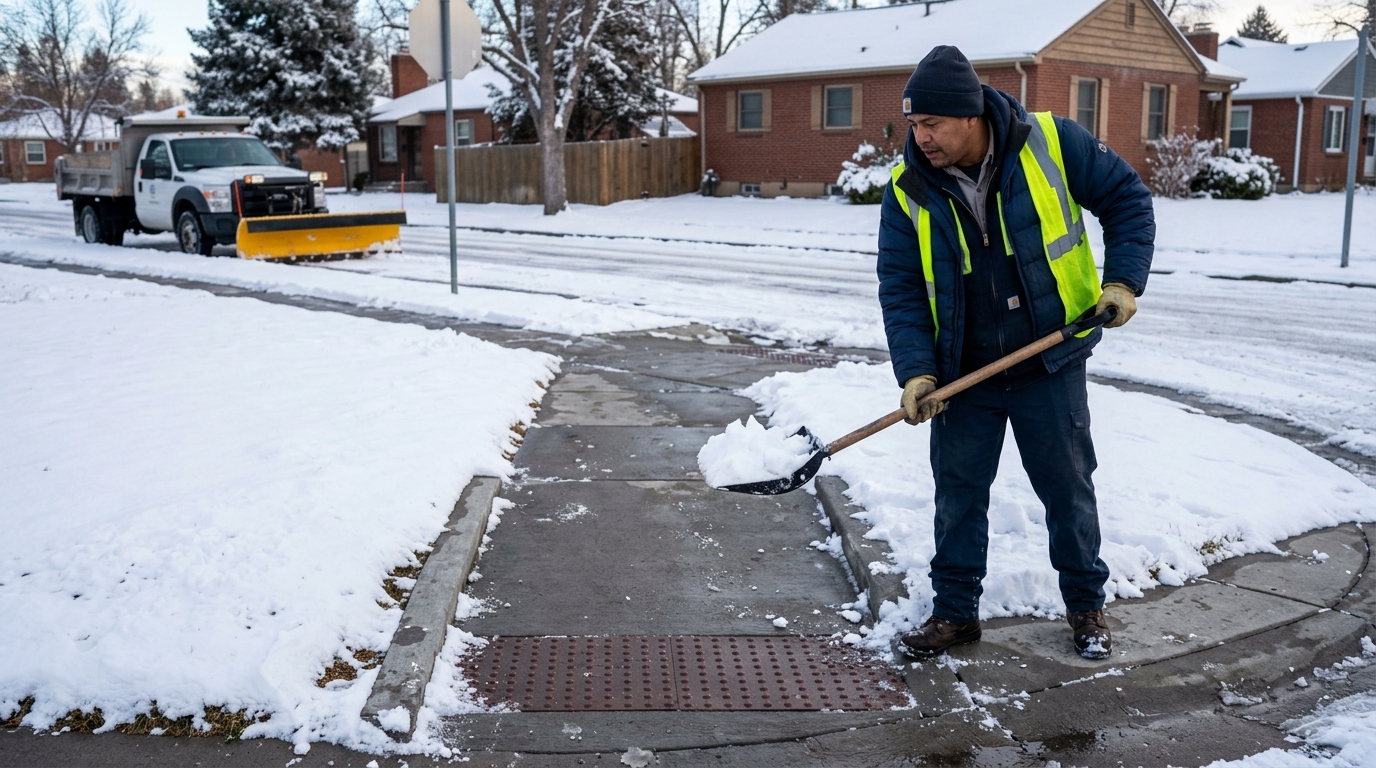
If you own or rent property in Denver, the curb ramp beside your sidewalk is almost certainly yours to clear, not the city’s. The denver ada ramp snow clearing requirement falls on you in that case. The City and County of Denver says property owners must clear snow and ice from their sidewalks, including adjacent ADA ramps and bus stops, according to the DOTI snow removal page. The Council District 4 snow and ice fact sheet goes a step further. It says owners or tenants must clear walkways, ramps included.
That wording matters for rentals. If your lease puts sidewalk duty on the tenant, the ramp comes with it. If the lease says nothing, assume the owner is on the hook. Landlords who skip this step often hear about it first from an inspector’s notice. We cover how that plays out in our guide to residential snow removal services for Denver landlords.
One point trips up many people searching for the denver ada ramp snow clearing requirement: we found no separate ramp-only ordinance that sets out a denver ada ramp snow clearing requirement apart from sidewalks. Denver treats the adjacent ramp as part of the sidewalk it serves, so the same duty, timing and enforcement apply. If you already know your sidewalk snow removal obligations, you know your ramp obligations. The ramp is just the stretch of sidewalk where a blockage does the most harm.
And it does real harm. A ramp packed with snow or glazed with ice can cut a wheelchair user, someone with a walker or a parent with a stroller off from the street entirely. Collective Colorado describes the problem in detail in its reporting on navigating Denver’s snow-covered sidewalks. Clear the ramp first, not last.
Corner Lots, Bus Stops and What the City Covers
Corner lots carry the heaviest load. According to Collective Colorado, owners are responsible for adjacent mobility device ramps and curb cuts when the home or business sits on a corner. That can mean two ramps, one per street, and both are yours. Plenty of owners shovel the walk by the front door and forget the second ramp around the corner.
Bus stops work the same way, with one exception. Owners must clear adjacent bus stops that the Regional Transportation District (RTD) does not own. RTD handles the shelters it owns. If the stop outside your property is just a sign and a bench on the sidewalk, assume you need to keep it passable.
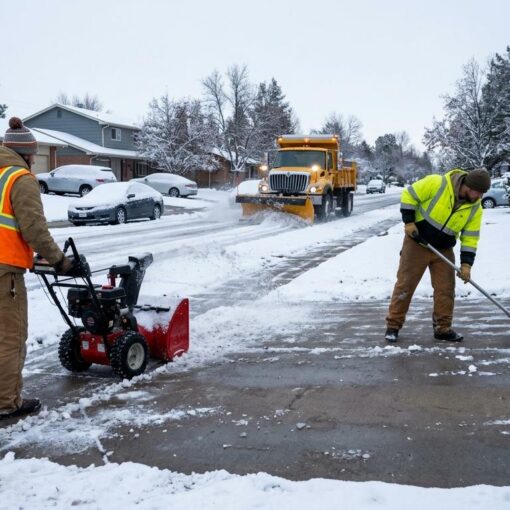
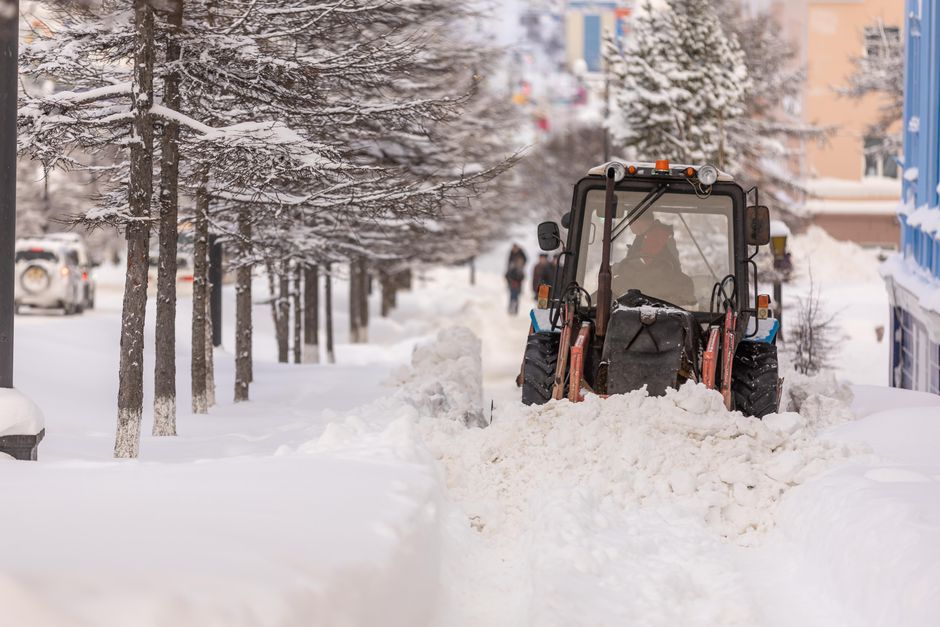
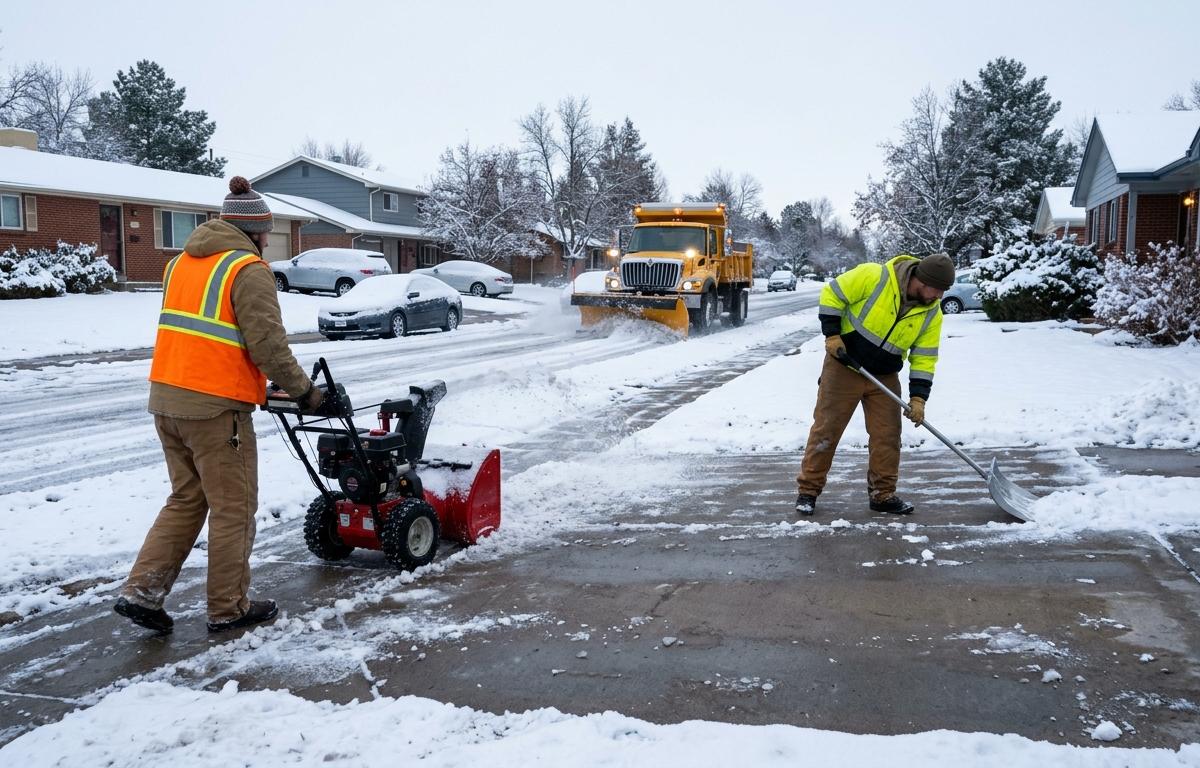
So what does the city cover? Less than most people expect. Denver Parks & Recreation clears park property and a few select sidewalks, such as bridges and underpasses. City crews plow streets: main arterials first, then, during major events, a single pass down the center of residential side streets, according to the city’s fact sheet. Those residential plows shave the top of the snowpack rather than exposing bare pavement. 311 can’t take special plowing requests, though it does take ice blading and sanding requests.
The takeaway is simple: city plows do not satisfy the denver ada ramp snow clearing requirement, and they are not a ramp-clearing service. If you manage an HOA or a multi-building property, put ramps into your scope of work and your bid specs. Our notes on condo association snow removal in Denver and snow removal for apartment complexes show how to write that in. Dense, busy neighborhoods have lots of corners, so the local picture is worth a read for places like Capitol Hill and Cherry Creek.
Clearing Deadlines: 4 Hours, 24 Hours and the $150 Fine
Timing depends on the kind of property. Once the snow stops, businesses should start clearing sidewalks immediately. Residences have until the next day. Those are the city’s published standards.
Enforcement runs on notice and recheck. As 9NEWS reports, an inspector leaves a time-stamped notice at a property with an unshoveled sidewalk. After that, a business has four hours and a residence has 24 hours before the inspector returns and a fine becomes possible. The reported fine is $150. Check the current amount with the city before quoting it to a client or a board, since fines can change.
A few things follow from that process:
- The clock that starts on the notice is separate from the "next day" standard. A residence that misses the first window can still get a second chance, but don’t plan around it.
- The $150 is the figure reported for a sidewalk violation. We found no ramp-specific penalty.
- A fine isn’t the only exposure. Injury attorneys note that following the local timeline is one factor courts weigh in slip-and-fall cases, so a skipped ramp can cost more than the ticket.
- One firm claims the city can clear a walk and bill the owner. We couldn’t confirm that on a city page, so don’t count on it, and don’t assume it won’t happen.
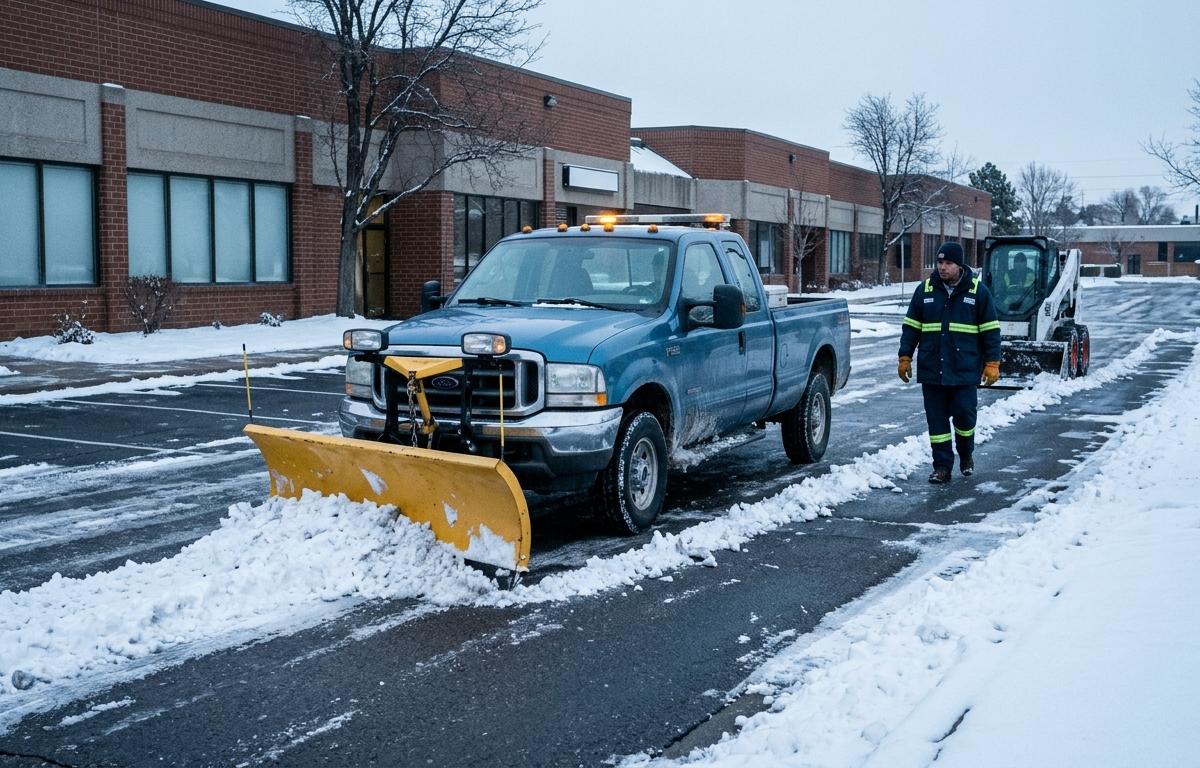
For a business, "immediately" is a tough standard to meet by hand, especially overnight. That’s why commercial managers and HOA boards increasingly ask for documented response and proof of work. A GPS tracked snow plow company in Denver can show arrival and departure times, which helps if an inspector or an injured visitor ever questions when a ramp was cleared.
What to Do When a Plow Buries the Ramp
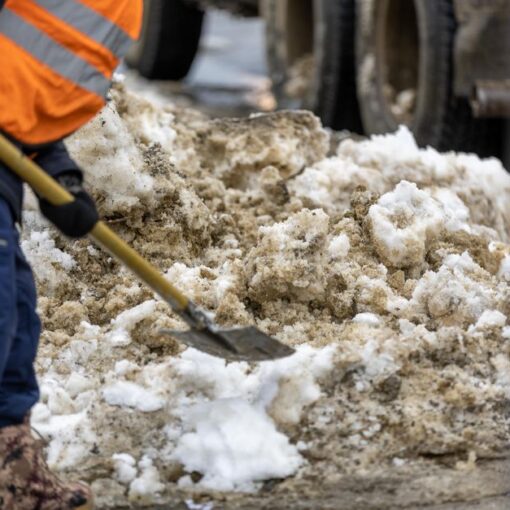
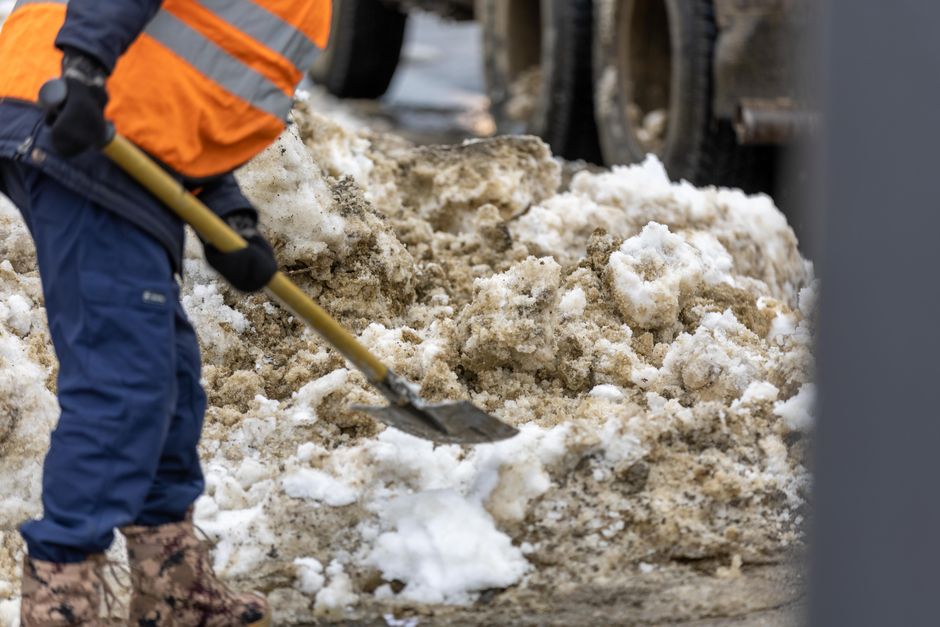
This is the situation that frustrates owners most. You clear the ramp, a city plow comes down the street, and the corner is buried again under a heavy berm of packed snow and slush. The city is direct about it: pushing snow onto sidewalks and driveways is an unavoidable result of plowing a street, and the owner must still clear the sidewalk afterward. The plow doesn’t reset your denver ada ramp snow clearing requirement or buy you extra time.
Here is how to handle it in practice:
- Wait for the plow, then clear. If you know a residential pass is coming, clearing the ramp before it arrives often means doing the job twice. Finish your main clearing after the street has been plowed when you can.
- Cut a full-width path. A thin shoveled track won’t do on a ramp. Clear the entire ramp surface and the landing at the curb so a wheelchair or stroller can get through, and keep a path to the street edge so the crossing is usable.
- Break the berm, not just the top. Heavy plow windrows can be dense and icy. Chip and lift rather than skimming, and don’t push the snow back into the street, since secondary sources say snow can’t be pushed into streets, alleys or rights-of-way. We couldn’t locate the ordinance text, so confirm with the city if this affects your site.
- Treat before the storm. The city fact sheet encourages putting de-icing material on sidewalks and ramps before forecast snow. That makes accumulation less likely and removal much easier. Pre-treating a ramp is cheap insurance.
If you hire this work out, ask whether ramps are included by name. A vague promise to clear "the walks" isn’t a promise to clear every curb cut on a corner lot. Our checklist on snow removal service red flags in Denver and our guide to vetting a residential service before the first storm both cover how to confirm scope in writing.
How to Report a Blocked Ramp to Denver 311
If you’re the one stuck behind a blocked ramp, or a neighbor who spots one, the route is Denver 311. The city’s guidance, reported by 9NEWS, is that if it has been more than 24 hours after a snow event and nearby sidewalks are still unshoveled, you should contact 311. The line is 720-913-1311, and the city also takes requests online. City inspectors from Community Planning and Development handle sidewalk enforcement.
We couldn’t find a dedicated ramp-reporting channel or a special category for blocked curb ramps, so treat this as a general sidewalk complaint and be specific. A useful report includes:
- The exact address or nearest intersection, and which corner of it
- That the problem is a curb ramp or curb cut, not just a stretch of sidewalk
- When the snow stopped, so the inspector can judge the timing
- A photo with a visible time stamp, if you can safely take one
Keep in mind that a report starts the notice process described above rather than producing an instant fine. The owner gets a time-stamped notice and a window to fix the problem. For an urgent safety situation, such as a ramp that is the only access for someone who can’t use stairs, say so plainly when you call.
If you’re an owner who received a notice, the fastest fix is to get the ramp cleared and documented. Before-and-after photos with time stamps protect you if a dispute follows. Staying ahead of the next storm is easier with a plan, and you can check where plows have been using the city’s Denver snowplow map, which runs about 15 minutes behind. For rules that kick in during a declared storm, see our overview of the Denver snow emergency parking ban.