Residential vs. Commercial Deadlines: 24 Hours and 4 Hours Explained
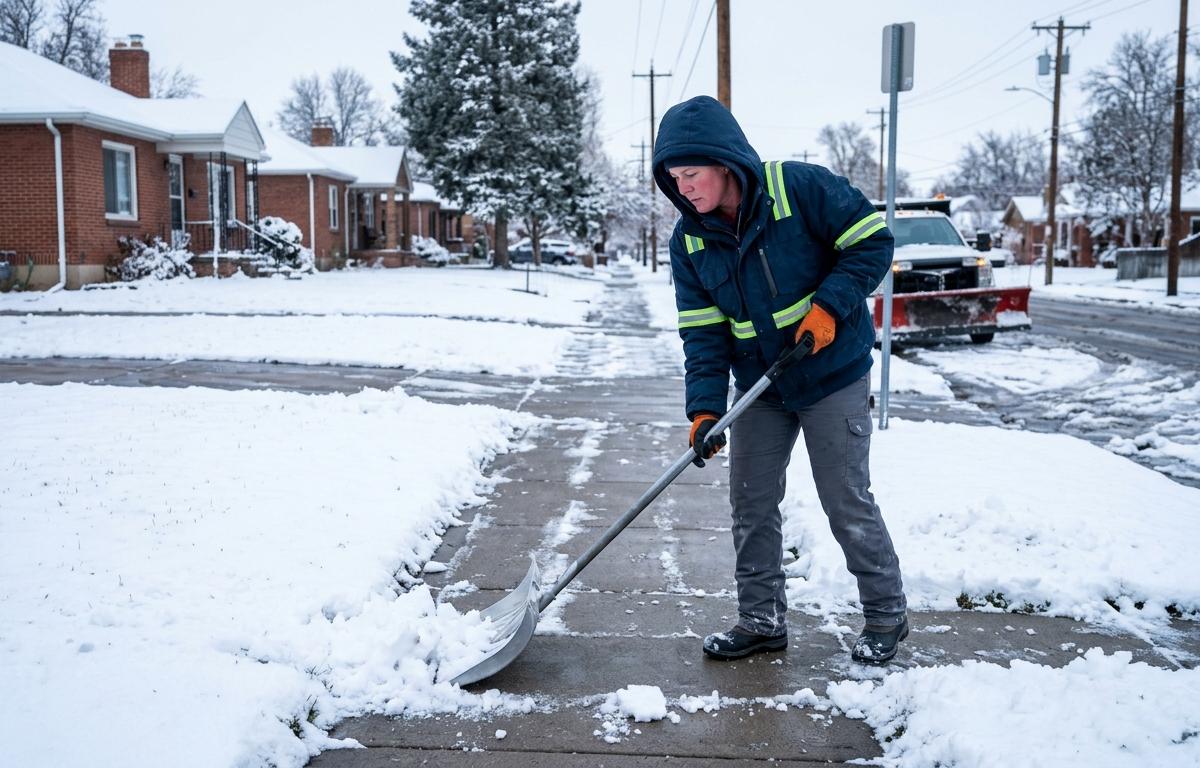
The denver sidewalk shoveling deadline rules come down to one question: what kind of property sits next to the walk? Under the city’s ordinance, as KDVR lays it out, sidewalks beside residential properties must be cleared within 24 hours after the snow stops falling. Sidewalks beside commercial properties get four hours. The clock starts when the last flake lands, not when the storm begins. If snowfall tapers off at 2 a.m., your countdown starts at 2 a.m.
Landlords are often surprised that "commercial" doesn’t mean storefronts only. Businesses and multi-family residential buildings fall under the four-hour rule. A duplex owner may get to treat the walk as a household chore with a 24-hour window, but the owner of a six-unit building, an apartment complex or a condo community is on the commercial clock. If you manage common areas for an association, our guide on condo association snow removal in Denver shows how scope and contracts are usually built around that shorter window. The same logic applies to rentals, which we cover in residential snow removal services for Denver landlords and rentals.
The duty also reaches past the straight run of sidewalk. KDVR notes that it includes adjacent ADA ramps and applicable bus stops. You can have a spotless walk and still be out of compliance if the curb ramp at the corner is buried. For the full picture of who owns the obligation, our explainer on whether the City of Denver is responsible for sidewalks answers the most common version of that question, and the broader Denver sidewalk snow removal law for property owners page covers the legal framing.
A word of caution: most public explainers on these rules are several years old, and details can change. Before you build a contract or a compliance plan around a specific number, confirm the current deadline with the city.
How Denver Enforces the Rules: Warning, Notice, Re-Check, Citation
Enforcement of Denver sidewalk shoveling deadline rules is complaint-driven and staged, not instant. According to 9News, inspectors typically issue warnings early in the season. Later, after several snows, they leave a notice of violation on an unshoveled walk. The notice carries no fine by itself, but it tells the owner an inspector will be back. If the walk is still unclear at the re-check, the city may issue an administrative citation with a $150 penalty.
So the realistic sequence runs warning, notice, re-check, citation. Coverage isn’t fully consistent on how long an owner gets between the notice and the re-check. Denver7 describes a $150 fine after the 4-hour or 24-hour window, while other outlets describe a grace period after the notice. Rather than trust one version, treat the process as a ladder you never want to climb. The cheapest outcome is clearing the walk inside the original deadline. The second cheapest is clearing it the moment you spot a notice on the door.
If you do receive a notice, clear the full width of the walk, the ramp and any bus stop portion right away, then photograph the result with a timestamp. A re-check that finds a clean, dry walk ends the matter. One that finds a half-shoveled path or a frozen ridge of plowed snow does not. Repeated storms matter too. Inspectors get stricter as the season goes on, so a property that skated by with a warning in November is more exposed by January.
Shoveling Rules That Catch People Out: ADA Ramps, Bus Stops, Streets and Plow Pushback
Most violations don’t come from ignoring snow altogether. They come from edge cases owners overlook.
ADA ramps. The corner curb ramp is your responsibility if it adjoins your property. A ramp blocked by a berm is a barrier for wheelchair users, parents with strollers and anyone with limited mobility. Our breakdown of the Denver ADA ramp snow clearing requirement explains why these spots deserve first attention.
Bus stops. Where a transit stop sits on your frontage, the clearing duty extends to it. Riders should be able to get from the walk to the curb without wading through slush.
Shoveling into the street. Several explainers note that Denver prohibits pushing sidewalk snow into the roadway. After a heavy storm it’s tempting, but it creates a hazard for drivers and can draw a complaint. Pile snow on your own landscaping or an approved area instead. One local outlet reported specific administrative fee amounts for the street rule, but that figure traces to an older article and wasn’t confirmed for Denver, so check with the city rather than relying on it.
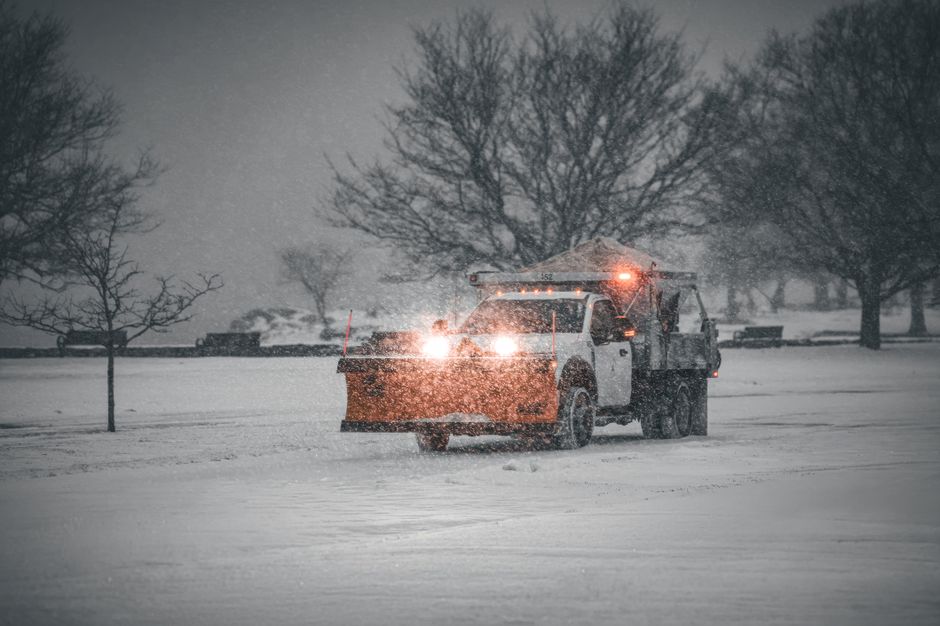
Plow pushback. The most frustrating scenario is finishing your walk and then watching a city plow shove a wall of heavy snow back across it. Plan for a second pass. If a plow buries a walk you’ve already cleared, re-clear it, ideally once the street plowing has passed. This is why property managers schedule a follow-up visit instead of a single trip. To see where city plows are working, use our overview of the Denver snowplow map live.
Ice. Clearing snow isn’t always enough, because packed snow turns to ice. If you treat walks, pick a product that won’t damage your surfaces. Our guide to safe ice melt for pavers in Denver covers what to use on decorative hardscape.
Documenting Compliance for Landlords, HOAs and Property Managers
If you manage property for others, being compliant with denver sidewalk shoveling deadline rules is only half the job. You also have to prove it. A citation or a slip-and-fall claim usually turns on one question: when was the walk cleared, and what shape was it in?
A simple habit protects you. After each storm, record when snowfall stopped, when your crew arrived and when the work finished. Take photos of the walk, the ramps and any bus stop area, with timestamps visible or embedded in the file, and keep them filed by storm date. For a multi-family building on the four-hour clock, that paper trail separates a clear defense from a he-said-she-said dispute.
This is where service selection matters. When you compare crews, ask what proof they give you after each visit. A provider with photo confirmation of every visit and GPS-tracked trucks hands you a defensible record without extra effort on your part. Our guide to GPS-tracked snow plow companies in Denver explains what to look for, and the licensed and insured snow plowing buyer guide covers the coverage questions that protect you if something goes wrong. For larger sites, see commercial parking lot snow removal in Denver and our guidance for snow removal for apartment complexes in Denver.
Finally, put the deadline in your contract. A vendor who agrees to "service within a reasonable time" hasn’t agreed to a four-hour requirement. Spell out the response window, the areas covered (walks, ramps, bus stops) and the re-visit expectation after plow pushback. Use how to compare snow removal crews in 2026 as a checklist when you evaluate bids.
Getting Help and Reporting: 311, Snow Angels and Emergency Service
Not every owner can meet denver sidewalk shoveling deadline rules by hand, and not every neighbor will. Denver has channels for both situations.
Reporting an unshoveled walk. If a neighboring property is leaving a sidewalk buried, you can report it through Denver 311 or the city’s PocketGov tool, as KDVR notes. Give the exact address, since enforcement starts with a complaint tied to a specific property. 9News also points residents to 311 for this purpose.
Help for residents who can’t shovel. The Snow Angels program, run through the city’s Agency for Human Rights and Community Partnerships, is designed to help Denver residents who need their front sidewalks cleared. It’s a good first call for older adults or people with disabilities who can’t do the work themselves.
Professional and emergency service. Owners who would rather hand off the job can hire a licensed, insured crew to meet the deadline for them. Storms don’t keep business hours, and a four-hour commercial window can start in the middle of the night, so 24/7 emergency availability and a clear response time matter more than a low per-visit price. Our Denver snow removal services page for homes, HOAs and commercial properties outlines the options, and vetting a residential snow removal service before the first storm helps you ask the right questions before you need them.
The takeaway on the denver sidewalk shoveling deadline rules is simple. Know which clock applies to your property, treat ramps and bus stops as part of the job, expect a second pass after plows, and keep proof. Do those four things and the notice-and-citation process rarely becomes your problem.