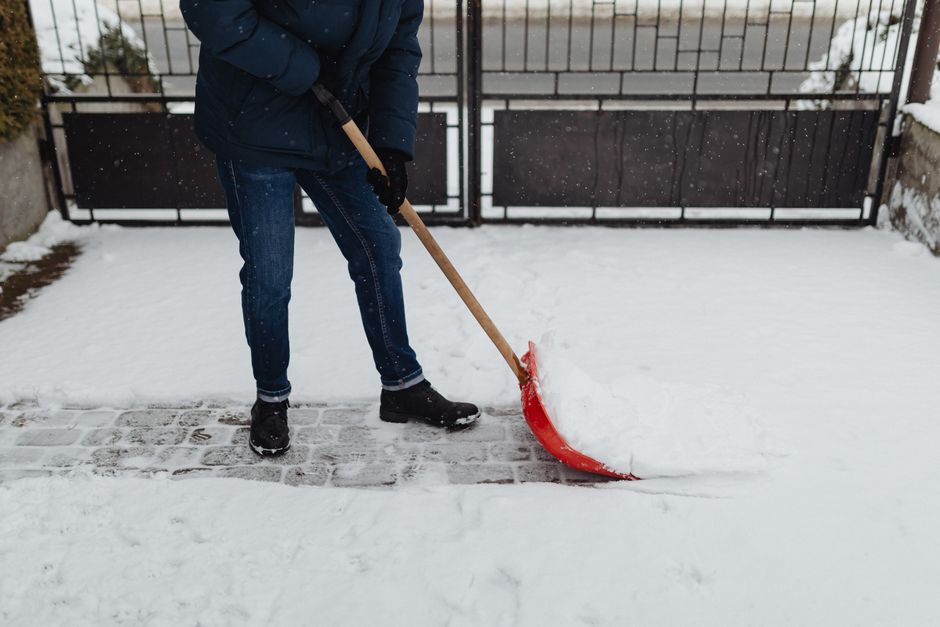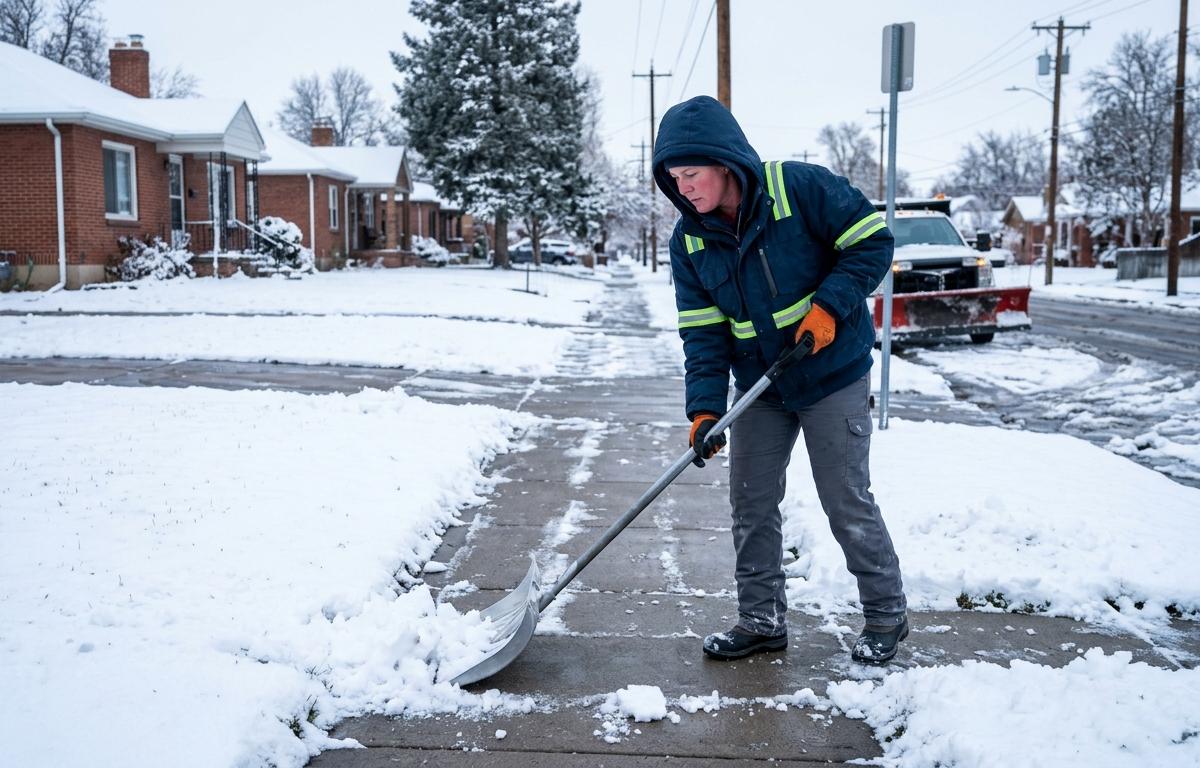
Yes, rock salt damages concrete. The deicer, not the ice or snow alone, is what breaks down driveways and sidewalks. In Denver’s repeated freeze-thaw cycles, that damage shows up fast as spalling, pitting, and crumbling. Here is a straight comparison of rock salt versus calcium chloride for two neighborhood types: Cherry Creek commercial lots and Washington Park residential driveways. Calcium chloride, used sparingly on cured concrete, is the option that actually protects the slab.
Table of Contents
-
What is the safest ice melt for new concrete under a year old?
-
How do you stop salt damage to a Cherry Creek parking lot or Washington Park driveway?
-
How do you clean salt residue off concrete and neutralize it?
Why does salt damage concrete driveways and sidewalks?
Salt does not just sit on top of the concrete. Concrete is porous and absorbs meltwater, so the damage starts under the surface. According to PROSOCO, deicers such as salt, rather than ice or snow alone, are what cause concrete to deteriorate.
Calcium hydroxide in concrete reacts with calcium chloride in salt to create calcium oxychloride, often called CAOXY. Those crystals expand inside the concrete and cause internal cracks and crumbling. The reaction happens below the visible surface, which is why a driveway can look fine right up until it starts flaking.
Salt also lowers the freezing point of water and increases the pressure of frozen water. That intensifies the freeze-thaw cycle. When ice melts, it carries approximately 10% more water than normal, adding hydraulic pressure to concrete upon refreezing, according to PROSOCO.
The visible results are discolored, cracked, and crumbling concrete. The deicer, not the snow, is the culprit. In Denver, where daytime sun melts surface snow and nighttime temperatures drop below freezing, the cycle repeats often enough to accelerate the damage.
What does salt damage look like on a Denver driveway?
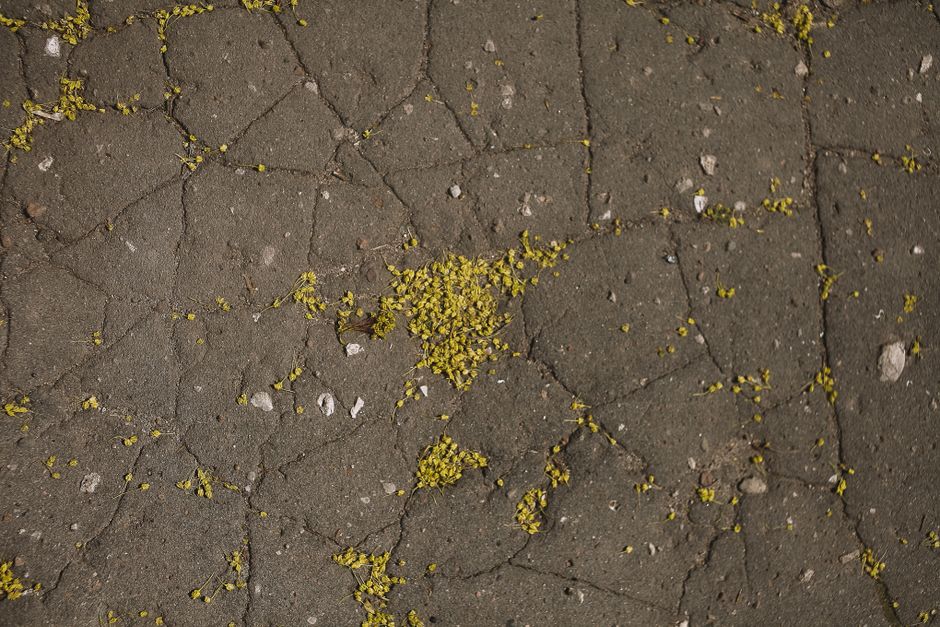
Spalling is the most common form of salt damage. According to Brickform, spalling appears as flaking or chipping that makes concrete look rough and pitted. The surface loses its smooth finish and starts to look like it is peeling in thin layers.
Other signs to check for include chips, cracks, discoloration, surface erosion, flaking, pitting, and scaling. These are all listed by Brickform as signs of salt-damaged concrete. Discoloration often shows up as white residue or darker patches where meltwater has soaked in.
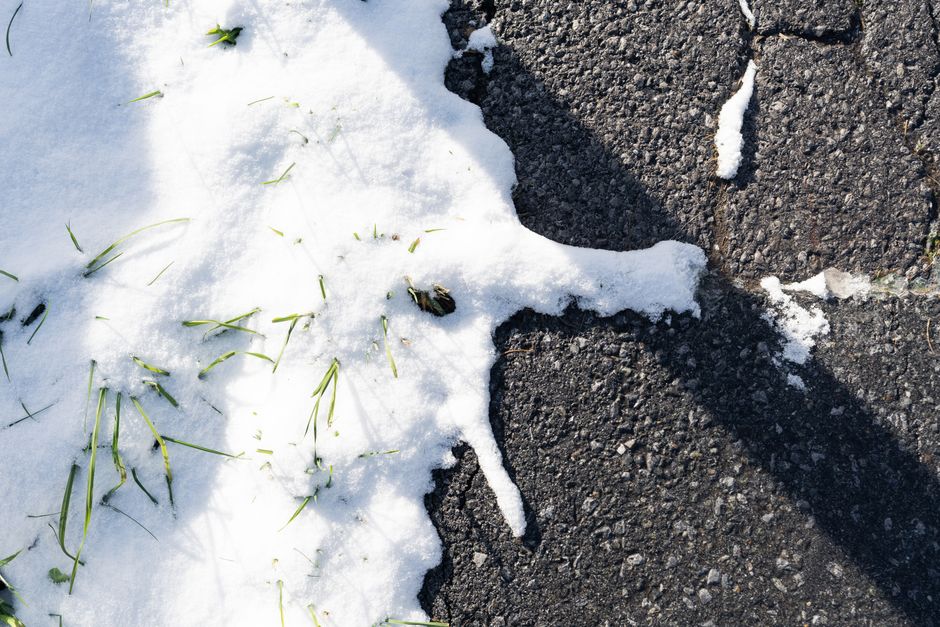
Denver’s repeated freeze-thaw swings in 2026 push damage faster than a single cold snap would. A slab that endures dozens of melt-and-refreeze cycles in one winter ages faster than a slab in a consistently cold climate.
A quick homeowner check takes 30 seconds. Run a hand over the apron and the south-facing walk. If the texture feels rough, gritty, or uneven compared to a protected section, the damage has already started.
Is rock salt or calcium chloride worse for concrete?
Rock salt, which is sodium chloride, is the most damaging choice and should be avoided entirely on any concrete you want to preserve. According to Denver Snow Removals, sodium chloride is the most damaging deicer for concrete. It is cheap, but it chemically reacts with concrete during the freeze-thaw cycle, causing spalling and other issues, according to Brickform.
Calcium chloride works at very low temperatures but carries corrosion risk if over-applied. According to Denver Snow Removals, calcium chloride works at very low temperatures but carries corrosion risk if over-applied. On fully cured concrete, magnesium chloride or calcium chloride used sparingly are the next-best options after calcium magnesium acetate.
The honest trade-off is straightforward. Rock salt costs least up front and costs most in slab repair. A $10 bag of rock salt can lead to thousands of dollars in concrete replacement. Calcium chloride costs more per application but does less damage when used correctly on cured concrete.
What is the safest ice melt for new concrete under a year old?
For concrete less than 1 year old, use only ice melt labeled safe for new concrete. Regular salt will destroy new concrete in one winter, according to Denver Snow Removals. New concrete has not fully cured and is far more vulnerable to chemical reactions.
Calcium magnesium acetate, or CMA, is described as the safest deicer available for new concrete. The same source, Denver Snow Removals, lists CMA as the safest deicer available. CMA is gentle on concrete and does not trigger the same damaging chemical reactions.
CMA is gentle but loses effectiveness below about 20°F. That makes it a shoulder-season and light-snow tool in Denver, not a deep-winter solution for a January cold snap. When temperatures drop below 20°F, CMA will not melt ice effectively.
The practical rule is to read the label for “safe for new concrete” before the first storm, not after the first spall. Once the surface starts flaking, the damage is already done. For any slab poured within the last 12 months, check the product label before the first application.
Does calcium chloride ruin sidewalks?
It depends. The sources conflict: one calls calcium chloride a good option on cured concrete, another flags corrosion risk. Both are right depending on dose and cure age. According to Brickform, calcium chloride is a good option on cured concrete. Denver Snow Removals flags corrosion risk when it is over-applied.
Over-application is the real failure mode. Used sparingly on fully cured concrete, calcium chloride is a next-best option. Dumping it on thick does not melt ice faster and increases the chance of surface damage and metal corrosion.
Never use calcium chloride on concrete under 1 year old. Only new-concrete-safe products belong on fresh slabs. The chemical reaction between calcium chloride and uncured concrete can cause damage in a single winter.
Watch pet paws and metal fixtures near heavy calcium chloride use. Sweep excess rather than letting it sit in meltwater. Meltwater carries the deicer into pores and expansion joints, where it can keep working against the slab.
How do you stop salt damage to a Cherry Creek parking lot or Washington Park driveway?
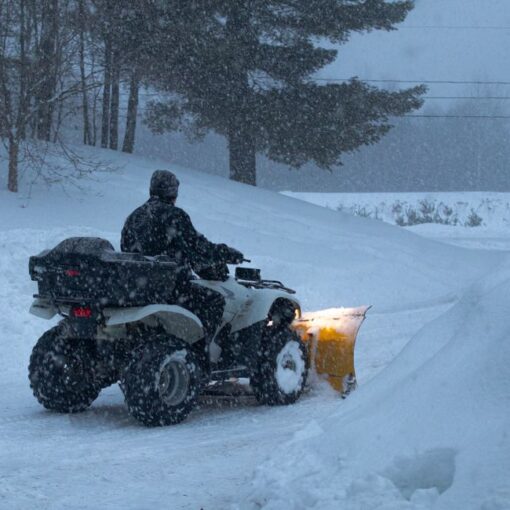
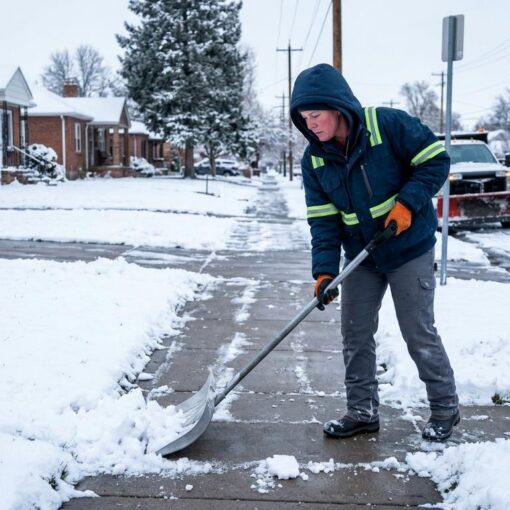
Start with mechanical clearing first. Shovel and plow remove the bulk of snow so less deicer is needed at all. Less deicer means less chemical exposure for the concrete. This is the single most effective step for any Denver property.
Pre-treat refreeze zones before the storm and de-ice after clearing, matching product to slab age and temperature. According to PROSOCO, salt indirectly damages concrete driveways, patios, and sidewalks by causing corrosion under the surface. The right product choice reduces that corrosion risk.
For residential driveways, walkways, and porches, Denver Snow Removal’s Residential Driveway & Walkway Snow Removal uses W-2 crews with 2-hour core response inside I-470, GPS tracking, and photo proof after every push, from $89 per visit. The service covers drive, walk, porch, and city sidewalk clearing.
For Cherry Creek commercial lots and HOA stalls, ask for COI, 4AM service, and timestamped before/after logs. Deicer applications should be documented, not guessed. A lot manager should know exactly what product went down, when, and at what rate.
Seal or treat vulnerable concrete before winter. PROSOCO describes Saltguard WB as a water-based, VOC-compliant repellent applied at high volume and low pressure, under 50 psi, with a fan-type tip. A sealed slab absorbs less salty meltwater.
How do you clean salt residue off concrete and neutralize it?
Brickform’s sequence is specific: apply E-Etch mixed with water, scrub, neutralize with Neutra Clean, then rinse with a high-pressure hose or power washer. The full sequence is documented by Brickform. The sources do not name the specific neutralizing chemistry, so treat “neutralize” as a product step, not a DIY recipe.
Rinse before refreeze so salty meltwater does not soak back in and refreeze in the pores. Timing matters. A rinse that sits on the slab overnight in freezing temperatures can cause more damage than the salt it was meant to remove.
Fix drainage while you are at it. Concrete should slope 1/4 inch per foot, about 5 inches end to end on a 20-foot patio, according to Brickform. Proper slope moves meltwater away from the slab instead of letting it pool and refreeze.
Key Takeaways
-
Rock salt, or sodium chloride, is the most damaging deicer for concrete and should be avoided entirely on any slab you want to preserve.
-
Salt damages concrete from the inside as calcium oxychloride crystals expand within the slab and cause cracking and crumbling.
-
Spalling, which is flaking, pitting, and a rough surface, is the most common visible sign of salt damage.
-
On concrete less than 1 year old, only ice melt labeled safe for new concrete should be used because regular salt can destroy it in one winter.
-
CMA is the safest deicer for new concrete but stops working below about 20°F.
-
Calcium chloride works at low temperatures but carries corrosion risk when over-applied, and sources disagree on its safety for sidewalks.
-
Concrete should slope 1/4 inch per foot so meltwater drains instead of refreezing in the pores.