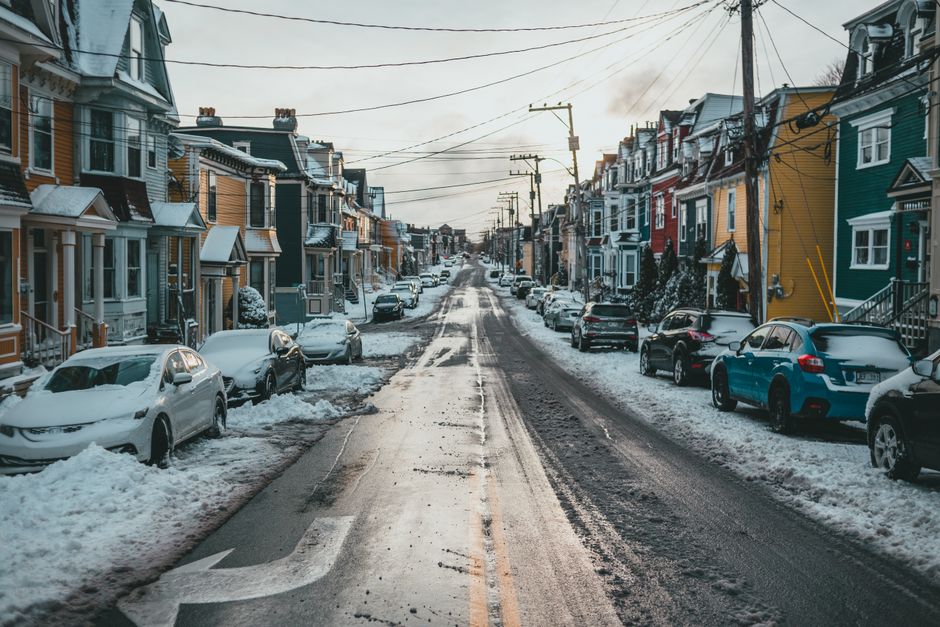
A standard Denver driveway usually clears for somewhere between $35 and $55 when a few inches fall. That number moves once the storm gets serious, and it moves again if you own a parking lot instead of a single-family home. The 2026 pricing picture for Denver breaks down into a fairly tight residential band, a wide commercial band, and a seasonal contract option that trades flexibility for predictability.
Below are the per-push and seasonal ranges being quoted around Denver this year, what pushes a quote up or down, and how to read a bid so you are not comparing a light-snow price against a foot of wet spring slush.
Residential Per-Push Pricing in Denver
Most Denver homeowners hiring a professional crew pay per visit rather than per hour. A 2026 Denver pricing listing puts typical driveways at $35 to $55 for light snow of 0 to 4 inches, with storms of 8 inches or more running about $65. A separate 2026 Denver cost survey lands in a similar place, quoting $35 to $65 per residential visit, with most homeowners paying between $45 and $160 and an average of roughly $105 per visit.
| Residential scenario | Typical 2026 Denver price |
|---|---|
| Light snow, 0 to 4 inches, standard driveway | $35 to $55 |
| Heavy storm, 8 inches or more | about $65 |
| Overall residential per-visit range | $35 to $65 |
| All-in residential spend, most homeowners | $45 to $160, average near $105 |
| Per-push pricing inside Denver County (MileHiSnow) | $35 to $85 |
The gap between the low end and the high end is rarely about the driveway alone. A corner lot with a long sidewalk, a shared walkway, a porch, front steps, and a rear alley apron is a different job than a straight two-car driveway with nothing else attached. When a quote comes in near $160 for a single home, it usually means there is a lot of edge work, a steep grade, or parking-area clearing included.
Why the Quote Moves With the Storm
Snow depth is the first thing a Denver operator looks at, and it shows up directly in the price. The 0 to 4 inch tier is the cheapest because a small truck or a shovel crew can clear a driveway in one pass. Cross into 8 inches or more and the time per property roughly doubles, which is why the heavy-storm price sits near $65 for work that would cost $35 to $55 in light snow.
Older Denver pricing data from 2021 quoted an average of $75 to $100 for up to 6 inches of snow, with plow operators typically adding about $30 when the total went above 6 inches. That benchmark is several winters old now, so treat it as a historical reference point rather than a current quote. Rates have shifted since then, and the newer 2026 figures above are the better yardstick.
Storm timing matters too. A storm that drags on for two days often requires more than one push at the same address, and each push is a separate billing event on a per-visit contract. Wind-driven snow that refills a driveway an hour after it was cleared has the same effect. If you want a fixed number no matter how many times the truck returns, that is what a seasonal contract is for.
Commercial and HOA Per-Push Pricing
Commercial work in Denver jumps into a different range because parking lots, fire lanes, loading zones, walkways, and entrances all have to be cleared and often treated with ice melt before the property opens. A 2026 commercial pricing guide for the Denver market breaks the per-push cost down by square footage.
| Commercial site size | Per-push range | What drives the number |
|---|---|---|
| Small properties, under 10,000 sq ft | $125 to $350 | Small lot, but entrances and walks still need hand work |
| Medium properties, 10,000 to 50,000 sq ft | $300 to $800 | Equipment time, stacking room, multiple access points |
| Overall commercial per-push range in Denver | $125 to $800 | Square footage, service standard, contract structure |
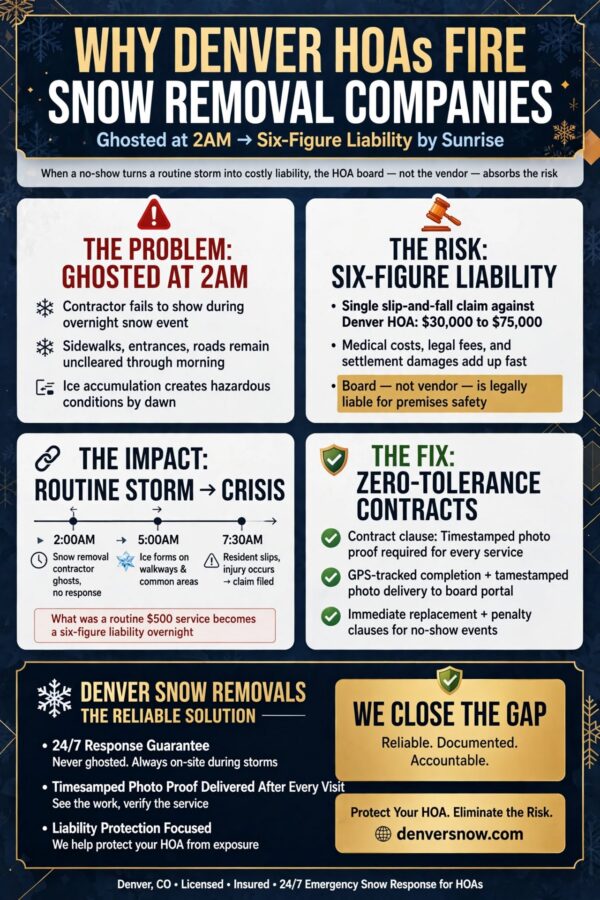
Denver commercial pricing is not driven by parking-lot size alone. The service standard matters just as much: a lot that has to be clean and treated by a set opening time costs more than one that gets cleared when the crew reaches it. Site layout, snow storage space, and whether de-icing is included all move the number. HOA boards should expect the same logic to apply to shared drive aisles, clubhouse walks, and mailbox clusters.
Seasonal Contracts Versus Paying Per Push
A full winter season contract for snow removal runs $200 to $600 according to 2026 Denver service listings, while per-push pricing sits at $35 to $85 for Denver County properties. The two structures solve different problems.
- Per-push billing means you pay only when it snows and you can see exactly what each visit cost. The trade-off is that a long winter with frequent small storms adds up, and a season with many visits can cost more than a contract would have.
- Seasonal contracts spread a predictable amount across the winter and usually guarantee a response standard, which matters for HOAs, rental properties, and anyone who travels.
- Before signing, ask how many pushes are included, what counts as a “push,” whether ice melt is bundled, and what happens in a storm that requires a second visit in the same day.
A quick way to choose: count roughly how many times you cleared your own driveway last winter. Multiply that by the per-push rate you have been quoted, then compare it against the seasonal number. If your count lands above the seasonal price, the contract is the better financial bet. If you had a quiet winter with only a handful of shovel-worthy storms, per-push wins.
Hourly Rates and One-Off Jobs
Not every job fits a per-push or seasonal model. For driveway or sidewalk clearing billed by time, Denver rates run $30 to $70 per hour at a minimum. That structure tends to show up for one-time cleanups, small hand-shoveling jobs that do not justify a plow, and post-storm work after the main event has passed.
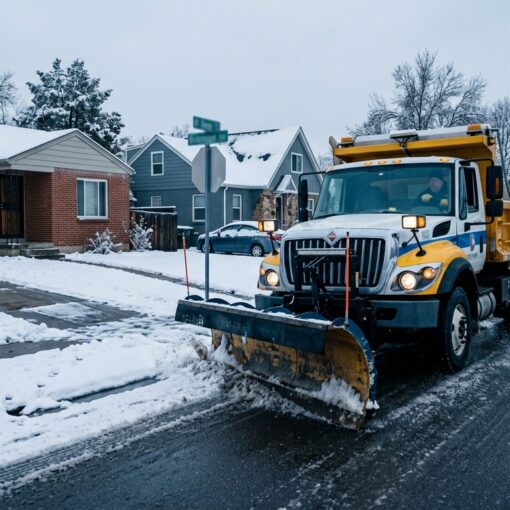
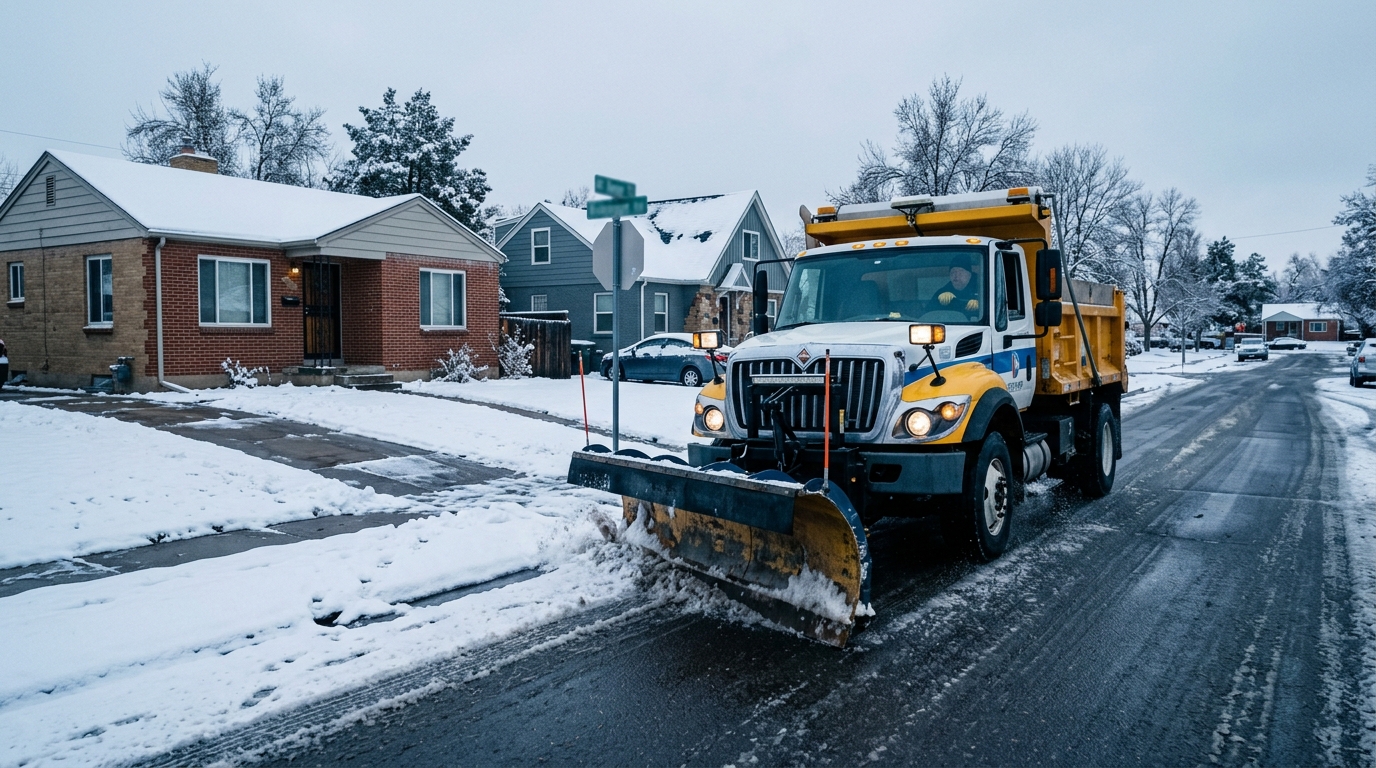
A flat $150 for a single professional visit can be reasonable once travel time to and from the address is factored in alongside the actual clearing, particularly for an isolated property. This is one of the practical arguments for hiring a crew already working your neighborhood. A route that stays inside Denver surface streets means less windshield time between jobs, and that efficiency is one of the few real levers a local operator has on price during a storm.
What Else Shows Up on a Denver Snow Removal Invoice
Base plowing is only part of the bill on many properties. De-icing and ice melt are typically handled as a separate line item or bundled into a service tier, and the type of product matters. Pet-friendly Ice Slicer and non-corrosive melt cost more than rock salt but cause less damage to concrete, landscaping, and paw pads, which is why many residential and HOA customers ask for them specifically.
Other items that can appear: hand work on steps, porches, and stoops that a plow cannot reach; clearing around mailboxes and utility boxes; hauling or stacking snow when the lot has nowhere to push it; and re-visits after a storm refills an already-cleared area. Ask for these to be listed in writing before the first storm rather than discovering them on the invoice in February.
Denver Sidewalk Rules and the $150 Fine
Cost questions in Denver come with a compliance angle. The City and County of Denver requires property owners to clear snow from sidewalks adjacent to their property, and enforcement is not purely advisory. According to the city’s snow removal information, an inspector can re-check a property, a potential $150 fine can apply, and the cost of the work can be billed to the responsible property owner. Residents can call 311 at 720-913-1311 with sidewalk snow questions.
For a homeowner who is out of town, elderly, or simply working long shifts, that risk is part of the real cost of doing nothing. A per-push visit at $35 to $55 is a small fraction of a $150 fine plus a city crew bill, which is why many Denver customers set up service before the first forecast rather than after the first ticket.
How to Compare Denver Snow Removal Quotes
The lowest bid is only the lowest bid if it covers the same scope. Use these questions to line up quotes side by side.
- Is the price per push, per hour, or seasonal, and what exactly triggers a billable push?
- What snow depth is included in the quoted rate, and what is charged above it?
- Are sidewalks, walkways, porches, and stairs included or priced separately?
- Is ice melt included, and which product is used?
- What is the response window after snow starts, and does the company route inside Denver County or travel in from outside?
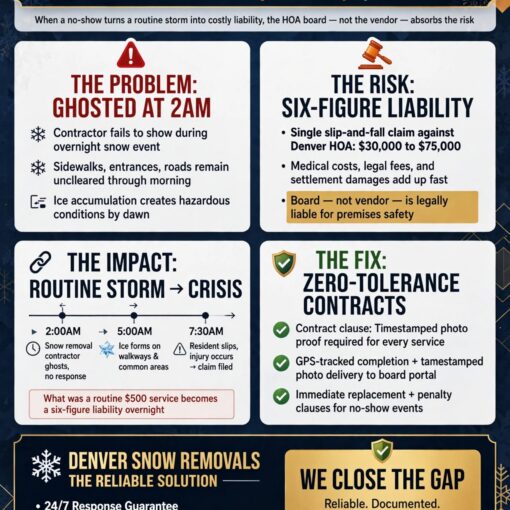
- Is there photo proof or a timestamped log of each visit?
- Is the company licensed and insured?
A crew that is already on Denver surface streets can hit a 2 to 4 hour response window that a company driving in from outside the county simply cannot match during a blizzard. That reliability is worth weighing against a quote that looks $10 cheaper on paper. Get the scope, the depth tiers, and the response standard in writing, and the per-push versus seasonal decision becomes a straightforward math problem instead of a guess.
Frequently Asked Questions
How much does snow removal cost in Denver for a typical driveway?
Most Denver driveways cost $35 to $55 per visit for light snow of 0 to 4 inches. Storms of 8 inches or more typically run about $65. Across all providers, the residential per-visit range lands at $35 to $65, with most homeowners paying between $45 and $160 depending on driveway size, walks, and stairs.
Is a seasonal snow removal contract cheaper than paying per push?
It depends on the winter. Seasonal contracts in Denver run $200 to $600, while per-push pricing sits at $35 to $85. If your property needs a dozen or more visits in a season, the contract usually wins. In a mild winter with only a few storms, per-push billing often costs less overall.
Why do commercial snow removal quotes in Denver vary so much?
Commercial pricing depends on more than square footage. A 2026 Denver guide puts small properties under 10,000 square feet at $125 to $350 per push and medium sites at $300 to $800. Service standard, site layout, snow storage, access points, and whether de-icing is bundled all move the final number significantly.
Can Denver fine a property owner for an uncleared sidewalk?
Yes. Denver requires property owners to clear adjacent sidewalks, and enforcement includes an inspector re-check and a potential $150 fine, with the cost of the work billed to the responsible owner. Residents with questions about sidewalk snow can call 311 at 720-913-1311 for guidance on their specific block.
What is the best way to keep snow removal costs down in Denver?
Book before the first storm, keep the scope simple, and hire a crew already routing through your part of Denver County. Fewer windshield miles means faster response and less cost passed to you. Clear vehicles and obstructions from the driveway before the crew arrives so the push takes one pass instead of three.