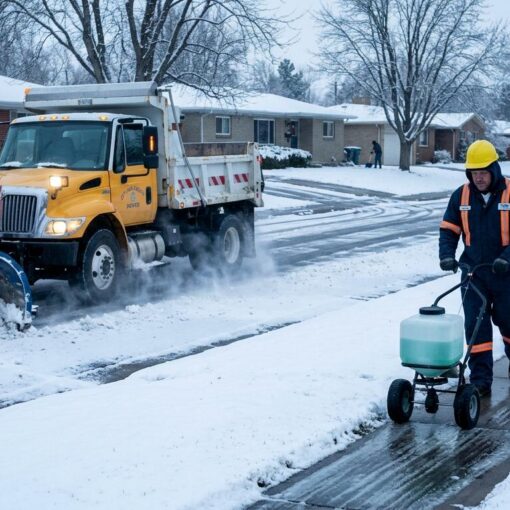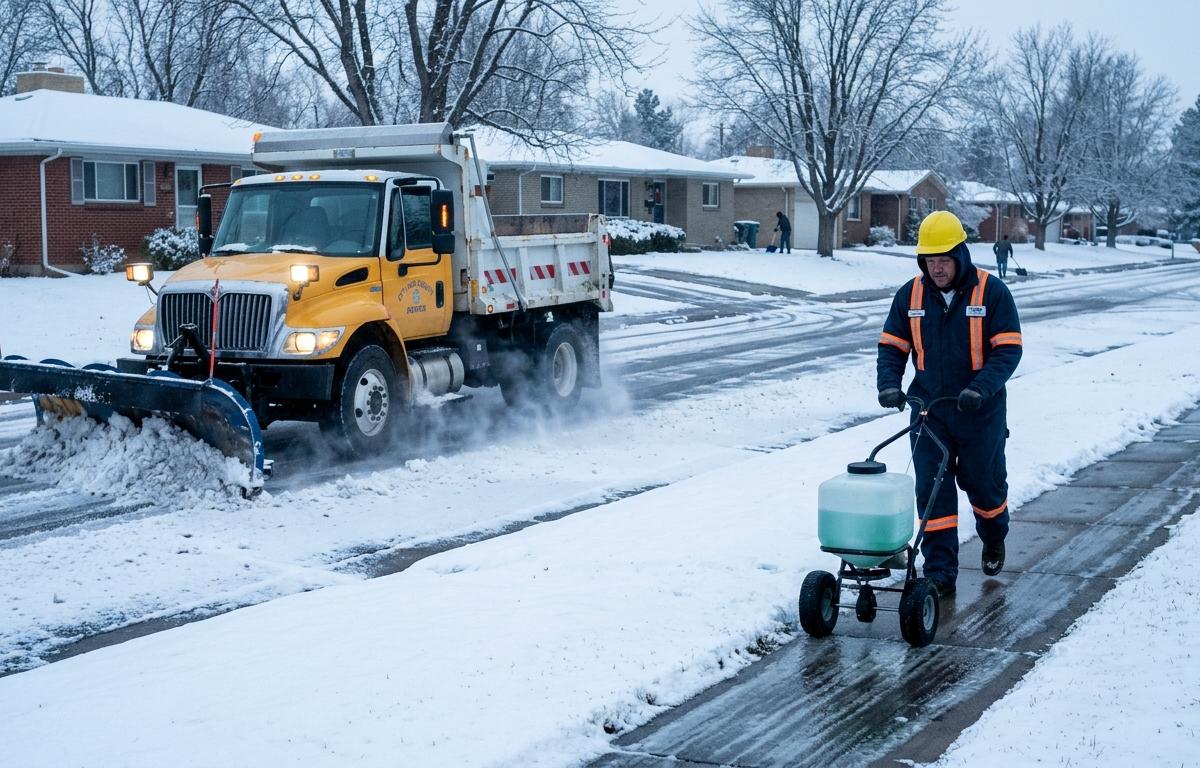
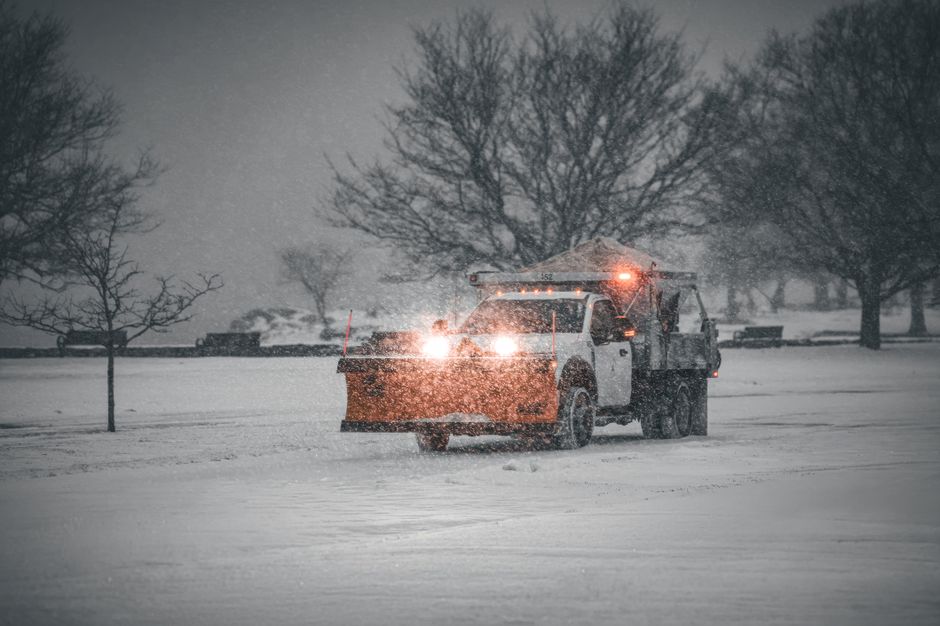
The snow stops falling, the sky clears, and Denver looks finished with winter for about an hour. Then the wind pushes loose snow back onto the curb line, overnight temperatures drop, and every shaded intersection turns into ice that lasts until somebody scrapes it. For a snow removal crew, the end of a storm is not the finish line. It is the starting gun for the part of the job property owners never see: routing.
MileHiSnow has been clearing Denver properties since 1974, which adds up to fifty winters of learning where a plow truck moves quickly and where it sits still. The routing decisions below are the ones that decide whether a driveway is clear by 6 a.m. or by noon. All of that work happens on Denver surface streets inside the City and County of Denver and a small ring of adjacent communities, never on I-25 or I-70 during a storm.
What Changes on Denver Streets Once the Snow Stops
Fresh snow is soft and forgiving. Snow that has been driven over, packed down, and then refrozen is a different material, and that shift changes the entire job from pushing to cutting.
- Traffic compresses the first inch or two into a hard layer that a plow blade skims rather than lifts.
- Curb lines and driveway aprons collect the berm that city plows push aside.
- Gutters refreeze at night, so daytime melting becomes morning ice.
- Parked cars force operators to leave lanes half treated, which means the same block often needs a second pass.
Denver’s own residential plow crews work 3am to 3pm after large storms, and the city notes that its smaller residential plows do not bring streets to bare pavement. They shave the top few inches of snow and move on. That detail matters for anyone waiting on a driveway or a sidewalk apron, because a street that looks plowed can still hide a hard pack underneath.
Denver County Only Routing Comes First
The first routing decision in a blizzard is not which street to take. It is which storms the crew can reasonably answer at all. MileHiSnow serves Denver County and a few adjacent communities within roughly 10 miles of downtown. Sticking to that footprint is what keeps a 2 to 4 hour response window realistic when the metro is gridlocked.
| Route status | Communities and conditions |
|---|---|
| Inside the MileHiSnow route | City and County of Denver, Glendale, Edgewater, Englewood, East Lakewood, West Aurora within 10 miles of downtown |
| Outside the route | Brighton, Centennial, Parker, Castle Rock, Longmont, Commerce City north, and any address that requires I-25 or I-70 travel during a blizzard |
A truck stuck on an interstate during a storm is not clearing a driveway, a sidewalk, or a parking lot entrance. That single constraint shapes the schedule more than any other factor.
The Order of Operations on a Post Blizzard Route
Commercial Lots, HOA Entries, and Walkways Go First
Most commercial and HOA work starts well before sunrise, often around 4 a.m., because that is when liability begins to build. Parking lots, walkways, and building entrances need to be passable before employees, tenants, or customers arrive. A slick entry mat or an unplowed walkway is the kind of hazard that turns a snow event into an injury claim. On these routes the truck handles the lot first, then the paths, then the entrances.
Residential Driveways, Sidewalks, Porches, and Stairs Follow
Residential routing is built block by block rather than one address at a time, which is why a crew can usually finish a neighborhood faster than a one-off customer expects. Within that sweep, properties with steep driveways, north-facing shade that never melts, or occupants who rarely get out are flagged for the earliest pass. Driveways come before sidewalks, and porches and stairs are treated as part of the same visit rather than a separate trip.
De-Icing and Ice Melt Close the Route
Plowing moves snow. It does not stop refreeze. The last step on most properties is a de-icing application, and MileHiSnow uses a pet-friendly Ice Slicer product that is non-corrosive to concrete and metal. For a driveway that holds meltwater or a commercial walkway with heavy foot traffic, that final pass is what keeps the surface safe after the sun goes down again.

How the Public Plow Tracker Fits Into a Private Route
Denver publishes a Plow Tracker on denvergov.org, and the city maintains a mapped set of Denver Snow Routes covering its own plowing operations. The Colorado Department of Transportation runs an Automated Vehicle Locator that lets travelers track active state plows in real time. Those tools are genuinely useful for understanding street conditions after a storm.
They also have limits. A tracker shows where government plows are, not where a specific driveway sits in a private queue. A street that shows a recent pass can still have a berm at every apron, and a quiet residential block may sit low on the city’s list while a private crew is already working it. Property owners can check the tracker for street context, then treat the driveway, sidewalk, and entry as a separate job with its own schedule.
What Denver Snow Routes Mean for a Property Owner
Denver’s snow routes are mapped and linear referenced, which is a technical way of saying they follow street centerlines rather than covering entire neighborhoods. If a property sits on one of those routes, expect more frequent plow traffic, bigger berms at the driveway opening, and more reason to move vehicles off the street. City guidance has suggested that drivers can be asked to move their cars from Denver Snow Routes during the day so plows can clear snow to the curb.
If a property sits on a quiet residential block instead, city service tends to arrive later and stop at shaving the top layer. That is where a private route earns its keep, because clearing the apron, the walkway, and the stairs is not part of the city’s job at all.

GPS Logs, Timestamps, and Photo Proof
Every MileHiSnow visit is GPS tracked and timestamped, with photos taken before and after the work. For a single homeowner, that means knowing the crew actually arrived instead of wondering whether a truck drove past. For an HOA board or a property manager, it means documentation that can be pulled up when a resident asks why their walkway was listed as complete.
Routing and proof are two halves of the same system. A route is only as good as the record showing which properties were finished, in what order, and at what time, especially when several inches of new snow arrive and yesterday’s work disappears under it.
When the Next Storm Arrives Before the Route Is Finished
Denver weather rarely waits for a route to be completed. When a second round hits mid-schedule, the plan shifts to keeping access open rather than making everything perfect. Commercial and HOA entries stay at the top, primary residential driveways get a pass, de-icer goes down where it slows refreeze, and detail work waits for the next window. MileHiSnow runs 24/7 through these events, so calls that come in overnight are routed into the same morning plan.
How Neighboring Cities Handle the Same Problem
Denver is not alone in sorting roads by type. Arvada’s snow and ice policy is to plow and apply de-icing material to arterial and collector streets on a priority basis. Winter Park lists arterial streets, described as the primary routes most used to access locations and the main bus routes, as its Priority 1 category. Centennial’s snow plow route page lists state highway maintenance for corridors including I-25, Parker Road, University Boulevard, and Arapahoe Road.
The pattern holds across the metro: the wider and busier the road, the earlier it gets attention. That leaves driveways, sidewalks, parking lots, and building entries to private crews, and it explains why watching the street in front of the house is a poor way to predict when a property will actually be clear.
Getting on the Route After a Blizzard
- Confirm the address falls inside the footprint: City and County of Denver, Glendale, Edgewater, Englewood, East Lakewood, or West Aurora within 10 miles of downtown.
- Describe the property in detail, including driveway length and slope, sidewalk and stair counts, gate codes, and where snow can be stacked.
- Choose between per-push pricing, which runs $35 to $85 for residential work, or a seasonal contract for a fixed plan.
- Flag any de-icing preferences, including pet-friendly Ice Slicer for yards where animals spend time.
Requests come in 24/7, and a first visit usually includes a quick walkthrough so the crew knows the property before the next storm instead of guessing in the dark. Licensed, insured, and Denver-owned since 1974, the operation is built around one idea: know the streets well enough that a blizzard becomes a schedule rather than a scramble.
Frequently Asked Questions
Does the City of Denver plow residential streets?
Denver runs its own residential plowing crews during major storms, typically working from 3am to 3pm. The city notes that these smaller plows do not bring streets to bare pavement, they shave the top few inches and move on. Quiet residential blocks can wait longer, and driveways, sidewalks, porches, and stairs remain the property owner’s responsibility.
How fast can a private crew reach a driveway after a blizzard?
MileHiSnow targets a 2 to 4 hour response for properties inside its Denver County footprint. That window depends on storm timing, how many properties are already queued, and whether surface streets are passable. Because the route stays off I-25 and I-70 during storms, trucks are not parked in highway traffic while driveways wait.
Should I move my car during a snowstorm?
It is not a requirement, but city guidance has suggested that drivers can be asked to move their cars from Denver Snow Routes during the day so plows can clear snow to the curb. Moving a vehicle lets plows reach the full width of the street and reduces the berm left at the end of a driveway.
Why does a plow leave a berm at the end of my driveway?
When a plow passes, it pushes snow from the traffic lane toward the curb, and that includes the opening of a driveway. A private pass afterward clears the apron. That is why MileHiSnow treats driveway aprons as part of the job rather than something finished the moment the street looks clear.
What does per-push pricing cover?
Per-push pricing at MileHiSnow runs $35 to $85 for Denver County residential properties, with seasonal contracts available for homeowners and HOAs that prefer a fixed plan. Each visit covers the driveway, sidewalks, porches, and stairs, and it ends with a de-icing application and timestamped before-and-after photos.