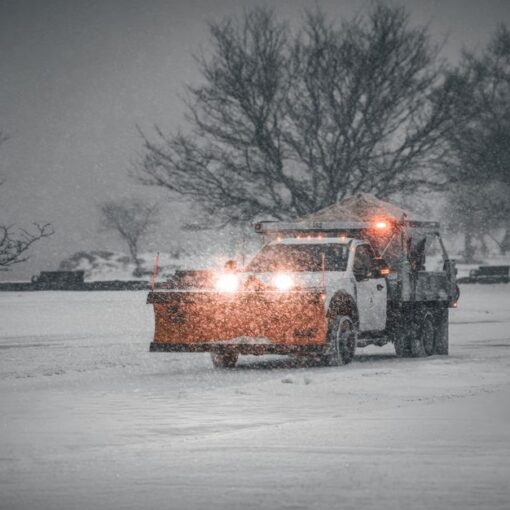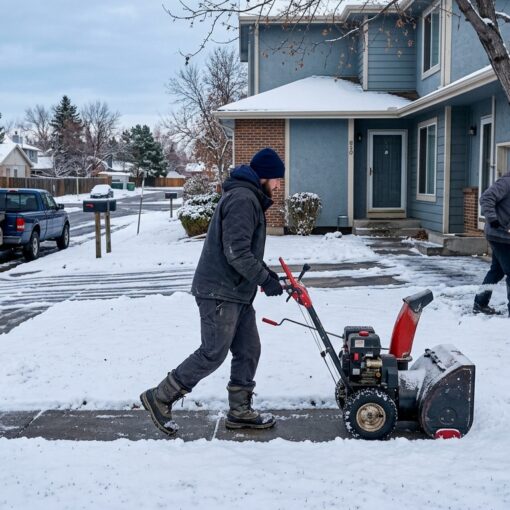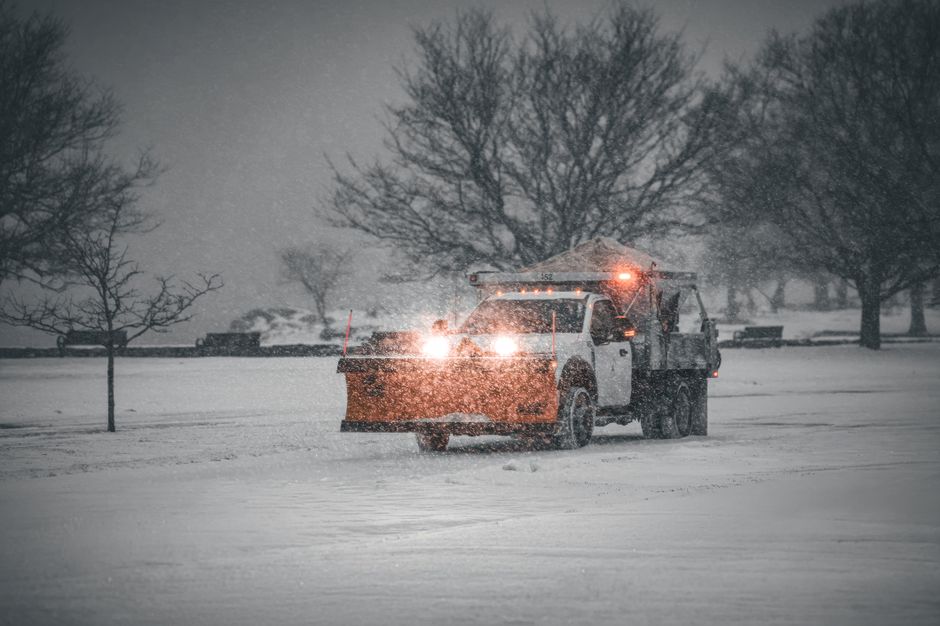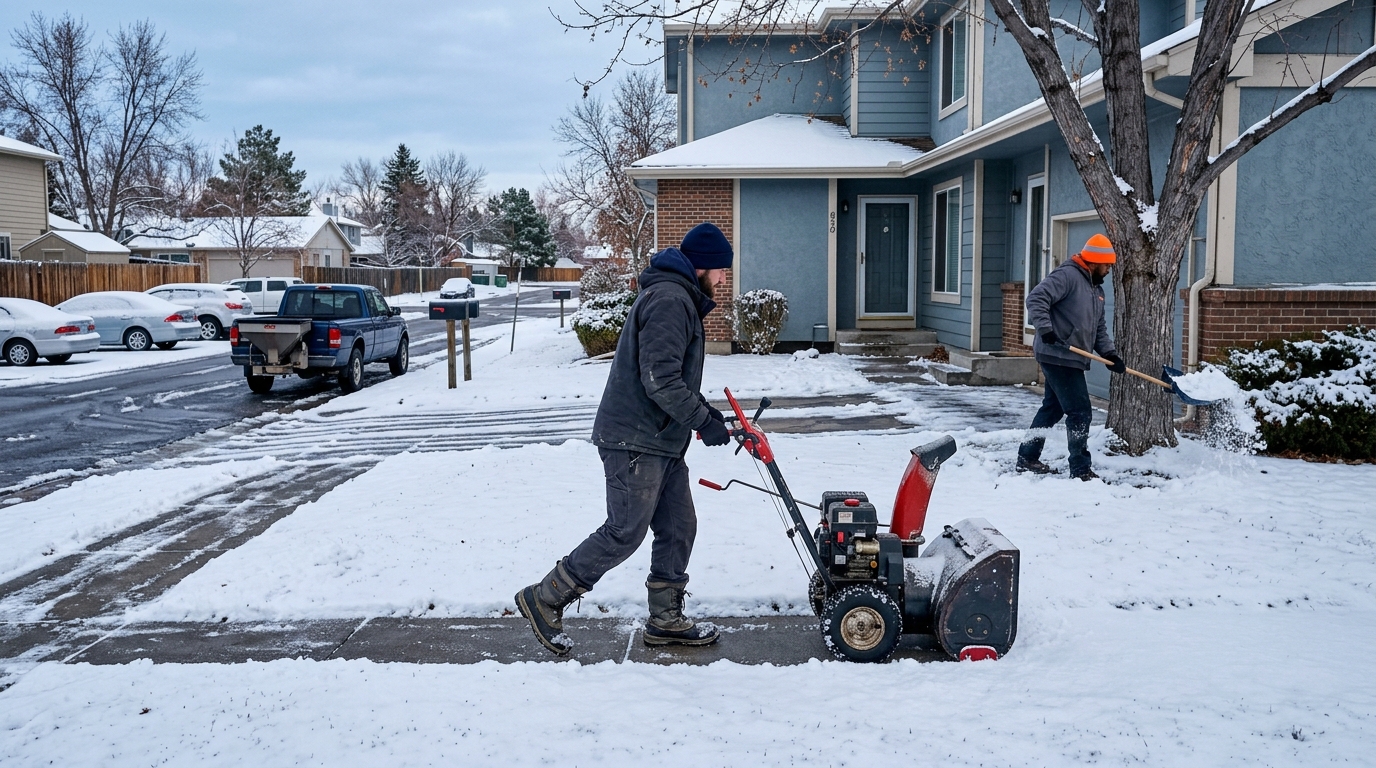

Downtown Denver snow removal splits into two systems. The City and County of Denver, through the Department of Transportation and Infrastructure (DOTI), clears main streets, protected bikeways, and off-street trails. Property owners are legally responsible for sidewalks, adjacent ADA ramps, and bus stops. For 2026, downtown property managers should expect city plows to work on route priorities, not on demand. Driveways, lots, and building walks require a contracted crew with a defined response window.
Table of Contents
- Who plows what in downtown Denver — city or property owner?
- What are Denver's parking bans and how do they affect downtown?
- How fast can you expect downtown Denver snow removal in 2026?
- What does downtown Denver snow removal cost in 2026?
- What should downtown property managers and HOAs plan for in 2026?
- How does Denver Snow Removal handle downtown and Denver County contracts?
- Which downtown Denver snow removal companies are worth comparing?
- What do people get wrong about downtown Denver snow removal?
- Key Takeaways
- References
Who plows what in downtown Denver — city or property owner?
DOTI runs about 70 large plows across roughly 2,050 lane miles of main streets, according to the City and County of Denver. Downtown streets receive liquid magnesium chloride as the primary deicer. That is a different material from what residential areas get, which is nothing.
The Residential Snow Plow Program was created during the blizzards of 2006-07. It covers about 1,260 center lane miles of residential streets using a fleet of 4×4 pickup trucks with plows. Residential plowing runs between 3:00 a.m. and 3:00 p.m. when deployed. Each side street gets one center pass.
Residential plows shave off the top few inches of snow pack. They will not expose bare pavement. Residential areas do not receive de-icing materials at all. That is a key distinction for anyone who assumes city service means clean, dry pavement everywhere.
Property owners must clear snow and ice from their sidewalks, including adjacent ADA ramps and bus stops. Downtown sidewalks are never the city's job. The density of downtown Denver means loading zones, alleys, and garage aprons also fall to the property owner or manager, not the plow route.
What are Denver’s parking bans and how do they affect downtown?
Denver County parking bans restrict or prohibit street parking on designated routes during snow events so plows can clear curb to curb. The bans activate during significant storms and can change quickly. Downtown property managers should treat a parking ban as an operational event, not a minor inconvenience.
Downtown impact hits fast. Loading zones, meter parking, and alley access can shut down within hours of a ban. Deliveries get delayed. Tenants lose street parking. Vendors cannot reach docks. A missed ban notice creates a cascade of problems for commercial buildings.
Property managers should plan tenant and vendor communication before the ban, not during it. A simple template message covering parking restrictions, loading dock changes, and sidewalk clearing schedules saves hours of phone calls. The time to build that template is before the first storm.
Enforcement and tow risk raise the cost of a missed ban for downtown businesses. Towed vehicles, missed deliveries, and blocked access are all real financial hits. The City and County of Denver publishes snow route and parking ban information, but managers need a plan to act on it.
How fast can you expect downtown Denver snow removal in 2026?
City plows prioritize main streets and arterials first. Side streets and residential routes come after, on a one-pass standard. Downtown main routes get attention early, but that does not mean every downtown street is clear at the same time.
Protected bikeways are targeted at least once every 24 hours, according to the City and County of Denver. Off-street bicycle and multi-use trails with snow accumulation greater than one inch are plowed within 12 hours after the end of a snowfall event. Those are city targets, not private property guarantees.
Private response times vary widely. GreenPal reports a 22-minute median response time across listed snow removal pros in Denver. That figure is a marketplace metric, not a contractual guarantee. A homeowner posting a job may get a fast quote, but a downtown commercial lot needs a different standard.
Downtown commercial and HOA sites should contract for a defined window. Denver Snow Removal runs 2-4 hour response inside the core Denver area and 4AM service for commercial lots. A defined window means the crew shows up before tenants arrive, not whenever the storm ends.
What does downtown Denver snow removal cost in 2026?
GreenPal lists a typical Denver snow removal cost of $35 to $65. Listed pros on the platform range from about $34 to $50 on the low end up to $90 to $110 depending on scope. Those figures cover basic residential driveway and walk clearing.
Downtown costs run higher than residential. Lots, sidewalks, ADA ramps, and snow hauling add labor and equipment. A commercial property with 20 stalls, a loading zone, and public sidewalk frontage is not a $50 job. The scope drives the price.
Seasonal contracts lock pricing versus per-push billing. Per-push pricing spikes in heavy months when demand peaks. A seasonal contract spreads the cost and guarantees service. Downtown property managers should compare both models before the season starts.
De-icing materials and refreeze revisits are separate cost drivers downtown. Liquid magnesium chloride on city streets does not cover private walks and lots. Pet-friendly or commercial-grade ice melt, plus return visits for refreeze zones, add line items to any downtown snow removal budget.
What should downtown property managers and HOAs plan for in 2026?
Pre-season contracts with locked pricing, revisits included, and cancel-anytime terms remove storm-week scrambling. Waiting until the forecast shows snow means competing with every other property for the same crews. A signed contract before November is the difference between a cleared lot and a liability.
Require COI, timestamped before/after photo logs, and a completion archive for board and tenant reporting. A certificate of insurance proves the contractor is covered. Photo logs prove the work happened. A completion archive gives property managers documentation when a tenant or board member asks questions.
GPS-tracked trucks with live ETA keep tenants and managers informed without phone calls. The City and County of Denver publishes plow maps for city routes, but private crews need their own tracking. Live ETA data means a property manager can tell tenants exactly when the plow arrives.
Plan pre-treatment for refreeze zones. Downtown shade, garage entrances, and alley mouths ice first. Denver Sprinkler and Landscape offers deicing and sand/salt spreading as part of its snow removal services. Pre-treatment before a storm prevents ice from bonding to pavement, which reduces liability and labor later.
How does Denver Snow Removal handle downtown and Denver County contracts?
Denver Snow Removal handles residential driveways and sidewalks as one service: drive, walk, porch, and city sidewalk cleared in a single visit. That scope matches what Denver property owners are legally required to clear, including the city sidewalk frontage.
Commercial and HOA lots from 20 to 100 stalls get 4AM service with COI and photo logs. The 4AM start time means lots are cleared before tenants and employees arrive. Photo logs provide timestamped proof for property managers and boards.
Emergency 24/7 same-day removal covers properties inside I-470, with 2-4 hour response in core Denver. That response window is a defined commitment, not a marketplace estimate. Downtown properties inside the core get priority routing.
De-icing and ice melt services include pet-friendly and commercial-grade options. Pre-treatment and post-clear de-icing for refreeze zones are part of the service. Downtown shade zones and alley mouths need that follow-up pass.
Seasonal contracts include locked pricing, revisits included, and cancel-anytime terms. GPS-tracked trucks provide live ETA, and timestamped before/after photo proof documents every visit. Portal access for HOA and commercial clients includes logs, COI, and a completion archive.
Which downtown Denver snow removal companies are worth comparing?
GreenPal lists 29 local snow removal pros in Denver. Listed companies include Sparkle Cleannn at $50 to $55 with a 4.7 rating from 216 reviews, M&E Lawn Servicellc at $35 to $47 with a 4.4 rating from 80 reviews, and Colorado Curb at $34 to $50 with a 4.8 rating from 28 reviews.
Other GreenPal listings include Powers Services at $55 to $100 with a 4.6 rating from 2,542 reviews, Inspiring Landscape at $60 to $80 with a 4.8 rating from 976 reviews, and Lawn Barber Llc at $90 to $110 with a 4.8 rating from 383 reviews. Review counts and prices vary widely, which reflects different scopes and service levels.
Denver Sprinkler and Landscape serves Denver, Littleton, Lakewood, Arvada, Thornton, and Aurora. The company offers residential and commercial snow removal, hand shoveling, deicing, sand and salt spreading, deicing cable installation, and snow relocating and hauling.
Denver Sprinkler and Landscape notes that Sno Plow deicing material should not be used on concrete that has cured less than one full year. That caution matters for newer downtown construction. Applying the wrong deicer to fresh concrete can cause surface damage.
Compare on response window, insurance, photo proof, and downtown experience, not price alone. A low per-push rate means nothing if the crew does not show up or cannot document the work. Downtown properties need a contractor who understands loading zones, ADA ramps, and refreeze patterns.
What do people get wrong about downtown Denver snow removal?
A common error is assuming the city clears downtown sidewalks. The City and County of Denver requires property owners to clear snow and ice from sidewalks, adjacent ADA ramps, and bus stops. The city does not do that work.
Another mistake is expecting bare pavement from city residential plows. Residential plows make one center pass and leave snow pack. The plows shave the top few inches and do not expose bare pavement. Homeowners who expect a clean street are disappointed every storm.
Thinking residential areas get de-icing is also wrong. Residential areas get no de-icing materials. Downtown gets liquid magnesium chloride. The rest of the city gets Ice Slicer, a naturally-mined solid deicer from Utah that is more than 90 percent chloride salts, on main streets only.
Hiring on price alone leads to no-shows, no COI, and no proof of completion. GreenPal shows a wide price range among Denver pros, and Denver Sprinkler and Landscape lists services that go well beyond basic plowing. A cheap quote without insurance or documentation creates liability for the property owner.
Key Takeaways
- DOTI clears about 2,050 lane miles of main streets with roughly 70 large plows, and downtown deicing uses liquid magnesium chloride.
- The Residential Snow Plow Program covers about 1,260 center lane miles with 4×4 pickups, running 3:00 a.m. to 3:00 p.m., one center pass per street, no bare pavement, no de-icing.
- Denver property owners must clear sidewalks, adjacent ADA ramps, and bus stops, and this is not the city's responsibility.
- Protected bikeways are targeted at least once every 24 hours, and off-street trails with over one inch of snow are plowed within 12 hours after snowfall ends.
- GreenPal lists a typical Denver snow removal cost of $35 to $65 and a 22-minute median response time across 29 listed pros.
- Denver Snow Removal offers 2-4 hour emergency response inside the core, 4AM commercial service, photo proof, and portal access for HOA and commercial clients.
- Denver Sprinkler and Landscape warns that Sno Plow deicing material should not be used on concrete cured less than one full year.
References
- Snow Removal – City and County of Denver — date unknown
- Denver Snow Removal Services – Denver Sprinkler and Landscape — date unknown
- Snow Removal in Denver, CO – GreenPal — date unknown