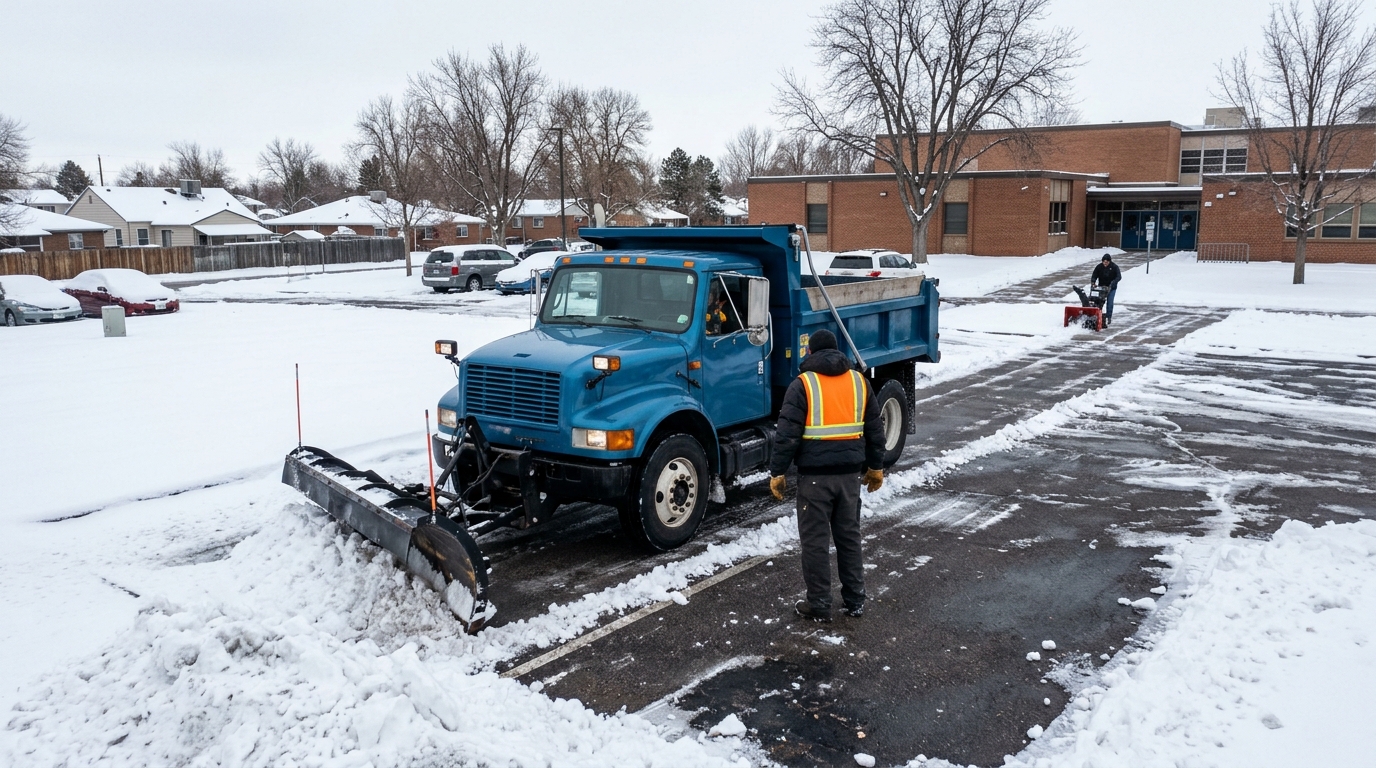
When a Front Range storm rolls in, the first question most property owners ask is simple: when will somebody actually show up? The honest answer depends less on how hard it is snowing than on where your provider’s trucks are coming from. A crew based on the far side of the metro has to cross I-25 or I-70 to reach you. In a real storm, those corridors become the slowest part of the job, and that delay lands directly in your Denver snow removal response times.
This is not a knock on anyone’s drivers. It is a routing problem, and it is predictable. Here is what actually happens when a snow contractor’s day starts with a highway crossing.
What Denver Snow Removal Response Times Actually Look Like
Published guides on the Denver market describe response times ranging from roughly 20 minutes to two days, depending on a provider’s capacity, the severity of the storm, and how far crews have to travel. That is a wide spread, and it is not random. A company with trucks staged inside the metro and routes that never touch a highway can start clearing quickly. A company dispatching from an outlying yard spends the opening hours of every storm just getting to the work.
Some variation is normal and unavoidable. Snow falls unevenly across the metro, and a property on the edge of a provider’s service area will always wait longer than one a few blocks from the yard. What matters is separating the delays you can plan around from the ones created by a routing decision that was made before the season even started.
If you are comparing providers, ask what their trucks do during a storm, not just what they promise on a contract. The answer tells you more about your response window than any advertised number.
The Highway Math That Eats Your Response Window
Highways are the fastest way across Denver on a dry Tuesday and the slowest way across it during a winter storm. Several things stack up at once.
- State highways get priority attention, but that attention is spread across an enormous network. A CDOT Denver metro snow update noted roughly 950 trucks working the region, with an average time to complete a snow route of about 2 to 3 hours and some routes running closer to 4 hours.
- Plowing does not equal bare pavement. Even a plowed and treated highway can stay snow packed through a long storm, and traffic moves accordingly.
- Passing a plow is now a Class A traffic offense in Colorado. Governor Jared Polis signed House Bill 19-1265 in 2019, which increased penalties for motorists who pass snowplows. That law exists for good reason, but it also means a contractor’s truck can end up stuck in a queue behind a plow train with no legal way around it.
- Traction is worse, speeds are lower, and a single spun out vehicle or stalled truck can turn a ten minute stretch into thirty.
There is a lesser known wrinkle too. CDOT limits snow removal operations to a 14 hour window, from 5 a.m. to 7 p.m., on highways with an annual average daily traffic of fewer than 1,000 vehicles, with some exceptions. Secondary routes simply do not get the same overnight attention as the interstates. A contractor planning to use those roads as a shortcut is planning on a road that may not be maintained the way they expect.
Put it together and the pattern is clear. A truck that spends an hour and a half crawling from one side of the metro to the other has an hour and a half less time to clear your driveway, sidewalk or parking lot.
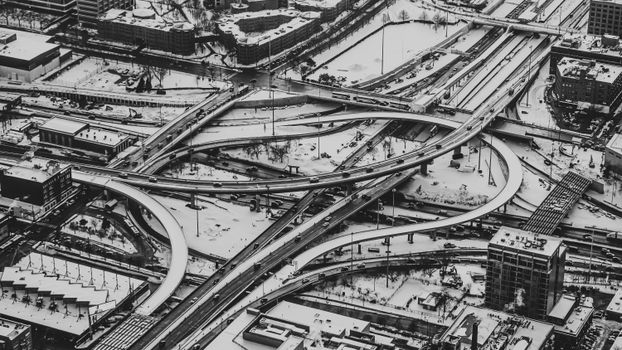
City Plows, State Plows and Contractor Trucks Share the Same Lanes
Denver’s own snow operation runs on its own timetable, and it does not coordinate with your contractor’s schedule. According to reporting on the city’s residential plowing, residential streets are typically plowed between 3 a.m. and 3 p.m., and residential plows make a single pass down the center of the street. That single center pass is a crucial detail. It clears a lane for travel, but it usually leaves the parking lanes, curb cuts and driveway aprons pushed full of snow for someone else to handle.
Emergency snow response in the city falls to Denver’s Department of Transportation and Infrastructure, whose workforce follows a response plan designed for normal winter conditions in Denver. That plan is built for typical storms, not for the biggest ones. After a storm that dropped nearly 2 feet of snow in January 2023, reporting noted that plowing crews were slow to respond, which is a reminder that even the city’s own fleet gets overwhelmed when a storm is severe enough.
Add contractor trucks, delivery vans and commuters to those same lanes and you get a system where everyone is waiting on everyone else. A company whose route crosses I-25 or I-70 voluntarily joins that queue. A company working surface streets inside Denver County largely avoids it.
What a Slow Route Costs a Denver Property Owner
The delay is not just inconvenient. Denver enforces sidewalk snow clearing through inspection, and the deadlines are tight. After receiving a notice, businesses have four hours and residences have 24 hours before the inspector’s re-check and a potential $150 fine. Commercial property owners and managers feel that four hour window most sharply, because a notice left mid morning can put them on the clock while their snow contractor is still sitting on a highway ramp.
For reference, Denver’s rules allow shoveling anytime during snowfall or within 24 hours after it stops for residences. Neighboring Boulder takes a similar approach, placing responsibility on the adjacent property owner, manager and tenant to clear a five foot path on curb ramps, also within 24 hours after it stops snowing. If you are unsure how a specific rule applies to your property, check with the relevant city department directly. Enforcement details can change, and the notice in your hand is the version that counts.
The practical takeaway is that a late crew does not just mean a messy walkway. It can mean a fine, a slip and fall exposure, or a tenant calling about an unplowed lot at 7 a.m.

Why Denver County Routing Changes the Equation
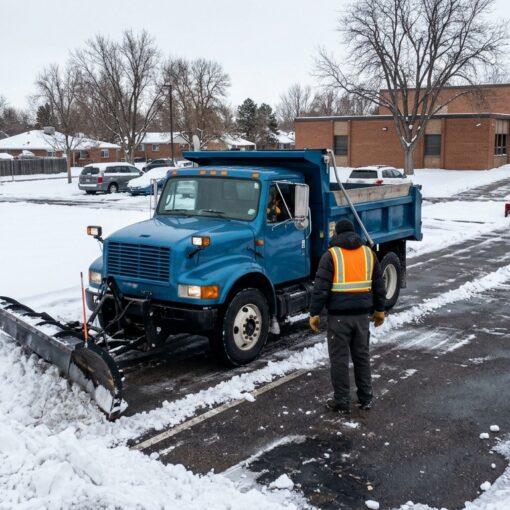
A hyper local routing model removes the most unpredictable variable in winter service: the highway. When trucks stay on Denver surface streets inside the county, they are not competing with plow trains, closures or interstate backups. They are driving a few miles between stops instead of crossing a metro area between them. That is the difference between a two to four hour response and an open ended wait.
Locally focused operations also tend to run on tighter accountability. GPS tracked, timestamped logs and before and after photo proof matter most when crews are close enough to hit predictable windows. A provider that has been family owned since 1974 and still works the same neighborhoods builds route knowledge that no dispatch algorithm can match, because the driver already knows which alley floods, which parking ramp ices first, and which sidewalk gets the drift.
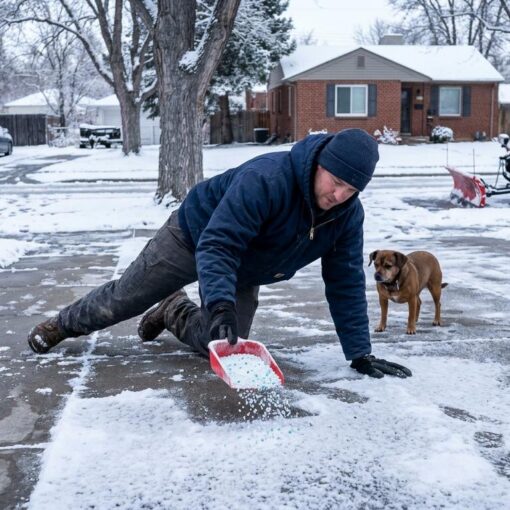
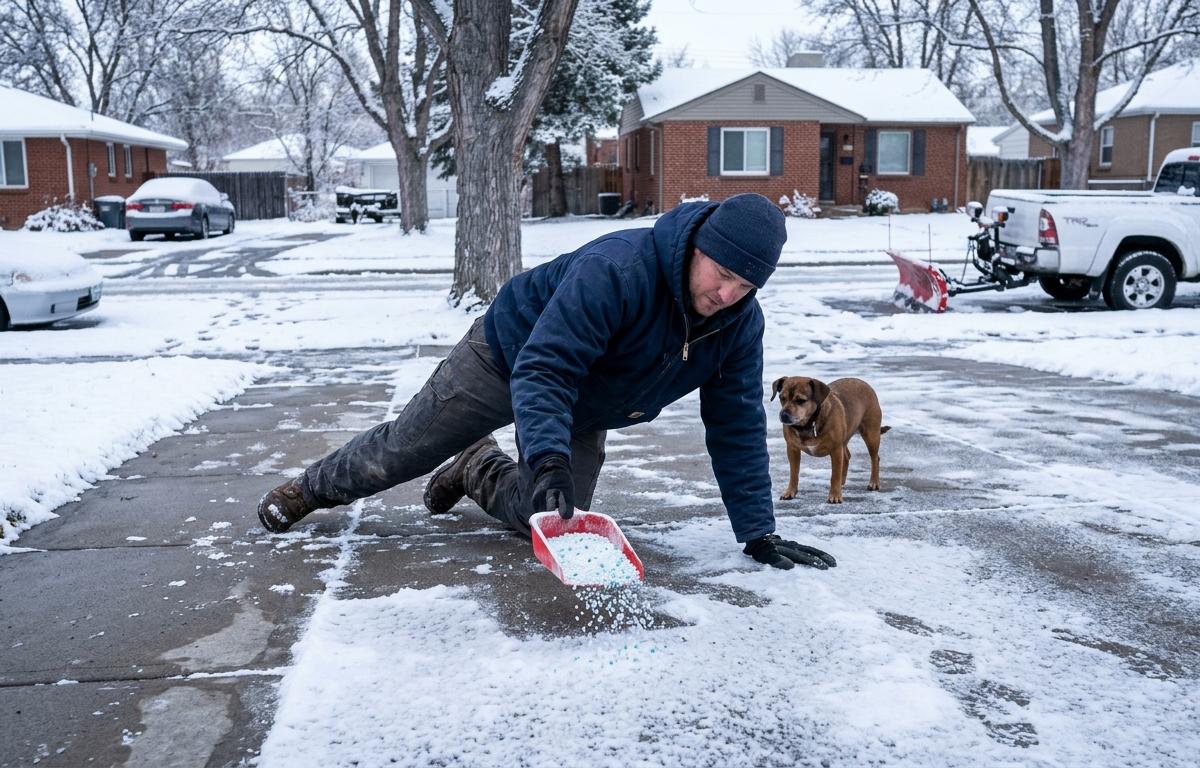
De-icing fits the same logic. Pet friendly Ice Slicer and non corrosive ice melt applied early prevent the hard pack that turns a routine push into an hours long scrape. Timing depends on the crew being nearby when the freezing rain starts, not on a truck that is still northbound.

How to Keep Your Response Time Short
You cannot control the weather, but you can control whether your property is on a route that works. A few things help.
- Ask where the trucks stage during a storm and which roads they use to reach your property.
- Confirm whether your provider crosses a highway to serve you. If the answer is yes, expect variability in severe storms.
- Sign a seasonal agreement before the first snow, so you are on the route map rather than a call back list.
- Clear access points beforehand. Snow piled in front of a gate or blocking a dumpster pad adds minutes to every visit.
- Request photo and GPS documentation so you can see when service actually happened, especially if you manage a property remotely.
- Know your own deadline. Commercial properties on a four hour clock should confirm their provider’s storm plan in writing.
None of this makes a storm easy. It does make the outcome predictable, which is usually what property owners actually want.
Frequently Asked Questions
How long should snow removal take in Denver?
It varies widely by provider. Market guides describe response windows from roughly 20 minutes to two days, depending on capacity, storm severity and travel distance. A locally routed Denver County provider typically targets a two to four hour window for scheduled service pushes. If a company cannot tell you what its normal storm window looks like, that vagueness is your answer.
Do snow removal companies have to use I-25 or I-70?
No. Plenty of Denver County properties can be reached entirely on surface streets without touching an interstate. Companies choose highway routes because they serve a wide service area. Narrowing that service area is a business decision, not a legal requirement, and it directly affects how fast crews reach your property during a storm.
What happens if my sidewalk is not cleared in time?
Denver enforces sidewalk clearing through inspection. After a property receives a notice, businesses have four hours and residences have 24 hours before the inspector’s re-check and a potential $150 fine. Because commercial deadlines are so short, a delayed crew can put a property manager on the clock before the work even starts. Verify current rules with the city.
Why do some snow removal companies take two days?
Usually capacity and distance, not laziness. Severe storms create more calls than any fleet can handle at once, and long travel distances between stops compound the problem. When a storm dropped nearly 2 feet of snow in January 2023, reporting noted that even city plowing crews were slow to respond. Smaller, denser routes recover faster.
Does de-icing help response times?
Yes, when it happens early. Ice melt and de-icing products applied before or during the freeze prevent hard pack and bonded ice, which take far longer to scrape than fresh snow. Pet friendly Ice Slicer and non corrosive options handle that job without damaging concrete, landscaping or paws, and they work best when the crew is already nearby.