What "Pet-Safe" Means on a Denver Ice Melt Bag
Here’s the uncomfortable starting point for anyone shopping for a pet-safe de-icer for Denver driveways: "pet safe" is a marketing phrase, not a regulated standard. No agency certifies it, and a bag can carry the claim with no independent testing behind it. Pet Poison Helpline has warned that every type of ice melt can be hazardous, including products sold as pet friendly.
That doesn’t make the label meaningless. It usually signals a different ingredient mix, most often urea or magnesium chloride in place of the harsher salts. The ASPCA describes pet-friendly versions this way. Read it as "lower risk," not "risk-free." Some manufacturers also say independent toxicologists have confirmed their product is safe under normal use, but we found no independent source backing that up, so treat it as a sales claim.
For Denver households, this changes how you shop. Don’t trust the front of the bag. Flip it over and read the ingredient list. Then pair a better ingredient with better habits: shovel first, apply sparingly, and store the product where pets can’t reach it. For a closer look at how paver surfaces fit in, see our guide to safe ice melt for pavers in Denver.
Ingredients to Look For (and Avoid) on the Label
The ASPCA lists the common ice melt ingredients as sodium, potassium, calcium and magnesium chloride, noting that pet-friendly versions typically use urea or magnesium chloride instead. Within that group, the ingredients differ in how they affect a pet that licks a paw or swallows a few granules.
Urea sits at the gentle end. ASPCA Poison Control has described it as the least irritating to the stomach of the common de-icer ingredients, though no ice melt is fully safe if a dog eats enough of it. Urea is also the weakest melter, which matters in a cold snap (more on that below).
Calcium salts are the main irritant worry. Pet Poison Helpline calls them the most severe irritants among ice melt ingredients, and the ASPCA says calcium chloride can cause mouth ulcers if eaten. If a bag lists calcium chloride first and also wears a pet-safe badge, read the fine print twice.
Magnesium chloride is the usual middle ground, and the one most "pet-safe" bags rely on. It’s gentler on paws than the harshest options but not harmless, so sparing use still applies. For a deeper comparison of the two most common choices, our breakdown of salt vs magnesium chloride for Denver snow removal walks through the trade-offs. You can also browse pet-friendly, non-corrosive ice melt options for Denver walkways.
A few label habits help:
- Look for the active ingredient by name, not just "pet safe" or "eco friendly."
- Be wary of vague blends that don’t list percentages.
- Check the safety data sheet when the label is thin; manufacturers publish them.
Denver Cold Snaps: Which De-icer Works Below Zero
Denver winters swing hard. A sunny 45-degree afternoon can drop to single digits overnight, and that freeze-thaw cycle is what turns slush into black ice on a driveway. The gentlest ingredients aren’t always the strongest, so match the product to the temperature.
According to one vendor’s table, calcium magnesium acetate works down to roughly 20°F, magnesium chloride to about -13°F, and calcium chloride to about -25°F. Individual products vary; one pet-safe magnesium chloride listing claims effectiveness at -15°F. Treat these as ballpark figures from sellers, not guarantees, and check the bag for the manufacturer’s stated limit.
The trade-off is real. One roundup advises calcium chloride for maximum melt performance in harsh winters, or a pet-focused product if you’re willing to give up some extreme-cold effectiveness. For most Denver driveways, magnesium chloride covers the typical range. A true deep freeze is the moment to change tactics rather than pile on more product.
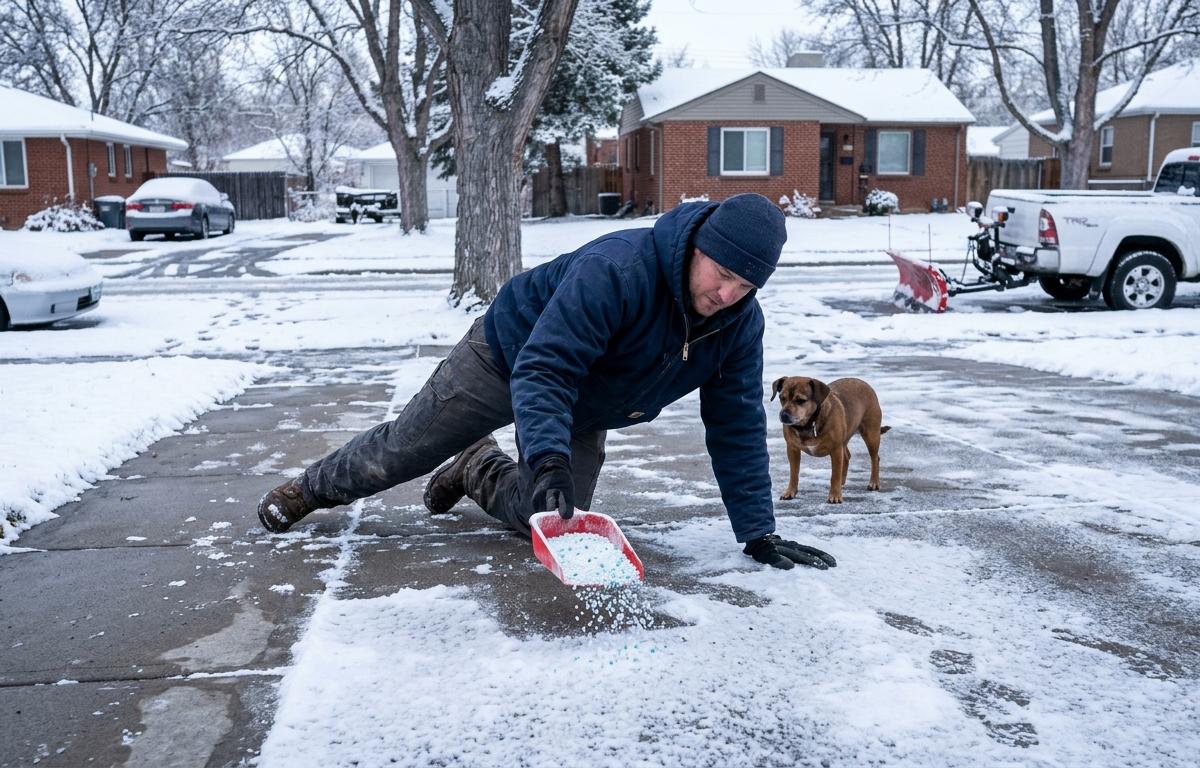
Below the effective range of your de-icer, go mechanical. Shovel thoroughly, then add traction with sand if needed. The best method is to shovel first, then apply a minimal amount of product to help break the bond between ice and pavement. Less product means less exposure for paws and less runoff onto lawns.
Protecting New Concrete and Paws
Two things deserve protection on a Denver driveway: the surface and the animals walking across it.
Start with the concrete. Vendor sources advise that new concrete under 12 months old shouldn’t get any chemical ice melt, and another retail guide says concrete less than a year old is at greatest risk of damage from magnesium chloride. Part of the problem is mechanical. A USPTO patent document notes that spalling can be accelerated by ice melters because they increase freeze/thaw cycles. If your driveway or walkway was poured recently, lean on shoveling and sand rather than chemicals.
Whether magnesium chloride harms concrete is genuinely disputed. One source calls it safer than sodium chloride but still capable of damage over time, while a vendor claims the opposite about magnesium specifically. Rather than pick a side, use it sparingly on any surface and keep it off concrete that’s brand new. Pavers have their own concerns, covered in our paver-safe ice melt guide.
Now the paws. The ASPCA says paw wax or doggie booties provide an excellent barrier against ice melt. Beyond that, a few habits go a long way:
- Wipe paws and bellies after walks on treated surfaces.
- Keep any ice melt in sealed, pet-proof containers.
- Sweep up leftover granules once the ice has melted.
These steps cost almost nothing and lower the chance a pet ingests residue while grooming.
What to Do If Your Pet Eats Ice Melt
The most common result when a pet eats ice melt is stomach upset, vomiting and diarrhea, according to the ASPCA. Mild cases often come down to a dog licking its paws after a walk, but a larger amount can be more serious, and no ice melt is fully safe if enough is eaten.
If you suspect your pet swallowed ice melt, act quickly and calmly:
- Remove the pet from the area and take away any remaining product.
- Wipe or rinse paws and mouth to remove residue.
- Note the product name, the ingredients on the bag, and roughly how much was eaten.
- Call your veterinarian or a pet poison hotline right away.
The ASPCA Animal Poison Control Center number reported in pet-health sources is 888-426-4435. Confirm it on the ASPCA website before you save it, since contact details change and a consultation fee may apply. Keep the bag or a photo of the label handy, because the ingredient list tells the responder what they’re dealing with.
Don’t wait for symptoms to worsen before calling, especially with small animals, puppies, or any pet that ate a visible amount. Prevention is simpler than treatment: sealed storage, minimal application, and a quick paw wipe after every winter walk.
Documenting Safe De-icing for HOAs and Landlords
For boards and landlords, safe de-icing is a liability question as much as a product choice. Shared driveways, entries and walkways see residents with dogs, cats and children, and an injury or a sick pet can quickly become a dispute. Writing down what was applied, where and when protects everyone.
Start with a written scope. Specify the product type, an application rate expressed as "minimal, after shoveling," and any surfaces that are off limits, such as new concrete poured within the past year. Spell out that pet-safe wording is a lower-risk goal, not a guarantee, so expectations stay realistic. Our guide to condo association snow removal contracts in Denver covers how to structure scope and responsibilities, and our piece on residential snow removal for Denver landlords and rentals addresses the rental side.
Then insist on proof. A crew that logs each visit gives you a record to point to if a resident questions whether a walkway was treated or which product was used. At Denver Snow Removal, every visit is backed by GPS-tracked trucks and photo documentation, delivered by a licensed, insured W-2 crew rather than subcontractors. That paper trail turns "we think it was done" into "here’s the timestamped photo."
Finally, confirm who is responsible for what. If you’re unsure where the city’s duty ends and the owner’s begins, see whether the City of Denver is responsible for sidewalks and the Denver sidewalk shoveling deadline rules. Clear scope, careful product choice and documented visits make a pet-safe de-icer for Denver driveways something you can defend, not just something you hope works.