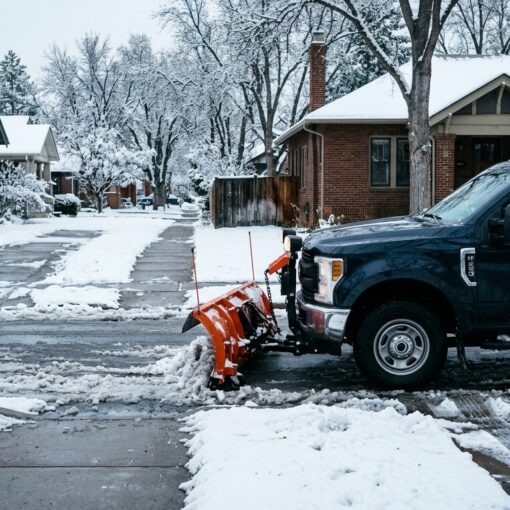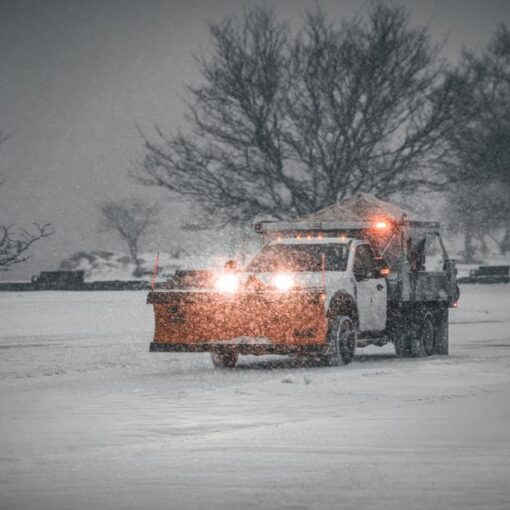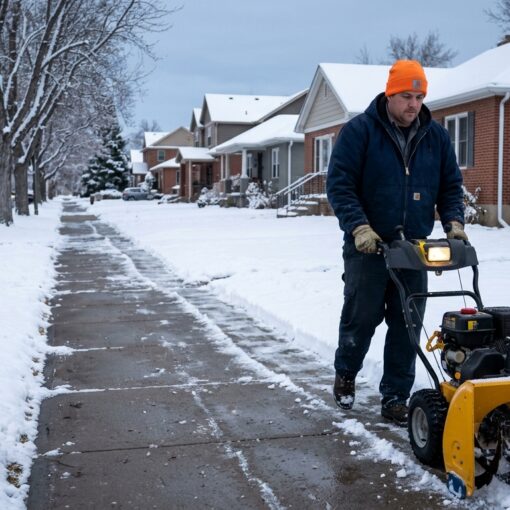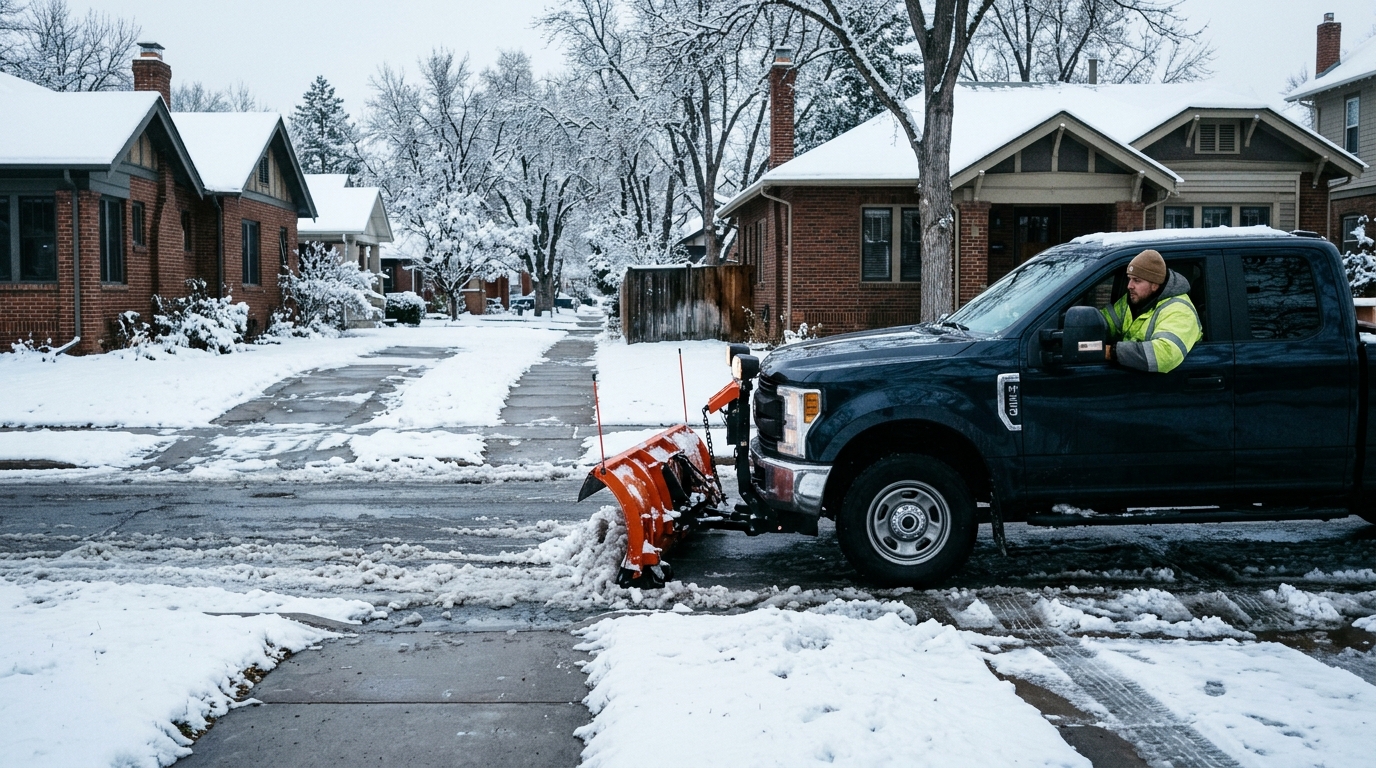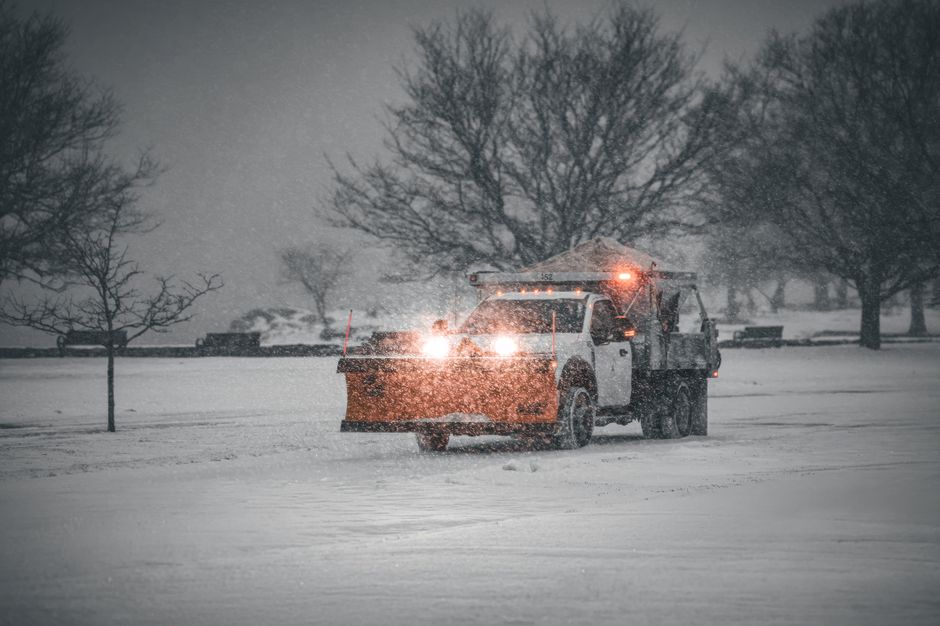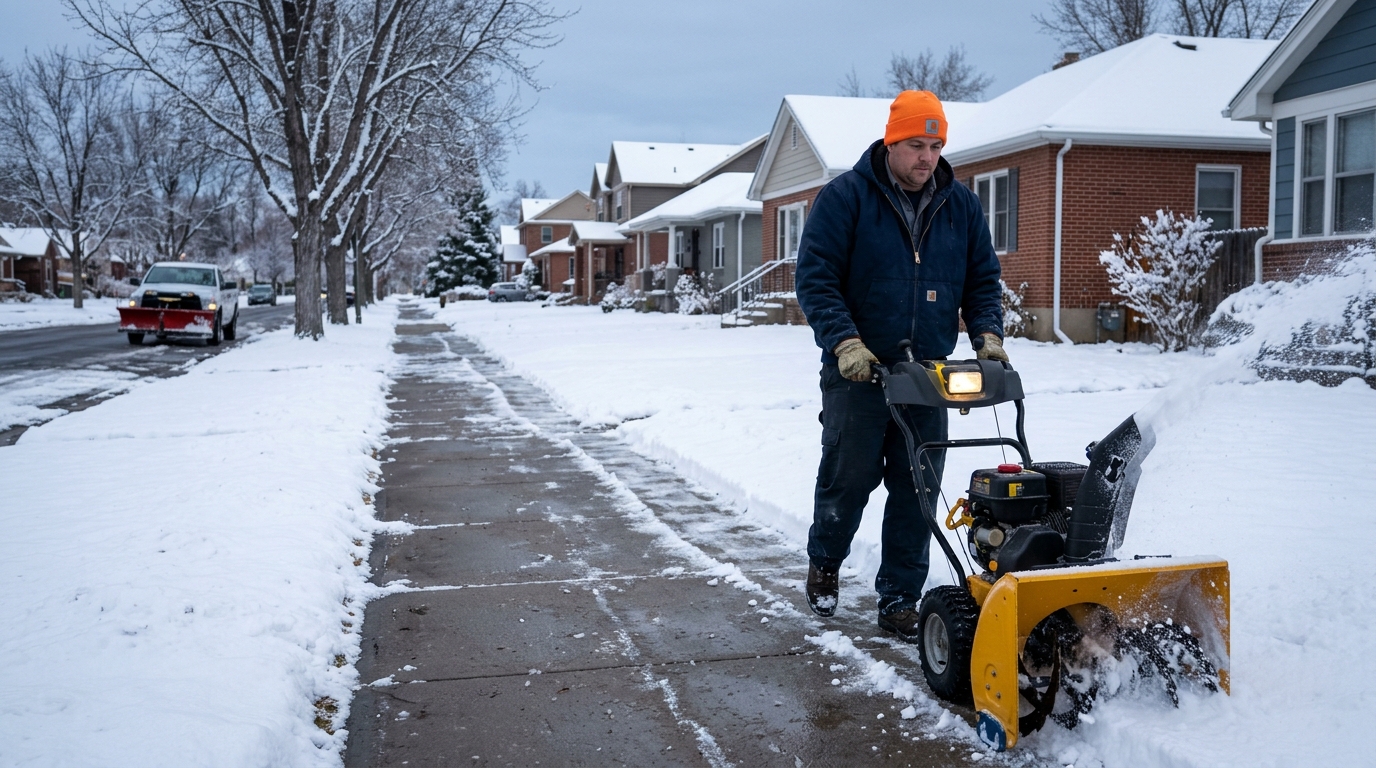
A two to four hour response window is the part of snow removal that customers notice first, and it is also the part most people misunderstand. It is not a promise that a truck will be in your driveway exactly 90 minutes after the first flake. It is an operating system: a set of snow triggers, route priorities, equipment assignments, and dispatch rules that get crews to Denver properties while the storm is still moving through. When that system runs well, your driveway, sidewalk, or parking lot is cleared long before a storm ends. When it runs poorly, you are the person shoveling at midnight.
Denver Snow Removal at denversnow.com, operated by MileHiSnow, has run this kind of routing for 50 years as a family-owned Denver company since 1974. Here is a plain look at how a 2 to 4 hour window is built, what starts the clock, and what can stretch it.
What a 2 to 4 Hour Response Window Really Means
A response window is the amount of time between a storm hitting a defined trigger point and a crew arriving at your property. In Denver County, that trigger is usually measurable accumulation, not a phone call. Crews are staged before the snow starts, so the clock is already running when the first inch lands.
- The window covers arrival and completion of the first pass, not just arrival.
- Properties are worked in route order, which is why your neighbor two blocks away may see a truck 20 minutes before you do.
- Long storms mean repeat visits. A driveway cleared at 4 inches may need a second pass at 8 inches.
- De-icing is often folded into the same visit so ice does not refreeze after clearing.
Why Response Windows Beat Fixed Appointment Times
Denver snow does not respect a schedule. A storm that was forecast for 2 inches can drop 6, and a storm that stalls over the Front Range can keep going for a day and a half. Appointment-based scheduling collapses under those conditions because every missed slot pushes the next one later.
Response-window routing works differently. Dispatchers hold a queue of properties and work it in priority order, so a storm that runs long delays the back of the queue instead of breaking the whole day. It also lets crews keep circling back through the same neighborhoods, which is how a client on a Denver review site described one local operator showing up early every time it snowed and sometimes returning the same day when snow continued.
How Snow Triggers and Dispatch Actually Work
Snow Triggers
A trigger is the condition that moves your property from “waiting” to “active.” Common triggers include a set accumulation depth, a temperature threshold that signals ice rather than snow, or a time-of-day rule for commercial lots that need to be open before staff arrive. The exact trigger is set when the contract is written, so both sides know what counts as a service event.
Dispatch and Route Building
Once triggers fire, dispatch builds routes around geography rather than around who called first. Denver County-only routing is the reason this works. Because crews stay on Denver surface streets inside Denver County and avoid highway travel during blizzard conditions, they keep moving while out-of-area trucks sit in traffic on I-25 or I-70. A tight service radius means more properties per hour and shorter gaps between visits.
First Pass and Cleanup Pass
The first pass opens the property: driveway, walkway, porch, stairs, or the main aisles of a parking lot. A cleanup pass follows later in the storm or after it ends, clearing what fell in the meantime and re-treating surfaces. Skipping the cleanup pass is the most common reason a property looks cleared at 6 a.m. and dangerous at 9 a.m.
Route Density and the Denver County Advantage
Response time is mostly a math problem. The more properties a crew can reach per hour, the shorter the window for everyone on that route. Dense routing inside City and County of Denver, Glendale, Edgewater, Englewood, East Lakewood, and West Aurora within 10 miles of downtown Denver is what makes a 2 to 4 hour window realistic instead of aspirational.
That also explains a hard boundary. This service area does not include Brighton, Centennial, Parker, Castle Rock, Longmont, or Commerce City north. Those routes require highway travel during storms, which is exactly the kind of trip that turns a 3 hour window into a 7 hour one. If you are outside the Denver County radius, verify coverage with the company before you sign anything.
Residential and Commercial Response Priorities
| Property type | Typical priority | What gets cleared |
|---|---|---|
| Residential | Route order within the response window | Driveways, sidewalks, porches, stairs |
| Commercial | Overnight and pre-opening, often a 4 a.m. lot priority | Parking lots, walkways, entrances |
| HOA | Common areas and shared walkways | Paths, entries, shared parking |
| Emergency or same-day | Dispatched as crews free up | Whatever is blocking safe access |
Commercial and HOA properties usually jump the queue overnight because a parking lot that is not clear at 6 a.m. costs a business real money. Residential routes tend to run in geographic clusters, which is why homeowners on the same block often see the same crew.
Photo Proof, GPS Tracking, and Timestamped Logs
A response window is only useful if you can verify it happened. Photo proof before and after service, GPS-tracked vehicle locations, and timestamped logs turn “we were there” into a record you can check from your phone. For property managers, that record also settles the most common winter dispute: whether a slip-and-fall happened on a surface that was serviced and treated, or on one that was missed.
Homeowners get the same benefit in a simpler form. You can see when the crew arrived, what was cleared, and whether ice melt was applied, without standing at a window at 5 a.m. wondering.

Where De-Icing Fits in the Window
Clearing snow is half the job. Denver’s freeze-thaw cycles turn melted snow into ice overnight, so de-icing and ice melt are usually applied during the same visit rather than as a separate appointment. The product matters around pets and landscaping, and a pet-friendly, non-corrosive ice melt such as Ice Slicer limits damage to paws, concrete, and plants compared with harsher alternatives.
Timing matters too. Ice melt applied before a freeze sets up better than product scattered on top of an established ice sheet, so crews often treat during the storm rather than waiting for it to end.
What Can Slow a Response Window Down
Honest operators will tell you the window is a target, not a guarantee. Several things can stretch it:
- Storm severity and duration, especially multi-day events that require repeat passes.
- Parked cars and blocked driveways that prevent equipment from reaching surfaces.
- Drifting snow that refills an area minutes after it is cleared.
- Windrows left behind by city plows at the end of a driveway or lot entrance.
- Ice storms, which slow every crew because surfaces must be treated as well as cleared.
Denver publishes an online plow tracker that shows where city equipment is working, which is useful context when your street has not been touched yet. For emergencies, call 911. Routine city snow questions should go through the city’s own published channels rather than a private contractor.
Per-Push and Seasonal Pricing, and How They Fit the Window
Two pricing models are common in Denver County. Per-push pricing charges for each service visit, with typical residential ranges of $35 to $85 per push. Seasonal contracts charge a flat rate for the winter and cover a set number of visits and triggers. Per-push suits homeowners who want to pay only when it snows. Seasonal contracts suit HOAs and commercial properties that need predictable budgets and guaranteed priority.
Rates vary by property size, access, surface area, and scope, so treat any range as a starting point and confirm your specific quote in writing.
How to Get the Fastest Response at Your Property
A few small habits make a measurable difference once crews are on route:
- Keep the driveway and walkway approach clear of cars, bins, and equipment.
- Mark the edges of lawns and beds before winter so crews know where hard surfaces end.
- Clear a path to gates, meters, and side entrances that need service.
- Give the company a current phone number and gate code if access is controlled.
- Report missed areas the same day, while the crew is still in the neighborhood.
Do those five things and the 2 to 4 hour window becomes easier to hit, because the crew spends its time clearing instead of problem-solving access.
Frequently Asked Questions
What does a 2 to 4 hour response window mean?
It is the time between a storm meeting the agreed snow trigger and a crew completing the first pass at your property. The clock starts with the weather, not with your phone call, which is why crews are staged before snow begins. Cleanup passes during longer storms are separate visits inside the same storm event.
Does the clock start when I call?
No. For contracted properties, the clock starts when accumulation or ice conditions hit the trigger written into your agreement. Same-day and emergency requests are handled differently and dispatched as crews free up, so a mid-storm call may wait behind properties already on the active route.
Which areas of Denver do you actually serve?
Service runs inside City and County of Denver, Glendale, Edgewater, Englewood, East Lakewood, and West Aurora within 10 miles of downtown Denver. Areas requiring highway travel during blizzards, including Brighton, Centennial, Parker, Castle Rock, Longmont, and Commerce City north, are outside the service area.
How is commercial snow removal different from residential?
Commercial and HOA work runs on opening-hour deadlines, with parking lots, walkways, and entrances often cleared around 4 a.m. so the property is safe before staff and tenants arrive. Residential routes focus on driveways, sidewalks, porches, and stairs, worked in geographic clusters. Both use the same response window and proof-of-service records.
What proof do I get that service happened?
You receive photo proof taken before and after service, GPS-tracked vehicle records, and timestamped logs. For homeowners that means a quick confirmation on your phone. For property managers it creates a documented service history that shows when surfaces were cleared and treated, which matters if a slip or fall is ever reported.