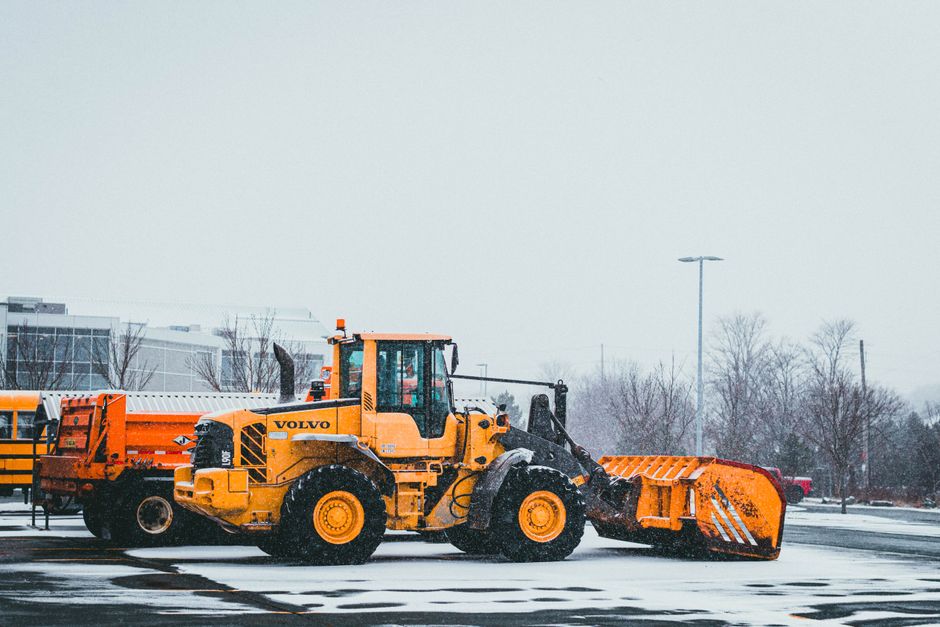
Denver HOAs should hire a Denver-based snow removal company with licensed and insured W-2 crews, a 4:00 AM zero-tolerance start, a certificate of insurance on file, 20-100 stall lot experience, GPS tracking, and timestamped photo proof after every push. The HOA, not the City of Denver, is legally responsible for clearing private lots, walks, entries, adjacent city sidewalks, ADA ramps, and bus stops. Photo logs are the difference between a cleared lot and a liability claim.
Table of Contents
- Who is legally responsible for snow removal at a Denver HOA?
- What should a Denver HOA board verify before signing a snow contract?
- What does 20-100 stall snow removal actually require in Denver?
- How much does HOA snow removal cost in Denver in 2026?
- What are the red flags Denver HOAs fire contractors over?
- How does Denver Snow Removal handle HOA snow removal with photo proof?
- Which Denver metro areas get the fastest HOA snow response?
- Key Takeaways
- References
Who is legally responsible for snow removal at a Denver HOA?
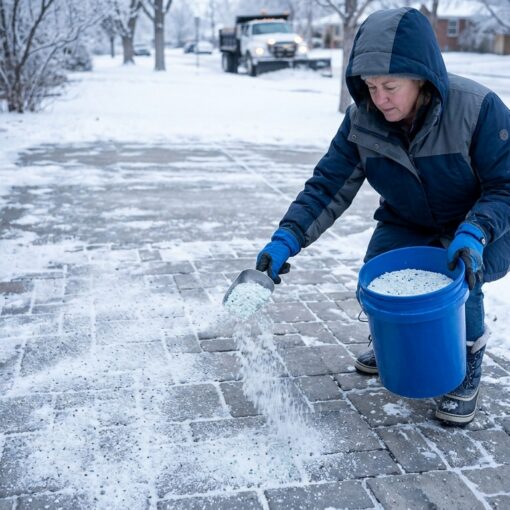
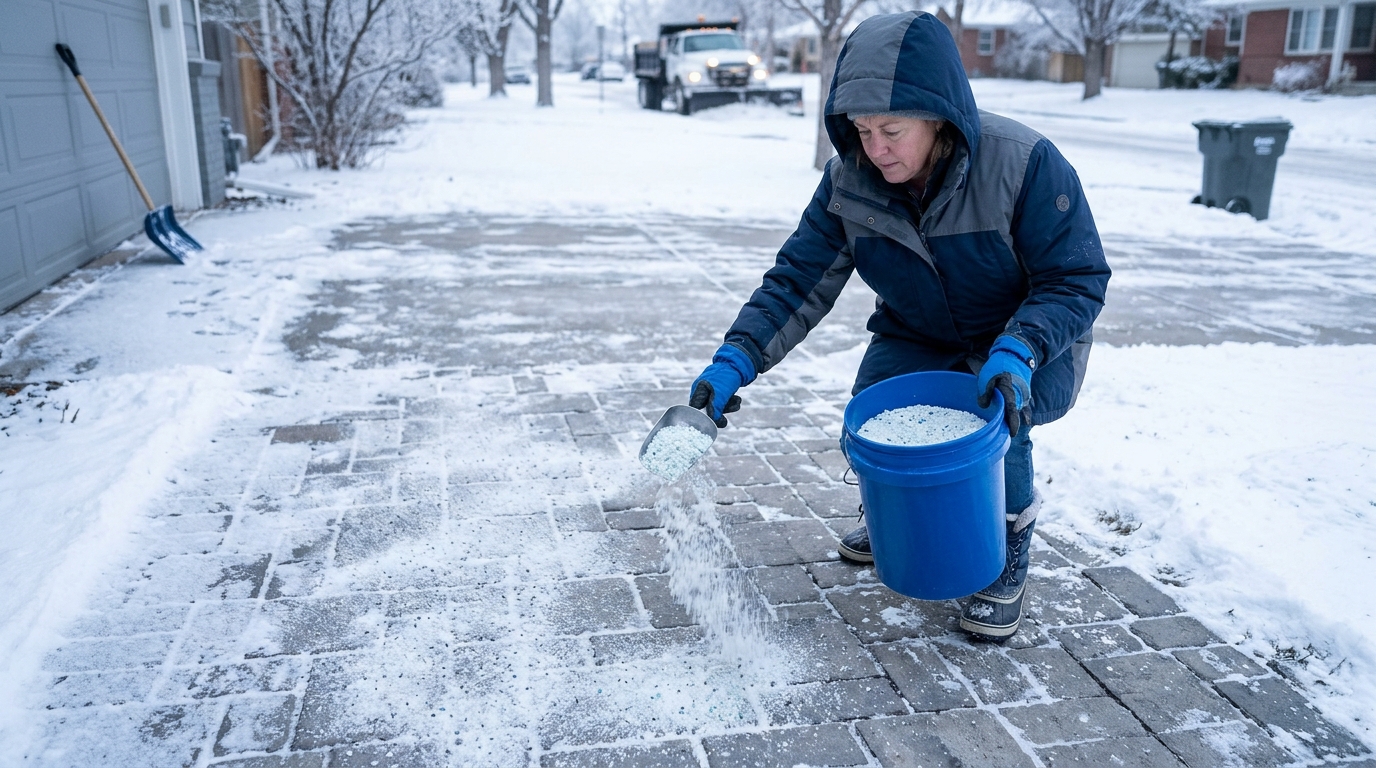
The HOA is legally responsible for snow removal on private lots, walkways, entries, adjacent city sidewalks, ADA ramps, and bus stops. Denver's city plows handle main streets and one center pass on residential streets only. Everything else on HOA property falls to the association.
Denver ordinance requires adjacent sidewalks, ADA ramps, and bus stops cleared within 24 hours of a storm. Zero-tolerance HOA boards set a 6:00 AM standard instead. That means crews must start by 4:00 AM to have lots and walks clear before residents leave for work.

HOAs are responsible for common areas and amenities, according to FirstService Residential. An HOA can be held liable when snow and ice in those common areas cause injury. The legal exposure is not theoretical.
Falls are the second leading cause of unintentional injury deaths globally, according to the World Health Organization, cited by FirstService Residential. The WHO estimates 37.3 million falls yearly are severe enough to require medical attention. A Denver HOA board carries real liability stakes with every storm.
HOA fees fund the snow contract, so the board answers to homeowners when a walk ices over. A homeowner who slips on an uncleared HOA sidewalk will not call the city. The board gets the call, the claim, and the repair bill.
What should a Denver HOA board verify before signing a snow contract?
A Denver HOA board must verify six items before signing a snow contract: COI and workers' comp on file, W-2 crews, 24/7 dispatch, a defined trigger, de-icing included, and timestamped photo logs. Skipping any one of these leaves the association exposed.
Certificate of insurance and workers' comp must be on file before the first storm, not after. A contractor who cannot produce a current COI the day you sign is not ready for a Denver winter. Workers' comp protects the HOA from claims if a crew member is injured on the property.

W-2 crews matter more than most boards realize. Subcontractors and app-based gig workers mean inconsistent labor and no accountability. You need to know exactly who is on the property at 4:00 AM, and W-2 employees give the contractor control over training, timing, and standards.
24/7 dispatch with a 2-hour response commitment inside I-470 is the operational baseline for Denver HOAs. Snow does not fall on a schedule. A board needs a live person answering at 2:00 AM, not a voicemail.
Zero-tolerance trigger means the crew plows at any accumulation. A 1-inch or 2-inch trigger means the lot sits under snow until the threshold is met. Know which one you bought, because the difference is visible to every resident.
De-icing should be included in the base rate, not billed as an add-on every storm. Timestamped photo logs after every push give the HOA liability defense if a slip-and-fall claim lands. Per-push and seasonal pricing structures both exist in the market, according to Malczewski's Lawn Care & Snow Removal, so boards should compare what each structure includes.
What does 20-100 stall snow removal actually require in Denver?
A 20-40 stall lot typically requires a skid steer plus hand shovels. A 40-100 stall lot requires a plow truck, a skid steer, and a dedicated sidewalk crew. The equipment mix changes with stall count, and boards should not accept a one-size-fits-all bid.
The scope must include the lot, walks, mailboxes, dumpster pads, and fire lanes, not just the parking rows. A plow that clears stalls but leaves the dumpster pad buried creates a new hazard. Fire lanes blocked by snow are a code violation and a liability risk.
Sidewalk crews handle ADA ramps and bus stops, which the city does not clear for the HOA. Denver ordinance puts adjacent sidewalks and ramps on the property owner, and for an HOA that means the association. Bus stops adjacent to HOA property fall into the same bucket.
Vendors quote per push or as a seasonal flat price. Seasonal pricing may include a snowfall cap before reverting to per-push rates, according to Malczewski's Lawn Care & Snow Removal. Boards should ask what happens after the cap is reached.
HOAs typically call in a plow after a certain amount of snow has fallen, like two inches, or when roads and sidewalks become icy and dangerous, according to FirstService Residential. Zero-tolerance contracts remove that judgment call entirely.
How much does HOA snow removal cost in Denver in 2026?
Seasonal HOA contracts in Denver run roughly $3,500 to $12,000 depending on stall count and trigger. Per-push pricing runs roughly $350 to $900 per visit for HOA-sized lots. These are Denver market numbers for 2026, not national averages.
Lock pricing by September. October brings price jumps as contractors fill their routes. November often means no availability at any price, because Denver snow contractors cap their client lists before the first storm.
National snow removal pricing averages around $80 per service, with a typical range of $65 to $100, according to Thumbtack. That number is useful only as a floor reference. A Denver HOA lot is a commercial-scale job, not a residential driveway.
Watch for service fees and deposits buried in the payment terms. Some contractors quote a clean per-push rate and then add dispatch fees, fuel surcharges, or salt charges on the invoice. Snow removal costs differ by region, time of year, amount of snow, and service rates, according to FirstService Residential.
What are the red flags Denver HOAs fire contractors over?
Denver HOAs fire snow contractors over six specific failures: no 4:00 AM start, no photo proof, subcontracted labor, missing COI, no sidewalk clearing, and "best effort" contract language. Each one produces resident complaints and board liability.
No 4:00 AM start is the fastest way to lose an HOA contract. If the lot is not clear before residents leave for work, the board gets the calls. A contractor who starts at 7:00 AM has already failed the zero-tolerance standard.
No photo proof after each push leaves the HOA exposed in a slip-and-fall claim. Without timestamped before-and-after images, the board cannot prove the lot was cleared. The claim becomes a word-against-word dispute.
Subcontracted or app-based labor means no consistent crew and no accountability. The person who plowed last week may not be the person who plows next week. HOAs need the same trained crew on the property every storm.
No COI or workers' comp on file is a non-negotiable red flag. No sidewalk, ADA ramp, or bus stop clearing is another, because Denver ordinance puts those areas on the HOA. A contractor who only plows the lot is doing half the job.
"Best effort" contract language instead of a defined trigger and response time is a red flag. Best effort means the contractor decides what is good enough. A real contract defines the trigger, the start time, and the completion standard.
Documented damage disputes are a firing offense. One HOA customer reported a plow dumping snow in a yard and damaging grass, with repeated requests ignored unless the homeowner stood outside watching, according to JustAnswer. That pattern of behavior is exactly what Denver boards should screen out.
How does Denver Snow Removal handle HOA snow removal with photo proof?
Denver Snow Removal handles HOA snow removal with W-2 crews, a 4:00 AM start, GPS-tracked trucks, and timestamped photo proof after every push. The company has operated in Denver since 1974 and runs 24/7 dispatch for storm response.
Residential Driveway & Walkway Snow Removal covers driveways, walkways, porches, and city sidewalks with W-2 crews, a 2-hour core response inside I-470, GPS tracking, and photo proof after every push. Pricing starts at $89 per visit.
Commercial and HOA lot service covers 20-100 stalls with a 4:00 AM start, COI, and photo logs. The service includes lot clearing, walkways, ADA ramps, dumpster pads, and fire lanes.
Seasonal contracts lock pricing, include revisits, and can be canceled anytime. Portal access gives HOA boards completion archives, logs, and COI on demand. GPS-tracked trucks provide live ETA for every service visit.
Which Denver metro areas get the fastest HOA snow response?
The fastest HOA snow response covers Denver, Lakewood, Littleton, Arvada, Thornton, and Aurora within a 10-mile core. Inside I-470 gets the 2-hour core response commitment. Outside the core, response times stretch.
Boards should confirm coverage before signing any contract. A contractor based in Castle Rock or Boulder will not hit a 4:00 AM start in central Denver during a storm. Local routing matters.
Denver's neighborhood snow patterns vary by elevation and side of town. A crew that knows the difference between a Highlands side street and a DTC lot will route more efficiently than a metro-wide dispatcher working from a map.
Key Takeaways
- In Denver, the HOA, not the city, is responsible for clearing private lots, walks, entries, adjacent sidewalks, ADA ramps, and bus stops.
- Denver's zero-tolerance HOA standard means lots clear before 6:00 AM, which requires a 4:00 AM crew start.
- A COI, workers' comp, W-2 crews, 24/7 dispatch, and a 2-hour inside-I-470 response are the minimum verification items before signing.
- Denver HOA seasonal contracts run about $3,500 to $12,000; per-push runs about $350 to $900.
- Lock seasonal pricing by September, because October prices jump and November availability disappears.
- Timestamped before-and-after photo proof after every push is the HOA's defense in a slip-and-fall claim.
- Denver Snow Removal has served Denver since 1974 with W-2 crews, GPS-tracked trucks, and photo proof on every push.