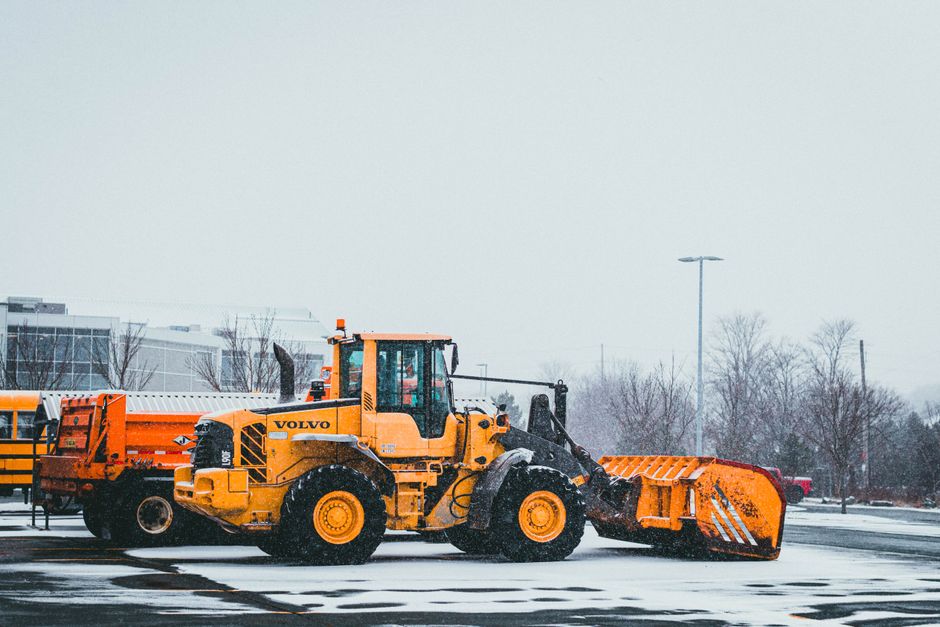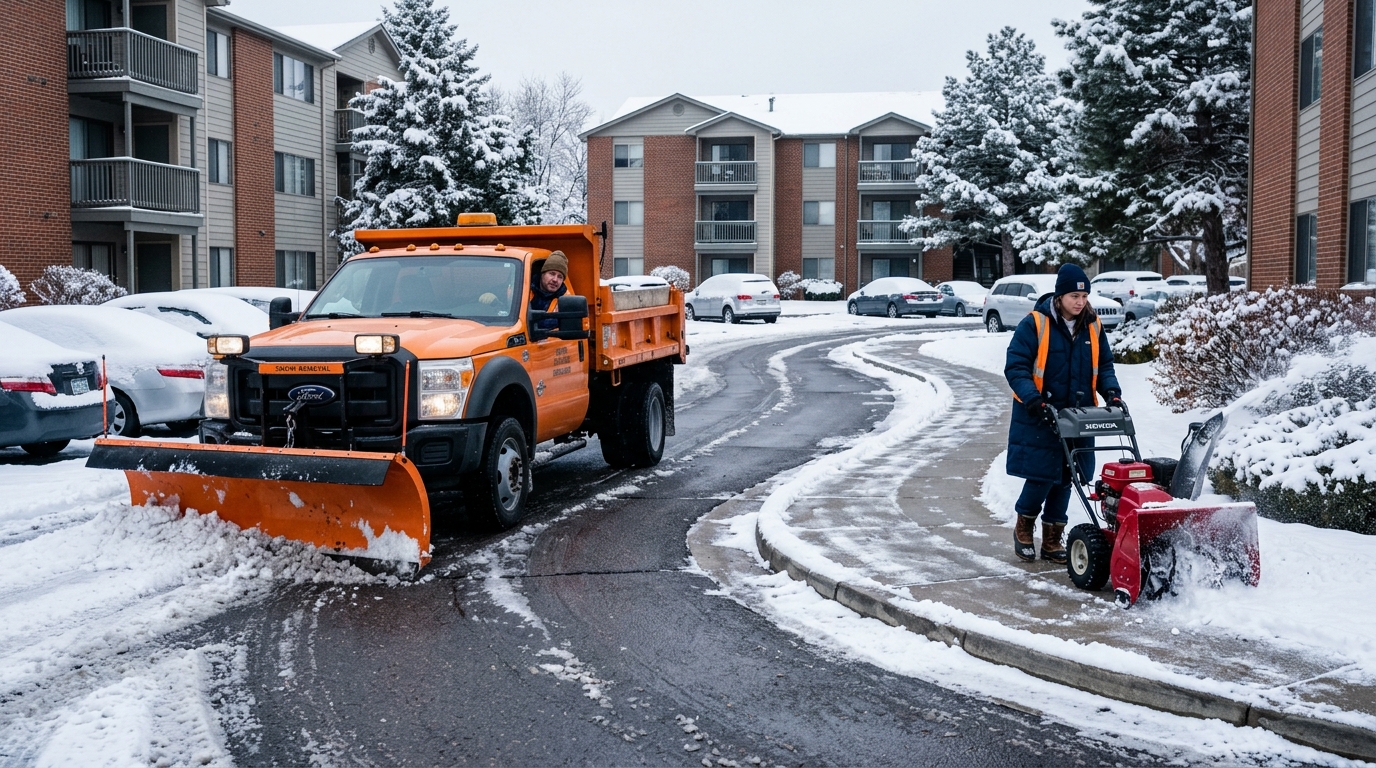

Owning a rental in Denver means owning a snow problem you do not physically live next to. A storm rolls through overnight, your tenant wakes up to a buried driveway, and you are either on the other side of town, out of state, or already at work. Residential snow removal services exist for exactly that gap. Instead of you driving over with a shovel at 6 a.m., a routed crew clears the driveway, sidewalks, porch, and stairs, spreads ice melt where it is needed, and sends you timestamped proof that it happened.
That last part matters more than most landlords expect. Snow removal for rentals is not really about the snow. It is about response time, documentation, and making sure nobody slips on a walkway you are responsible for.
Why rental properties need a different snow plan than owner occupied homes
If you live in the house, you shovel when you get around to it. If you rent it out, the timeline belongs to someone else. Your tenant is the one who has to get to work, get the kids to school, or get a delivery driver up the driveway. They are also the one who will call you when nothing has been cleared.
Denver snow often arrives overnight and can be heavy and wet, which makes porches and stairs slick quickly. A homeowner can wait until the sun comes out. A landlord usually cannot, because tenant safety, access for vehicles, and mail and package delivery all depend on the property being passable. That is why many Denver landlords treat snow removal as a fixed part of the winter operating budget rather than an occasional favor.
Denver property owners should confirm current sidewalk clearing expectations with the City and County of Denver, since local rules and enforcement can change. What does not change is the practical reality: an uncleared walkway is the most common source of winter complaints from tenants.
What residential snow removal services actually clear
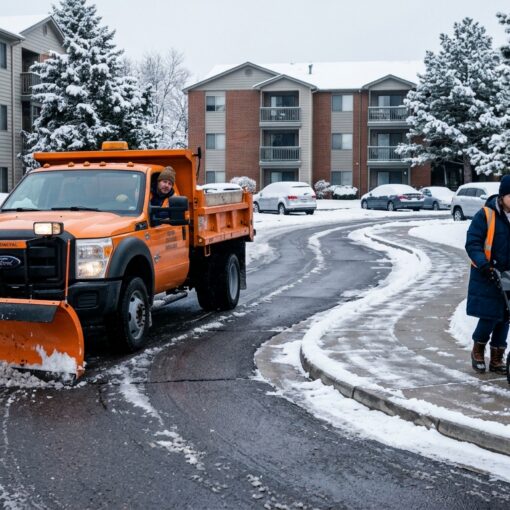
A residential snow removal visit covers the areas people actually walk and drive on. For a typical Denver rental, that means more than a driveway.
- Driveways, cleared wide enough for vehicles to enter and exit without getting stuck
- Sidewalks along the frontage, including the path a mail carrier or delivery driver uses
- Walkways leading from the sidewalk to the front door
- Porches and stoops, so the entry point is not a sheet of ice
- Stairs, including exterior steps to a front door or a basement unit
- De-icing and ice melt on hard surfaces where refreezing happens
For a single family rental, that is usually one clean pass. For a duplex, a small apartment building, or a house with an accessory dwelling unit, the same list multiplies across multiple doors, multiple sets of stairs, and shared walkways. It helps to tell the crew up front how many units exist and where tenants park, so the driveway is cleared in a way that does not box anyone in.
Seasonal contracts versus per push pricing
Denver landlords generally choose between a seasonal contract and per-push billing. Both are available from local residential snow removal providers, and the right choice usually comes down to how predictable your tenants need the service to be.
| Option | How it works | Best suited for |
|---|---|---|
| Seasonal contract | You are signed up before winter, and crews dispatch automatically when snow accumulates | Landlords who want no phone calls and consistent tenant service |
| Per push service | You pay per visit, billed when the work is performed | Owners who want to control costs storm by storm |
| 24/7 emergency and same day clearing | Dispatch during or right after a storm, including overnight | Problem properties, turnovers, and unexpected vacancies |
Per-push pricing for Denver County properties generally falls in the $35 to $85 range, with the number depending on driveway length, sidewalk footage, number of stairs, and how many units share the lot. Seasonal contracts spread that cost across the winter and remove the decision making from every single storm. Exact quotes should always come in writing after someone looks at the property.

Why Denver County routing matters during a blizzard
Plenty of snow removal companies serve a wide map and drive highways between jobs. That works fine on a sunny Tuesday. It falls apart in a blizzard, when I-25 and I-70 become parking lots and every crew in the metro is late.
Denver Snow Removal, operated by MileHiSnow, runs strictly inside the City and County of Denver, Glendale, Edgewater, Englewood, East Lakewood, and West Aurora within 10 miles of downtown Denver. Crews route on Denver surface streets rather than committing to highway travel during storms. That is a real operational difference for a landlord in Capitol Hill, Wash Park, the Highlands, Cherry Creek, or central Denver, where a 2 to 4 hour response window is realistic instead of theoretical.
The same routing discipline means the business does not serve Brighton, Centennial, Parker, Castle Rock, Longmont, or Commerce City north. If your rental sits outside that Denver County footprint, ask any provider directly whether they can commit to storm day service at your address before you sign anything.
Proof of service: photos, GPS tracking, and timestamped logs
Landlords are often the last person to see the property after a storm. That is why documentation should be part of the service, not an extra request.
Photo proof before and after clearing lets you confirm the driveway edge, the sidewalk run, and the front steps were actually done. GPS tracked and timestamped logs create a record of when the crew arrived and when the work finished. If a tenant claims nothing was cleared, or if you need to show an out of state owner that invoices match reality, that record settles the question quickly.
Ask any company how they document visits. A provider that cannot describe its proof process usually does not have one.
Ice melt that will not wreck concrete, pets, or landscaping
De-icing is where cheap service shows. Rock salt spread too heavily can damage concrete surfaces and irritate pet paws, and tenants with dogs notice immediately. Pet friendly Ice Slicer and non-corrosive ice melt products handle refreeze without turning the front walk into a chemical hazard.
For rentals, the practical approach is to clear snow first and treat ice second, focusing on the areas that refreeze: shaded sidewalks, north facing stairs, and the strip at the end of the driveway where plowed snow melts and runs back across the apron. A light, targeted application beats a heavy scattering that tracks into the house.
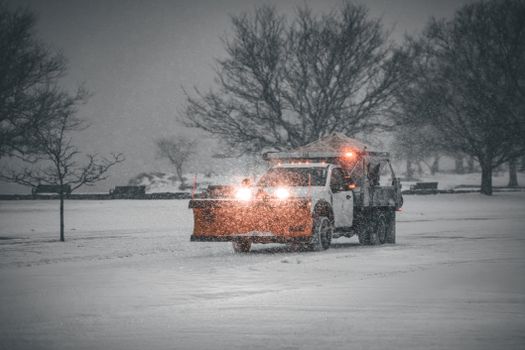
Setting tenant expectations before the first storm
Most winter complaints come from mismatched expectations rather than bad service. A short note to tenants in November prevents most of them.
- Tell tenants which surfaces are covered, typically driveway, sidewalks, porch, and stairs
- Explain that crews work outside and no one needs to be home
- Ask tenants to keep vehicles off the driveway when a storm is forecast so the plow can clear edge to edge
- Give one point of contact for snow issues, either you or your property manager
- Let them know service is dispatched automatically or that someone will call, depending on your plan
If you own a multi unit building, post the same information near the entry so every tenant sees it, not just the one who reads your email.
What to ask before hiring a snow removal company
- Do you serve my specific Denver neighborhood, and can you commit to storm day service there?
- What is your typical response window after snow stops or during an active storm?
- Does your service include sidewalks, porches, and stairs, or only the driveway?
- What ice melt product do you use, and is it pet friendly and non-corrosive?
- How do you document each visit? Photos, timestamps, or GPS logs?
- Are you licensed and insured, and how long have you operated in Denver?
- Is pricing per push or seasonal, and what factors change the quote?
- Is someone available at 2 a.m. if a storm hits overnight?
Denver Snow Removal has been family owned since 1974, which means roughly five decades of Front Range winters and the routing knowledge that comes with them. For a landlord, that history is less about nostalgia and more about knowing the crew has seen a wet, heavy spring storm dump two feet on a Tuesday in March.
Single family rentals, duplexes, and small multi unit buildings
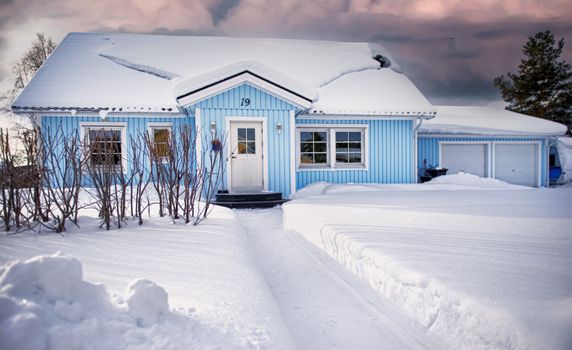
Scope changes with the property. A single family rental is usually a driveway, one sidewalk run, one porch, and one set of stairs. A duplex adds a shared walkway and a second entry. A small apartment building or a house with an accessory dwelling unit can mean several doors, multiple stair sets, and a parking area where snow has to be stacked somewhere other than the neighbor’s fence line.
When you request a quote, describe the property in plain terms: how many units, how many exterior doors, whether stairs exist, where cars park, and whether there is a shared alley or rear entrance. That detail is what lets a provider price accurately instead of guessing high to protect themselves.
Scheduling service before the season starts
Snow crews fill their routes as winter approaches, and adding a property mid-season is harder than most landlords expect, especially inside a tight service area. Setting up service in the fall means your address is already on the route when the first storm arrives, rather than waiting for a call back while your tenant shovels the walk themselves.
Do the setup work once. Confirm the covered surfaces, decide between seasonal and per-push billing, share tenant contact details, and save the documentation emails in one folder. After that, winter mostly takes care of itself, which is the entire point of hiring residential snow removal services in the first place.
Frequently Asked Questions
How much does residential snow removal cost in Denver?
Per-push pricing for Denver County residential properties generally runs from $35 to $85, depending on driveway length, sidewalk footage, the number of stairs, and how many units share the lot. Seasonal contracts spread the cost across the winter instead. Because every property is different, ask for a written quote based on an actual look at your address rather than a phone estimate.
How fast will someone clear my rental after a Denver snowstorm?
Denver Snow Removal works toward a 2 to 4 hour response window, with crews dispatched 24 hours a day during winter weather. The advantage comes from routing only on Denver surface streets inside the City and County of Denver, Glendale, Edgewater, Englewood, East Lakewood, and West Aurora within 10 miles of downtown, instead of losing hours driving highways between distant jobs.
Do I need to be at the property when the crew arrives?
No. Snow clearing happens outside on driveways, sidewalks, porches, and stairs, so neither the landlord nor the tenant needs to be present. Access is the only thing that matters, which is why it helps to ask tenants to keep vehicles off the driveway when a storm is forecast so the plow can clear edge to edge.
What proof do I get that the snow removal was completed?
Service visits are documented with before and after photos, GPS tracked routing, and timestamped logs. That record is useful for out of state owners, property managers, and any situation where a tenant says the walkway was never touched. Ask any provider to describe their documentation process before you sign a seasonal agreement.
Which Denver areas do you serve for residential snow removal?
Service is limited to the City and County of Denver, Glendale, Edgewater, Englewood, East Lakewood, and West Aurora within 10 miles of downtown Denver. Areas including Brighton, Centennial, Parker, Castle Rock, Longmont, and Commerce City north are outside the service area because reaching them during a blizzard would require highway travel.