Hire a Denver-based snow removal company with licensed, insured W-2 crews, a 4:00 AM zero-tolerance start, a certificate of insurance on file, 20–100 stall lot experience, GPS tracking, and timestamped before/after photo proof after every push. The HOA, not the City of Denver, is legally responsible for private lots, walks, entries, adjacent city sidewalks, ADA ramps, and bus stops. The contract has to cover all of it.
Table of Contents
- Why does an HOA need photo proof for snow removal?
- What does real photo proof look like after a Denver snowstorm?
- What are Denver's snow removal rules for HOAs and sidewalks?
- How do commercial, HOA, and residential snow removal differ?
- Does GPS tracking beat a verbal "we were there"?
- What insurance and crew requirements should an HOA verify before signing?
- What does HOA snow removal cost in Denver for 2026?
- How does Denver Snow Removal handle HOA snow removal with photo proof?
- Key Takeaways
- References
Why does an HOA need photo proof for snow removal?
Photo proof settles liability questions after a slip-and-fall claim and shows the board did its duty. A timestamped image of a cleared walk at 5:45 AM is evidence the HOA met its standard. Without it, the board is left arguing against an injury attorney with nothing but a vendor's word.
Timestamped before/after shots answer resident complaints without he-said-she-said arguments. A resident who emails at 7 AM claiming the north walk was never touched can be shown the exact photo of that walk cleared at 5:20 AM. The conversation ends there.

Board accountability requires a paper trail. Proof logs give board members documentation for meetings, annual reviews, and vendor renewal decisions. A board can review a full season of photos and see exactly which storms triggered service and when crews finished.
Verbal "we were there" claims fail when a resident sends a photo of an uncleared walk at 7 AM. The vendor says they cleared it. The resident says they didn't. Photo proof removes the ambiguity and protects the board from being caught between two conflicting stories. According to Denver Snow Removal, timestamped photo proof is a core requirement for any HOA snow contract in Denver.
What does real photo proof look like after a Denver snowstorm?
Real photo proof means timestamped before/after photos of driveways, sidewalks, parking lots, entries, and common areas, not a single wide shot from the truck window. Each zone the HOA is responsible for should have its own image record showing the surface before work began and after it was cleared.
Per-zone coverage matters. Stalls, walks, ADA ramps, bus stops, and mail areas each need their own photos. One wide shot of the lot cannot prove the ADA ramp by the leasing office was cleared or that the bus stop pad was shoveled. According to Denver Snow Removal, boards should require per-zone documentation for every push.
Logs must be archived and accessible to the board, not texted once and lost in a property manager's phone. A proper photo log is organized by storm date, time, and zone, and the board can pull any entry weeks or months later.
Photo proof should be tied to GPS truck data so time and place match the image. A photo timestamped 5:12 AM is stronger when GPS data shows the truck at that address at 5:11 AM. The two records together create a verifiable account that stands up in a board meeting or an insurance claim.
What are Denver’s snow removal rules for HOAs and sidewalks?
Denver ordinance requires adjacent sidewalks, ADA ramps, and bus stops cleared within 24 hours of a storm. The HOA is responsible for these surfaces when they border HOA property, not the City of Denver. According to Denver Snow Removal, the HOA is legally responsible for private lots, walks, entries, adjacent city sidewalks, ADA ramps, and bus stops.
Colorado law backs the 24-hour sidewalk standard. Property owners must clear snow and ice from adjacent sidewalks within 24 hours after a snowfall ends, according to Denver Snow Removals. Denver enforces this through the Department of Transportation and Infrastructure, which responds to citizen complaints and conducts spot checks after major storms.
Fines start at $50 to $150 per violation. A single storm that leaves multiple walks uncleared can generate multiple violations, and repeat issues draw more attention from DOTI. The financial risk compounds fast for an HOA that does not have a reliable contractor.
City plows handle main streets and residential centers only. Denver's Department of Transportation and Infrastructure provides snow response to approximately 2,050 lane miles of main streets using a fleet of 70 large plows, according to the City and County of Denver. The Residential Snow Plow Program covers about 1,260 center lane miles of residential streets using 4×4 pickup trucks with plows. Private lots and walks stay the HOA's job.
How do commercial, HOA, and residential snow removal differ?
HOA and commercial lots with 20–100 stalls need a 4:00 AM start, a certificate of insurance on file, photo logs, and portal access for the board. Residential service covers a single driveway, walk, porch, and city sidewalk with a different scope and different pricing. The two are not interchangeable.
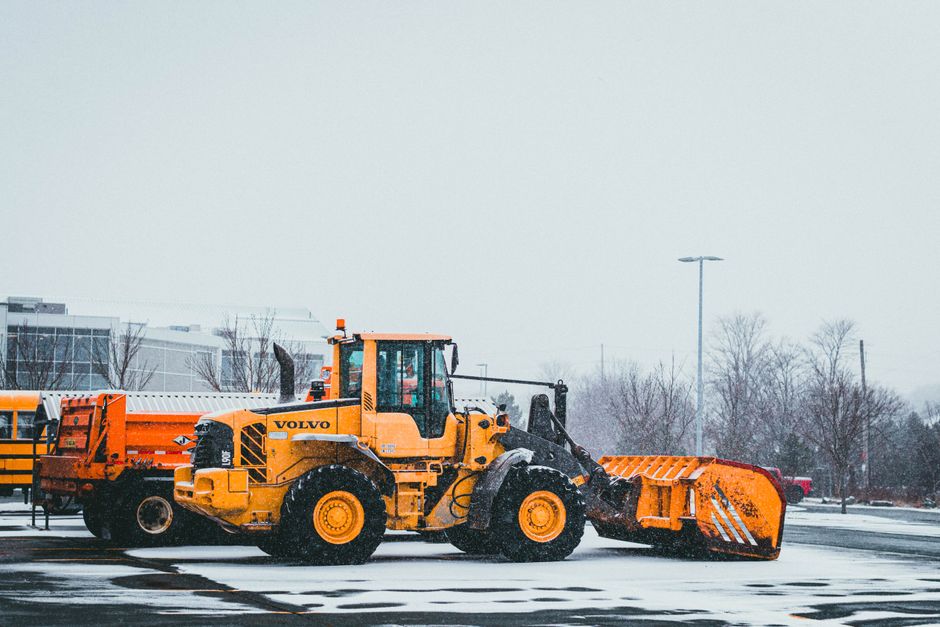
Lot size drives equipment. A 20–40 stall lot typically requires a skid steer plus hand shovels. A 40–100 stall lot requires a plow truck, a skid steer, and a dedicated sidewalk crew, according to Denver Snow Removal. An HOA with 60 stalls and multiple building walks cannot be served by a pickup truck and two guys with shovels.
Residential service covers the drive, walk, porch, and city sidewalk at a single home. The pricing is lower, the equipment is smaller, and the job is done in minutes, not hours. A residential crew is not equipped or insured for a 100-stall lot.
HOAs sit between the two. An HOA job involves multi-building walks, common areas, mail kiosks, and resident vehicles parked in the way. The contractor has to manage access, avoid damage, and document every zone. That is a different operational challenge than either a single driveway or a big-box retail lot.
Does GPS tracking beat a verbal "we were there"?
Yes. GPS-tracked trucks with live ETA show exactly when a crew arrived and how long it stayed. A board can see the truck hit the property at 4:12 AM and remained on site for 47 minutes. That is an auditable record, not a recollection.
Timestamped photos pair with GPS to create a verifiable record. The photo shows the cleared surface. The GPS shows the truck was there when the photo was taken. Together they answer the two questions every board asks: did they come, and did they actually clear it.
Verbal confirmation cannot be audited at a board meeting or in an insurance claim. A vendor saying "we were there" carries no weight when a resident produces a photo of an uncleared walk. GPS data and photo logs do.
A 24/7 dispatch with a 2-hour response commitment inside I-470 is the operational baseline for Denver HOAs, according to Denver Snow Removal. A board should not accept a vendor who cannot state their response time and prove it with GPS data.
What insurance and crew requirements should an HOA verify before signing?
An HOA board must verify six items before signing a snow contract: COI and workers' comp on file, W-2 crews, 24/7 dispatch, a defined trigger, de-icing included, and timestamped photo logs. According to Denver Snow Removal, these six checks are the minimum standard for any Denver HOA snow contract.
W-2 crews mean the company controls training and accountability. Day-labor subs picked up the morning of a storm have no stake in the HOA's satisfaction and no consistent supervision. W-2 employees are trained, scheduled, and managed by the company that signed the contract.
A certificate of insurance protects the HOA if a worker or vehicle damages property or someone gets hurt. The COI should name the HOA as an additional insured and include workers' compensation coverage. Without it, the HOA can be pulled into a claim.
A defined trigger, typically 2 inches and sometimes 4 inches, prevents "we didn't think it was enough" disputes. The contract states exactly what accumulation triggers service, so there is no judgment call at 3:00 AM. According to Denver Snow Removals, per-push contracts charge the HOA only when a storm triggers service, with the trigger most commonly set at two inches.
What does HOA snow removal cost in Denver for 2026?
Seasonal HOA contracts in Denver run roughly $3,500 to $12,000 depending on stall count and trigger, according to Denver Snow Removal. A 20-stall lot with a 4-inch trigger sits at the low end. A 100-stall lot with a 2-inch trigger and multiple buildings sits at the high end.
Per-push pricing runs roughly $350 to $900 per visit for HOA-sized lots. Per-push charges only when the trigger is met, so a dry winter costs less. A heavy winter costs more. The HOA carries the weather risk.
Seasonal contracts lock pricing and include revisits. The HOA pays a fixed amount for the season regardless of how many storms hit. Revisits for drifting or refreeze are included, not billed as extras.
De-icing should be included in the contract, not billed as a surprise add-on. Ice melt application after clearing is part of the job, and the contract should state what product is used and where it is applied. Pet-friendly and commercial-grade options should be spelled out before signing.
How does Denver Snow Removal handle HOA snow removal with photo proof?
Denver Snow Removal runs W-2 crews, GPS-tracked trucks, and timestamped before/after photo proof on every push. The company serves Denver-area HOAs and commercial properties with 20–100 stall lots, a 4:00 AM start, certificate of insurance on file, and portal access for boards to review logs and completion archives.
For residential properties, Residential Driveway & Walkway Snow Removal covers the driveway, walkway, porch, and city sidewalk with 2-hour core response inside I-470, GPS tracking, and photo proof after every push. Pricing starts at $89 per visit.
HOA and commercial service includes 20–100 stall lot clearing, 4:00 AM service, COI and photo logs, and portal access for boards. The company provides a free HOA walk-through and same-day quote at denversnow.com, with photo proof included on every job.
Key Takeaways
- The HOA, not the City of Denver, is legally responsible for private lots, walks, entries, adjacent sidewalks, ADA ramps, and bus stops.
- Denver ordinance requires sidewalks, ADA ramps, and bus stops cleared within 24 hours of a storm, with fines starting at $50–$150 per violation.
- A zero-tolerance 6:00 AM board standard means crews must start by 4:00 AM.
- Before signing, verify six items: COI and workers' comp, W-2 crews, 24/7 dispatch, defined trigger, de-icing included, and timestamped photo logs.
- Seasonal HOA contracts in Denver run roughly $3,500–$12,000; per-push runs roughly $350–$900 per visit.
- A 40–100 stall lot requires a plow truck, a skid steer, and a dedicated sidewalk crew.
- GPS tracking plus timestamped photos creates an auditable record that verbal confirmation cannot match.
References
- Who should Denver HOAs hire for snow removal with photo proof? — Denver Snow Removal
- HOA Snow Removal Services in Denver CO: 2026 Guide — Denver Snow Removals
- Snow Removal – City and County of Denver — City and County of Denver