A Denver HOA snow contract lives or dies on three documents: the bid spec the board sends out, the service log the vendor produces after each storm, and the winter report the board shows owners in February. Most boards put real effort into the middle one and almost none into the other two, which is why snow is one of the most common sources of resident complaints in a Denver association. Here is how to build all three so the board has something to point at when a homeowner asks why the walk was icy at 8AM.
What a Denver HOA snow bid spec needs to contain
A bid spec turns a vague request for plowing into a contract the board can actually enforce. Write it before you collect quotes, not after, so every vendor answers the same questions. If the board sends out an address and a hope for a good rate, the quotes that come back will not be comparable to each other.
Scope of work: name every surface separately
List each area on the property as its own line item: private drives and drive aisles, parking stalls, dumpster pads, sidewalks, entry walks, building entries, stairs, mail kiosks, clubhouse paths, and any gathering areas. Vendors that clear HOA common areas in Denver routinely handle streets, pathways, and shared gathering spots, so ask each bidder to price those items individually instead of bundling them into one lump sum. The spec should also spell out which surfaces belong to the association and which belong to a metro district or the city, and that split should be confirmed in writing before signing.
Response triggers and priority tiers
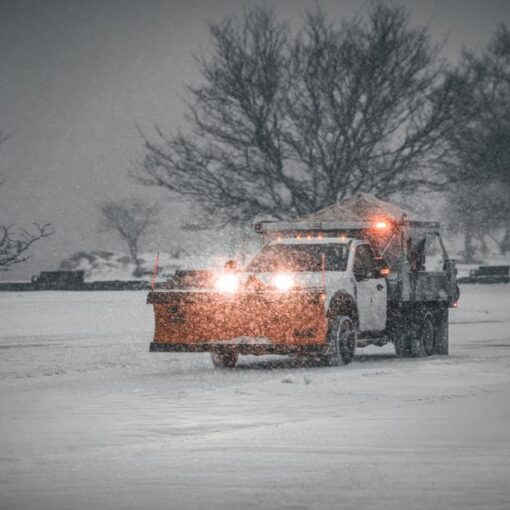
Define when service starts. A trigger can be a measured snow depth, a storm warning, or a fixed time such as a 4AM lot clearing so the property is open before residents leave for work. Name the priority order for the site, usually entries and fire lanes first, then main drives, then secondary walks and amenity areas. State the maximum response window you expect and ask whether the vendor has the crews and equipment to meet it during a metro-wide storm, when every property in Denver is calling at the same time. A realistic window for a local Denver operator is two to four hours.
Contract type: seasonal retainer or per push
Denver boards generally choose between a seasonal contract, which spreads cost across the winter, and per push pricing, which bills per service visit. Per push work from a Denver County operator commonly runs $35 to $85 depending on surface type, property size, and material use. That structure matches spend to actual snowfall but is harder to predict in a heavy year. A seasonal retainer is easier to budget, so ask what happens in a light snow year and whether any credit or added service is built in.
Comparing contract structures
| Structure | How billing works | Board watch item |
|---|---|---|
| Seasonal contract | One agreed price covers the winter season, paid on a schedule | What counts as an included visit and what triggers an extra charge |
| Per push service | Each service visit is billed, commonly $35 to $85 locally | Storm frequency, because a heavy winter can outrun a light budget |
| De-icing and ice melt | Material applied for ice control, priced per application or included | Ask for it as its own line item so quotes compare cleanly |

Service logs: the proof you should demand
Snow removal is one of the few line items an HOA pays for that board members almost never witness. The service log closes that gap. Ask bidders for a sample log before you sign, and make log delivery a contract requirement with a deadline, either within 24 hours of each visit or bundled at month end.
Timestamped GPS records
GPS tracked visits give the board arrival and departure times per site, which is how you verify a response window was met. The log should identify the property, the date, the start and finish times for each push, and the crew or equipment assigned. If your board has ever argued with a vendor about whether a truck showed up, this is the record that settles it without a phone call.
Before and after photo proof
Photos taken before work begins and after it finishes show depth, coverage, and any damage that already existed. That last part matters for claims. A photo from the start of a push protects the association from being blamed for a cracked curb or a scraped pillar that was damaged before the storm, and a photo from the end shows residents exactly what their dues paid for.
Board reporting: what belongs in the monthly packet
Reporting turns raw service logs into something an owner can understand. A short winter update at each board meeting keeps the snow line item from becoming a surprise at the annual meeting. Include:
- Storm count and total service visits for the period
- Trigger events, meaning what fell, when, and which priority tier was dispatched
- Before and after photos for notable storms
- Materials used for ice control and where they were applied
- Measured response times compared against the contract window
- Any property damage, claims, or resident complaints and how each was resolved
- Spend to date against the seasonal snow budget
Vetting the company behind the bid
Specs and logs only help if the vendor behind them is still around in February. Ask for proof of licensing and insurance, how long the company has operated, and whether it is locally owned. A Denver operation with decades in the market, including family ownership going back to 1974, has already survived enough storms to know which streets flood and which alleys are too tight for a full-size truck. Also confirm 24/7 dispatch, because storms do not schedule themselves around business hours, and ask for references from communities of a similar size. Denver area vendors publicly cite experience with HOA communities of 300 or more homes, so that scale exists in the local market and you should be able to check it.
Why Denver County routing matters in a bid
Ask every bidder where crews stage from and whether they drive highways to reach you. A vendor routing on Denver surface streets inside the county can keep working when the interstates are backed up, while a company based outside the metro may be stuck behind a closure before it ever reaches your property. Local coverage for Denver HOAs generally means the City and County of Denver plus nearby enclaves such as Glendale, Edgewater, Englewood, East Lakewood, and West Aurora within roughly 10 miles of downtown. If your community sits outside that ring, say so in the spec so vendors can decline honestly rather than overpromise in October.
Ice melt, de-icing, and surface safety
Colorado freeze and thaw cycles create ice that is more dangerous than the snow itself, especially on north-facing walks and shaded entries. Ask what material each vendor uses and whether it is pet friendly and non corrosive, then list the surfaces where it should and should not go. New concrete, decorative pavers, and metal thresholds all react differently to salt. A vendor that carries options such as a pet friendly Ice Slicer style product gives the board a choice per surface instead of one blanket application across the whole property.
Setting the snow budget and talking to residents
Two conversations prevent most HOA snow disputes. The first is with the board before the season, covering the total number the association can absorb and what happens if snowfall runs above average. The second is with residents after the first big storm, explaining what the association clears and what owners clear themselves. Many HOAs hire contractors for common areas, and the association policy should state clearly when and how often snow is removed, plus who handles the sidewalk in front of individual units if that duty is shared. Check your own governing documents on that point instead of assuming, and verify current city requirements directly with the City and County of Denver.
Frequently Asked Questions
Does a Denver HOA have to remove snow from sidewalks?
Responsibility depends on your governing documents, your site plan, and what the city requires of the property. Many associations hire contractors to clear common areas, but which sidewalks count as common area varies between communities. Boards should read the declaration, check current Denver snow ordinances, and then put the answer in writing so residents know who clears what.
What should a snow removal bid spec include?
At minimum: a full list of surfaces with quantities, response triggers and priority tiers, the contract type you want priced, the maximum response window, the log and photo proof you expect, the ice control products you will accept, insurance and licensing requirements, and a deadline for questions and submissions. Sending the same spec to every bidder is what makes the numbers comparable.
How often should crews visit during a storm?
Frequency follows the trigger, not the clock. Most Denver HOAs set a depth trigger for routine clearing, a separate plan for large storms, and pre-treatment before a forecast event. The spec should state whether the vendor returns for a second push after the same storm and how that additional visit gets billed.
What is a reasonable per push rate for an HOA?
Local Denver County per push work commonly falls in the $35 to $85 range, with the number moving based on surface type, property size, and how much ice control material is applied. HOA common areas with long private drives and multiple entries will land higher than a small lot. Ask for unit pricing per surface so the board can see what drives the total.
What should the board do if a vendor misses a storm?
Pull the service log and compare arrival times against the contract window, then ask for an explanation before deciding on any remedy. Document the miss in the board packet and note how the vendor responded. One miss during a record snow event is different from a pattern of missed trigger calls, and the paperwork supports either a credit request or a vendor change.