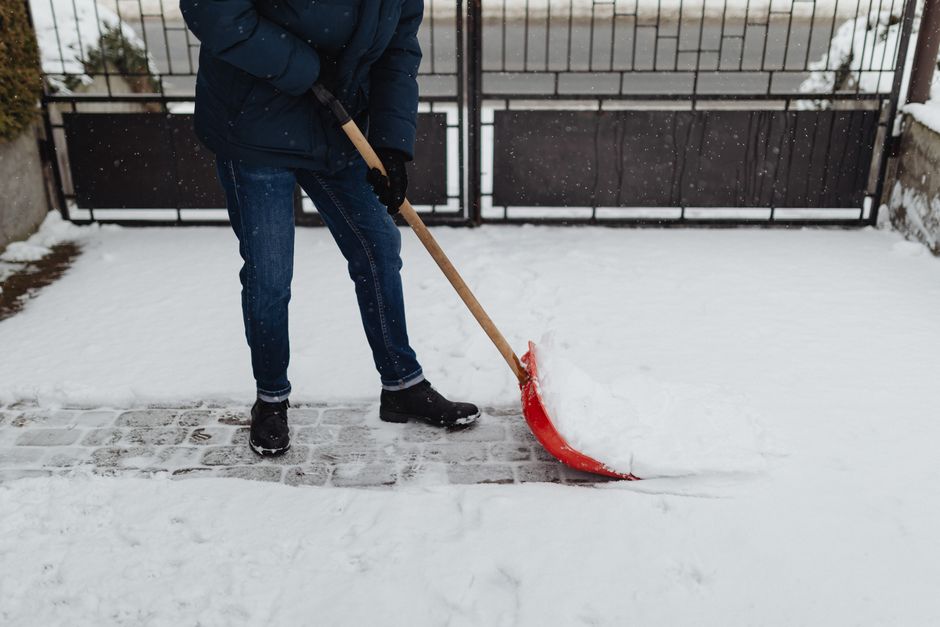
Denver winters have a rhythm that catches people off guard. Snow falls overnight, temperatures climb by noon, everything melts, and then the refreeze turns a cleared walkway into a skating rink by evening. For homeowners, the job does not end when the flakes stop. Clearing the driveway early matters, but so does scraping the porch steps, the front entry, and the public sidewalk along the property line.
This guide covers what residential snow removal in Denver actually includes heading into 2026, how the city’s own plowing schedule affects your driveway, what local pricing looks like, and how to pick a crew that shows up without three phone calls.
What residential snow removal covers in Denver
Home service is not the same as commercial lot plowing. A residential route usually covers four zones, and each one calls for different equipment and a different order of work.
- Driveways, from the garage apron out to the street cut, including the berm a city plow pushes against the curb
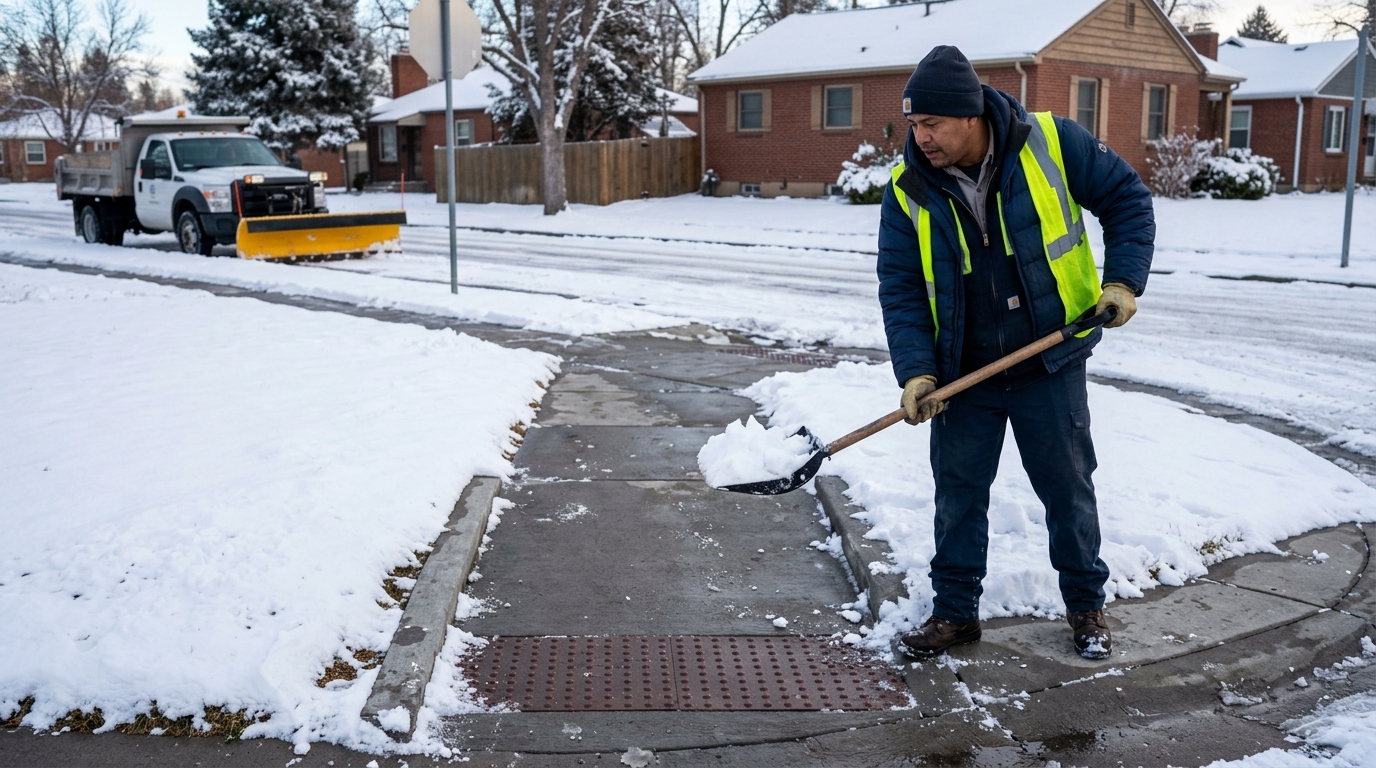
- Sidewalks, both the private walk to the door and the public sidewalk along the property line
- Porches, front entries, and stoops
- Stairs, including exterior steps up to a raised front door or down to a basement entry
De-icing and ice melt are typically quoted alongside the clearing work rather than as an afterthought. Pet-friendly products such as Ice Slicer are non-corrosive, which matters on concrete steps and for dogs heading out to the yard. Snow removal, de-icing, and ice melt are commonly bundled into a single residential visit.
How Denver’s street plowing changes your driveway
Emergency snow response on city streets falls to Denver’s Department of Transportation and Infrastructure, known as DOTI. The city also runs a residential snow plow program, and plowing of residential streets occurs between the hours of 3:00 a.m. and 3:00 p.m. That window overlaps almost exactly with when private crews work, which is why coordination matters more than most homeowners expect.
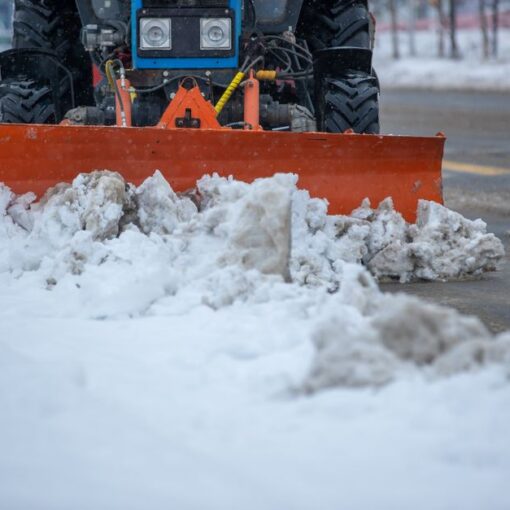
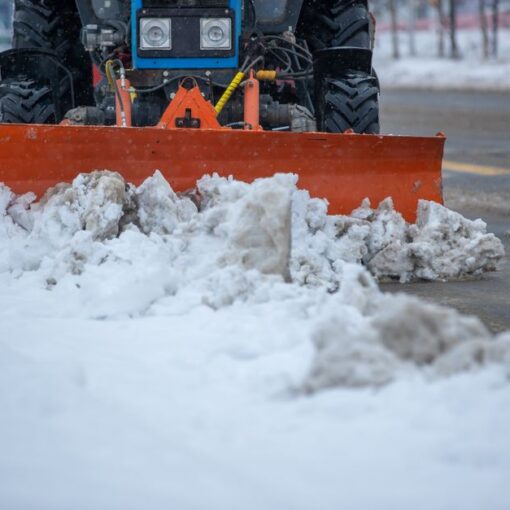
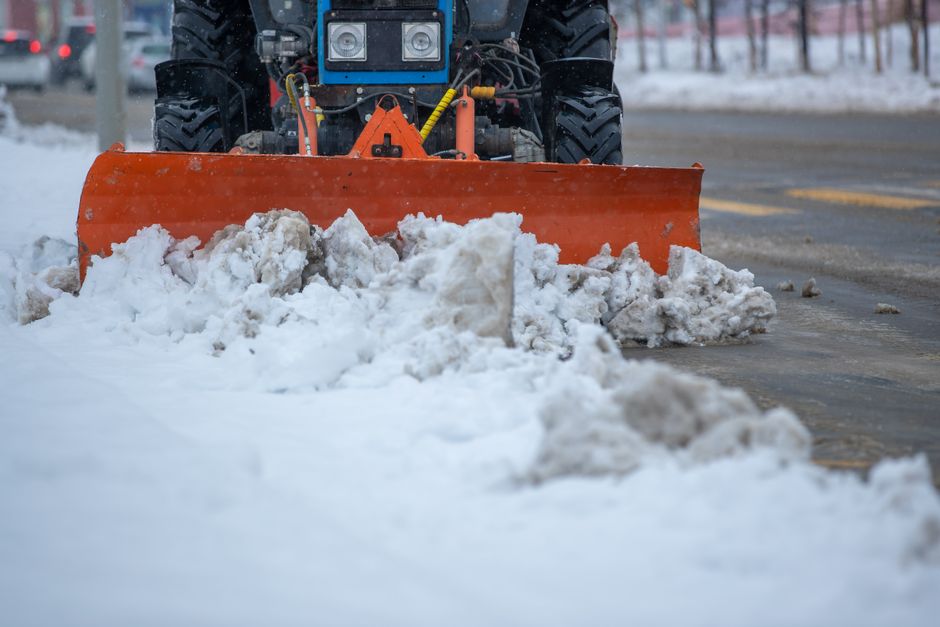
When a city plow passes your block, it pushes snow to the curb and often into the mouth of your driveway. That berm is the single most common complaint after a storm. If a contractor clears your apron at 6 a.m. and the plow comes through at 9 a.m., the driveway is blocked again. Ask any company you hire how they handle plow berms and whether a return trip is included after the city passes. Getting that answer in writing before the first snow is far easier than arguing about it in January.
What happens after the plow passes
A complete driveway clearing includes the apron, the street cut where the driveway meets the road, and the piled snow at the edges. Crews that only clear the flat rectangle between the garage and the sidewalk leave two problems: a wall at the curb and ice where meltwater refreezes across the apron overnight. On a typical Denver freeze-thaw day, that refrozen apron is more dangerous than the snow that fell.
Sidewalks, porches, and stairs
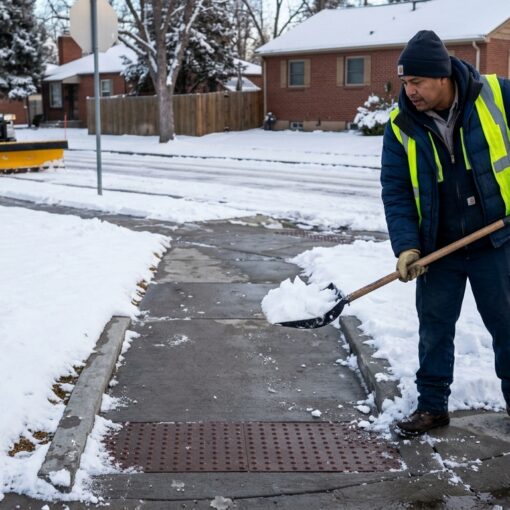
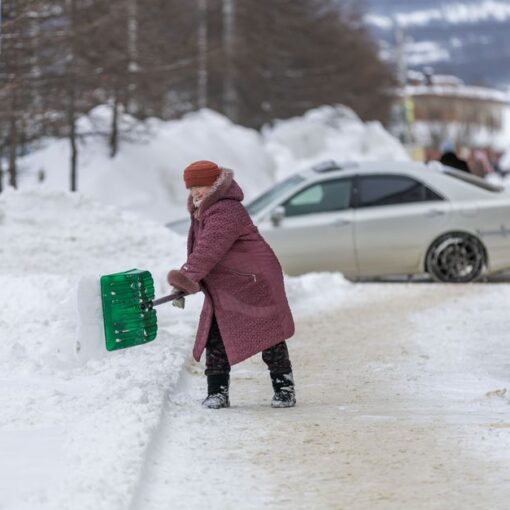
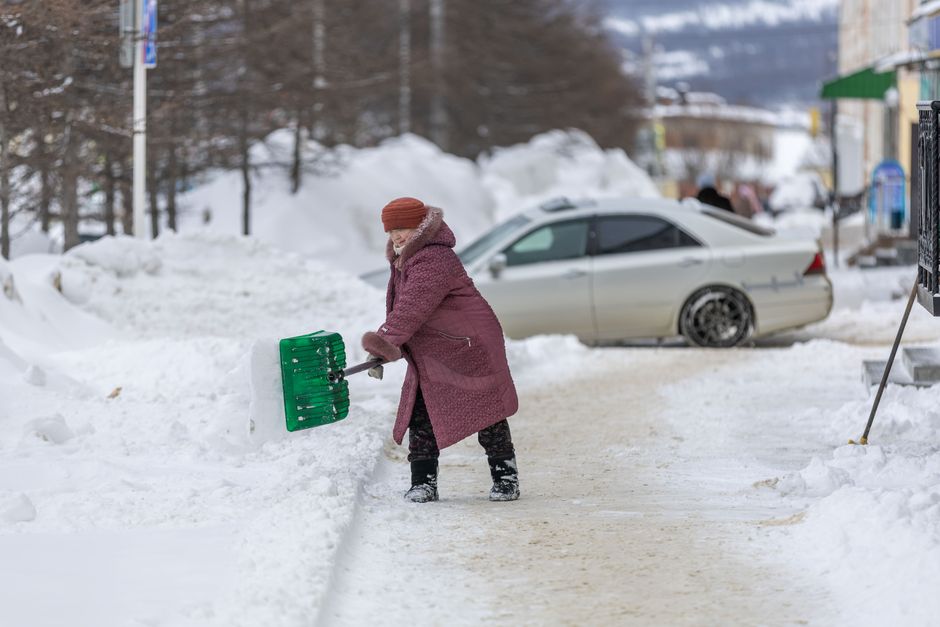
Sidewalk and stair clearing is the part most homeowners would rather not do themselves, and it is also the part neighbors notice. Porch steps collect drifting snow, and shaded exterior stairs keep ice long after the driveway has melted. A residential crew should clear the full width of the public sidewalk rather than a narrow path down the middle, scrape the porch and stoop, and treat the steps separately from the walk.
Stairs deserve their own attention because they are where slips happen. Snow gets packed into the corners of each tread, melts during the day, and freezes solid at night. Clearing that down to the surface and then applying ice melt is a different task from pushing snow off a flat slab. If your home has a raised entry, a basement stairwell, or a set of steps to a back door, confirm those are included in the quote rather than assumed.
Where the snow should go
Piling snow correctly protects your landscaping and your relationship with neighbors. Snow should be stacked on your own property, away from foundation walls where meltwater can seep, and away from the sidewalk so it does not blow back across the path. Shoveling or plowing snow onto a neighboring property is a common source of winter disputes, and rules around it vary, so it is worth checking with the City and County of Denver or a legal professional if you have a specific question about where snow may be placed.
De-icing and ice melt for residential properties
De-icing is what keeps a cleared driveway usable through a Denver cold snap. Standard rock salt works on roads but is harsh on concrete, plants, and paws. Non-corrosive, pet-friendly ice melt products are a better fit for walkways, porches, and stairs where kids and dogs travel every day.
Timing matters as much as the product. Applying ice melt after the surface is scraped down gives it direct contact with the ice rather than with a layer of loose snow. A crew that clears first and treats second gets better results than one that spreads material over an uncleared driveway.
What residential snow removal costs in Denver
Pricing in the Denver market varies widely, so a few reference points help. One Denver company advertises a complete package at $85 that includes front entryways, the city sidewalk, and the driveway. TaskRabbit lists snow removal Taskers in Denver at an average of $44 an hour. Meanwhile, residents posting on r/Denver have reported some companies charging $150 or more per visit, which is the high end of the range and usually reflects a minimum charge, an emergency call, or a large property.
Locally, per-push residential pricing commonly runs $35 to $85 for driveway, sidewalk, porch, and stair clearing inside Denver County. Seasonal contracts spread the cost across the winter and are often the better value in a heavy snow year, while per-push pricing makes sense for homeowners who travel or who only need help during bigger storms.
| Option | How it works | Best suited for |
|---|---|---|
| Per-push | You pay each time a crew clears your property after a storm | Homeowners who travel, or who only want service during larger storms |
| Seasonal contract | One agreed price covers the winter, with service triggered by snowfall | Households that want the same crew on every storm without rebooking |
Whatever the structure, ask what triggers a visit, whether the street berm is included, and whether de-icing is part of the price or billed separately. Those three answers explain most of the variation between quotes.

Response times and proof of service
Response time is the difference between a cleared driveway and a frozen one. A crew routed entirely on Denver surface streets inside the county can move between nearby properties quickly instead of sitting on a highway during a storm. Fast response in the two to four hour range is achievable when a company is not driving across the metro to reach you.
Documentation is the other half of trust. GPS-tracked, timestamped logs and before-and-after photos let you confirm service happened while you were at work or out of town, and they settle billing questions without a phone call. If a provider cannot show you a photo of your cleared walk, you are relying on memory.
Service area: who can realistically reach you
Denver County coverage is narrower than most marketing suggests. Service areas that make sense for a local residential route include the City and County of Denver, Glendale, Edgewater, Englewood, East Lakewood, and West Aurora within roughly 10 miles of downtown, neighborhoods such as Capitol Hill, Wash Park, the Highlands, Cherry Creek, and Central Denver.
It is just as useful to know who is not on the list. Areas that require highway travel during a blizzard, including Brighton, Centennial, Parker, Castle Rock, Longmont, and Commerce City north, are typically outside a Denver County-only route. A company that promises fast service in Castle Rock during a storm while also covering downtown is either overpromising or planning to leave someone waiting.

Preparing for the 2026 winter season
A little setup in the fall prevents most winter frustration. Work through this list before the first sticking snow.
- Mark your driveway edges, sprinkler heads, and any landscape lighting before snow covers them
- Clear the garage and entry of anything you need to reach quickly in a storm
- Confirm where your snow will be piled and keep that area clear of planters and hoses
- Book residential service or a seasonal contract early, since routes fill as storms approach
- Ask how berms from the city plow are handled and how you will be notified of a visit
- Verify that sidewalks, porches, and stairs are included, not just the driveway
- Request a pet-friendly, non-corrosive ice melt if you have dogs or concrete steps
Denver snow rarely stays put. It melts, refreezes, and demands a second pass. A residential service that treats clearing and de-icing as one job, on a route that stays inside the county, keeps your driveway, sidewalk, and stairs usable all winter instead of only on the day it snows.
Frequently Asked Questions
How often will a crew come out after a storm?
Most residential service is triggered by snowfall rather than a fixed schedule, so the number of visits depends on the winter. A seasonal contract typically defines a trigger depth and a response window. Per-push customers call or book each time. Ask your provider what snow depth starts a visit and how long after the storm ends you should expect a crew.
Do I need to be home for snow removal?
No. Residential crews work early, often starting well before sunrise, and most homeowners are asleep or already at work. That is why photo and GPS documentation matters. Before-and-after images with timestamps let you confirm the driveway, sidewalk, and stairs were cleared without waiting up for the crew to arrive.
Is the ice melt safe for pets and concrete?
It depends on the product. Traditional rock salt can irritate paws and damage concrete over time, especially on newer pours. Pet-friendly options such as Ice Slicer are non-corrosive and gentler on paws, which makes them a better choice for porches, walkways, and exterior stairs. Ask which product is used on your property before the season starts.
Can I get just sidewalk and stair clearing?
Many residential providers bundle driveway, sidewalk, porch, and stairs, but partial service is often available for homeowners who handle the driveway themselves. It is worth asking, because sidewalk clearing tends to be the task people most want off their plate. Confirm any minimum charge, since small jobs can carry a trip minimum.
What if I live outside Denver County?
Coverage varies by company, and many Denver-focused crews limit routes to the City and County of Denver, Glendale, Edgewater, Englewood, East Lakewood, and West Aurora within about 10 miles of downtown. If you live in Brighton, Centennial, Parker, Castle Rock, Longmont, or Commerce City north, ask providers directly about their storm-day routing before you sign anything.