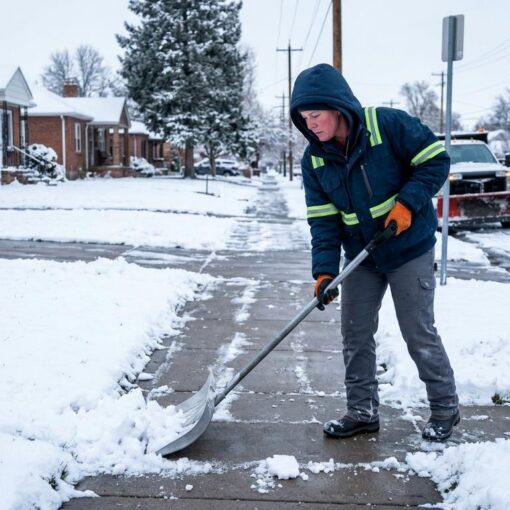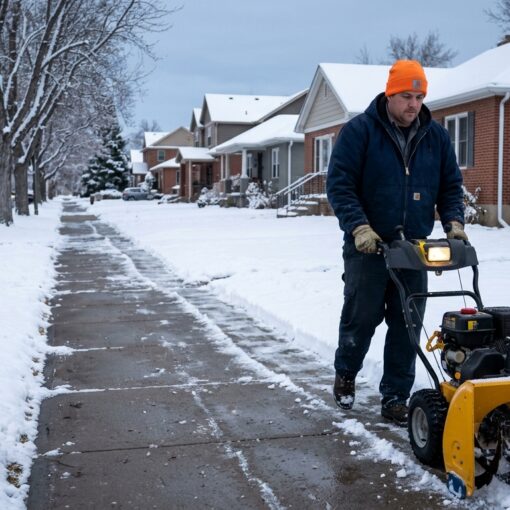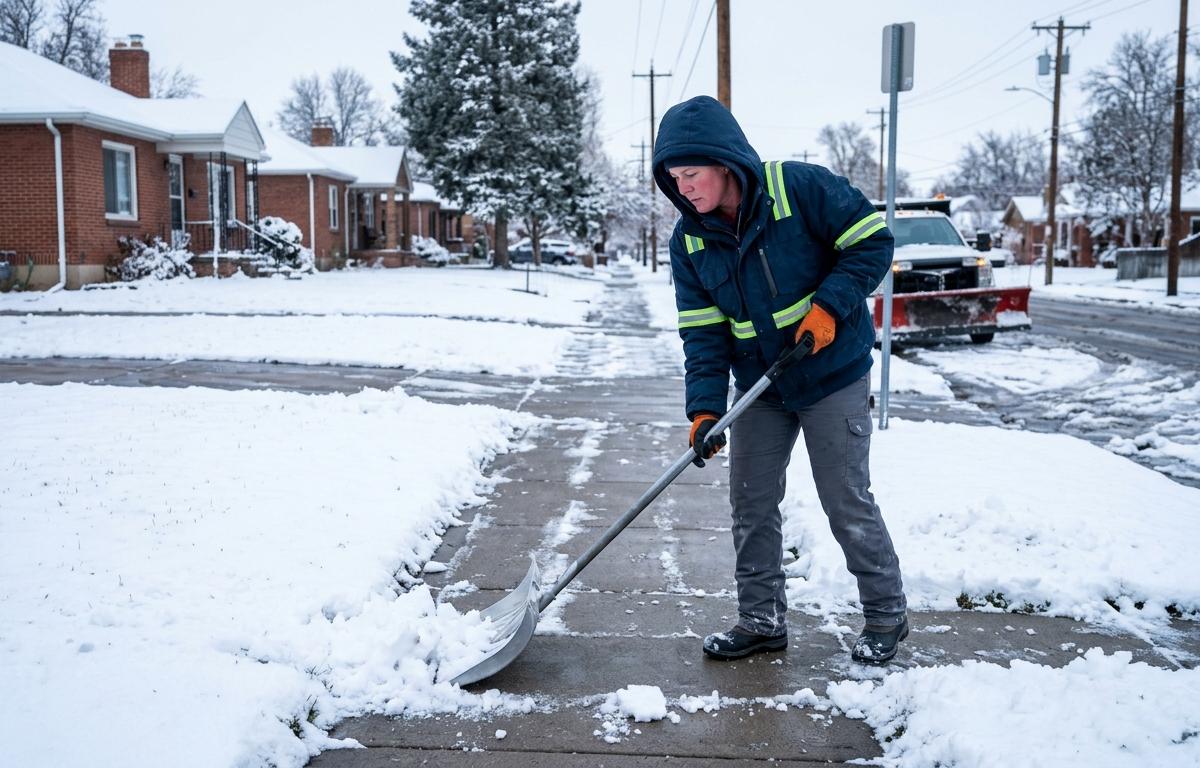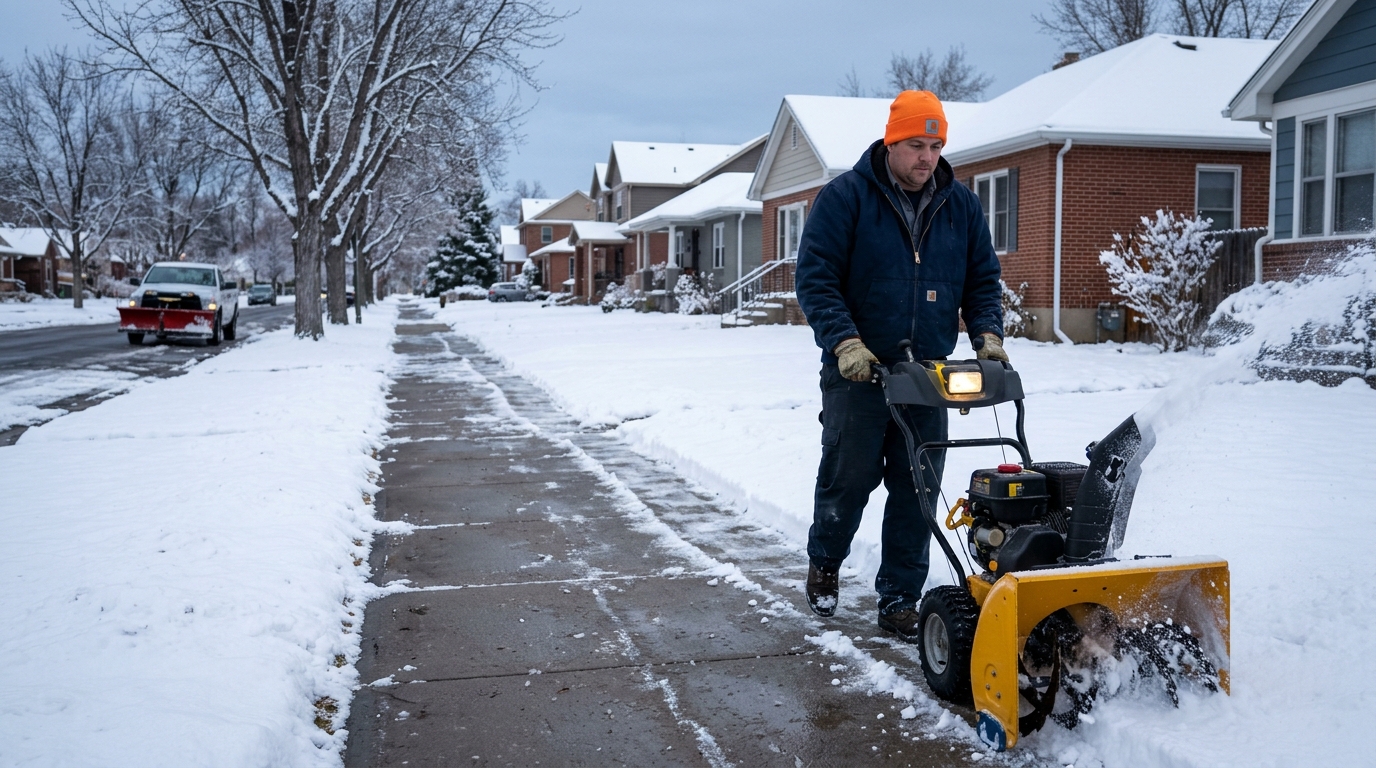

Hiring a snow company in Denver usually comes down to three things that have nothing to do with how polished the trucks look. Can the company prove it carries insurance? How quickly will a crew actually reach your property once snow starts? And does anyone have a written plan for your lot, driveway, or walkway before the first storm buries it?
Denver Snow Removal at denversnow.com, operated by MileHiSnow, has worked Denver County properties for 50 years as a family-owned business since 1974. Questions about certificates, timelines, and property documentation come up on nearly every estimate, so here is what to look for in any company you are considering.
What a COI Tells You About a Denver Snow Contractor
COI stands for certificate of insurance. It is a short document your contractor requests from their insurance agent, and it summarizes the coverage types, dollar limits, policy dates, and the insurer backing the work.
The Coverages That Matter on a Snow Contract
- General liability: covers damage to a building, fence, landscaping, mailbox, or a parked car if a plow or shovel causes it.
- Commercial auto: covers a plow truck or skid steer involved in an accident while traveling to or working on your property.
- Workers’ compensation: covers a crew member injured on your lot or driveway. Without it, an injury claim can land on the property owner.
On commercial and HOA accounts, ask to be named as an additional insured on the general liability policy. That puts your property management company or board directly on the certificate instead of relying on a handshake.
How to Request and Verify a COI
Request the certificate by email before signing anything, and ask that it list your legal entity name exactly as it appears on the contract. Check that the policy effective dates cover the entire snow season, not just the month you signed. Then call the agent listed on the certificate to confirm it is active and accurate, since a certificate is only useful if it reflects a real policy.
Match the insured name on the COI to the name on your contract and to the name on the truck. A mismatch is a reason to ask questions. If a policy expires in January and your season runs through April, request the renewal certificate when it comes through. HOAs should keep the current certificate in board records so a new board member can find it without digging through email.
Response Times: What 2 to 4 Hours Means in Practice
Response time is measured from a trigger, not from the moment you happen to look outside. Two trigger styles are common. Event-based service means the company monitors conditions and dispatches when accumulation reaches the depth written into your agreement. Call-based service means the clock starts when you phone in.
Trigger Depth and Priority Tiers
Commercial contracts often set a trigger depth, such as a specific accumulation amount, and then rank areas by priority. Entrances and walkways typically get cleared first, then drive lanes, then parking fields and storage areas. Residential customers get the best results from event-based triggers, because crews are already moving through the neighborhood instead of waiting for individual calls.
Read the contract language carefully. Ask whether the response window starts at trigger, at dispatch, or at arrival. Those three readings can mean very different mornings.
Why Denver County Routing Changes the Math
A company that stays off the interstates during storms is working surface streets inside the City and County of Denver, plus Glendale, Edgewater, Englewood, East Lakewood, and West Aurora within 10 miles of downtown. When I-25 and I-70 stall during a blizzard, crews based outside that ring sit in traffic while your lot fills up. Denver County-only routing keeps trucks on local streets inside a service area small enough to hold a 2 to 4 hour response window.
That is the footprint denversnow.com covers. Other companies draw their own lines, sometimes reaching from Castle Rock to Longmont. Ask each one to show you the map and confirm your address falls inside it before you sign.

Site Maps: The Document That Prevents Damage and Delays
A site map is a drawing of the property showing where snow goes, what must not be touched, and who to call when something is unclear. It is the difference between a crew that knows your property and a crew that guesses.
What Belongs on a Commercial Site Map
- Snow pile locations, and where piles are not allowed because they block sightlines or drains
- Plow paths, including turnaround space for trucks and skid steers
- Fire lanes, hydrants, loading docks, and dumpster enclosures that must stay accessible
- Curb lines, landscape islands, and irrigation heads that can be sheared by a plow blade
- Surface types that need gentler treatment, such as pavers or decorative concrete
- Gate codes, lockbox details, and after-hours contact numbers
What Belongs on a Residential or HOA Map
Residential maps are shorter but still useful. Mark the driveway outline, sidewalks, porches, and stairs. Note where snow should be piled so it does not block a neighbor’s sightline or bury a mailbox. Flag parked-car arrangements and guest parking so the crew is not weaving around vehicles at 5 a.m. For HOAs, note walkway priority near units with older residents and any pet areas where a pet-friendly ice melt such as Ice Slicer is preferred over harsher products.
Photo and GPS Proof as a Living Record
GPS-tracked routes with timestamped logs and before-and-after photos turn a site map into a record instead of a guess. Property managers can show a landlord that the work happened. HOA boards can answer resident complaints with a timestamp rather than a memory. And repeat problem spots, a corner that drifts every storm or a stairwell that ices first, get added to next season’s map.
Comparing Snow Removal Companies in Denver
| What to Check | Why It Matters | What Good Looks Like |
|---|---|---|
| Certificate of insurance | Protects you from damage and injury claims | Current policy dates, matching entity name, verified with the agent |
| Response window | Determines whether your lot opens on time | A stated window with a defined trigger, not a vague promise |
| Service area | Long highway drives mean late arrivals in storms | A defined map you can check your address against |
| Site map | Prevents property damage and missed areas | A written or drawn plan reviewed before the season |
| Proof of service | Settles disputes and supports board reporting | Timestamped logs and before-and-after photos |
| Pricing structure | Affects budgeting across an unpredictable winter | Per-push or seasonal terms explained in writing |

Pricing Signals: What Denver Snow Removal Runs
Two pricing models dominate. Per-push pricing charges each time the crew services your property, so a light winter costs less and a heavy one costs more. Seasonal contracts spread the cost across the winter regardless of snowfall, which helps with budgeting but can feel expensive in a mild year.
For market context, directory listings on HomeGuide report Denver snow removal costs of $30 to $70 per hour minimum for clearing a driveway or sidewalk, with some larger jobs running $200 to $600 depending on local conditions. Per-push pricing published by denversnow.com falls between $35 and $85 inside Denver County. Treat all of these as ranges rather than quotes, and get your own written estimate based on square footage, surface type, and access.

Questions to Ask Before You Sign
- Can you send a current COI with my entity listed, and can I call the agent to confirm it?
- What is your response window, and when does the clock start?
- Do you service my address from inside Denver County, or will crews drive in from outside?
- Who builds the site map, and when do we walk the property together?
- What proof do you provide after each visit?
- Which ice melt products do you use, and are they pet-friendly or safe for pavers?
- How do you handle damage claims if something gets hit?
- What happens during a multi-day storm with back-to-back events?
- Is pricing per push or seasonal, and what triggers an extra charge?
Frequently Asked Questions
What does COI mean in a snow removal contract?
A COI is a certificate of insurance, a summary issued by your contractor’s insurance agent showing coverage types, limits, and policy dates. It is not the policy itself, so the practical step is to call the agent listed on the certificate and confirm the policy is active, then check that the insured name matches your contract.
How fast should a Denver snow removal company respond?
Response windows vary by contract. denversnow.com works to a 2 to 4 hour window for properties inside its Denver County service area. Whatever number a company quotes, ask when the clock starts, whether at trigger depth, at dispatch, or at arrival on site, because those readings produce very different results.
Do I need a site map for a residential driveway?
Even a small residential property benefits from a short written plan. It notes the driveway outline, sidewalks, porches and stairs, where snow should be piled, and where cars are parked. That information prevents a crew from burying a mailbox, blocking a sightline, or missing a back walkway on the first visit.
What happens if my snow removal company’s insurance expires mid-season?
Ask for the renewal certificate as soon as the old policy lapses, and do not assume it was handled automatically. If a company cannot produce current coverage during the season, you are exposed to liability for injuries and property damage on your own lot. Keep copies in your files and follow up in writing.
Is per-push or seasonal pricing better in Denver?
Per-push pricing suits property owners who want to pay only for the storms that actually arrive. Seasonal contracts suit owners who prefer a predictable number across the winter and guaranteed priority during heavy events. Ask for both numbers in writing, since snowfall totals vary widely from one Denver winter to the next.