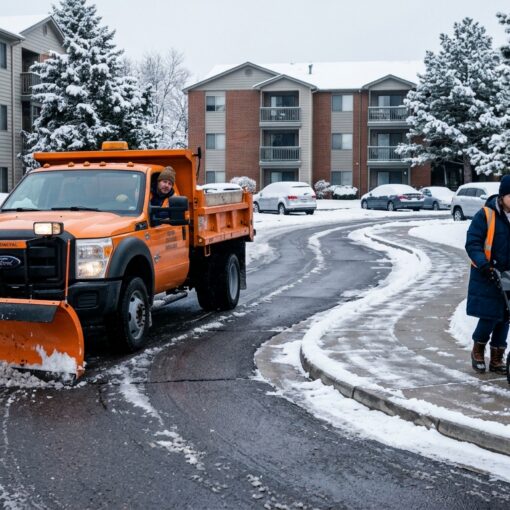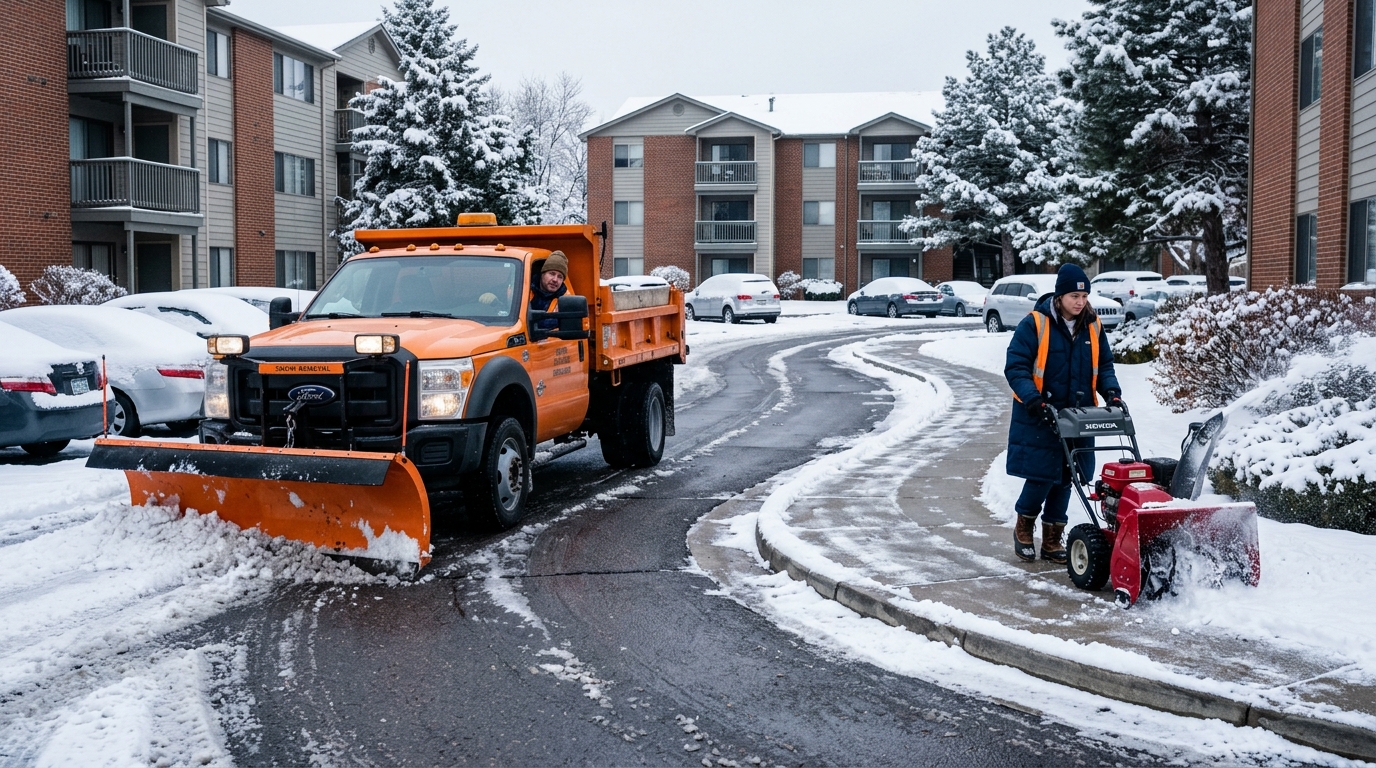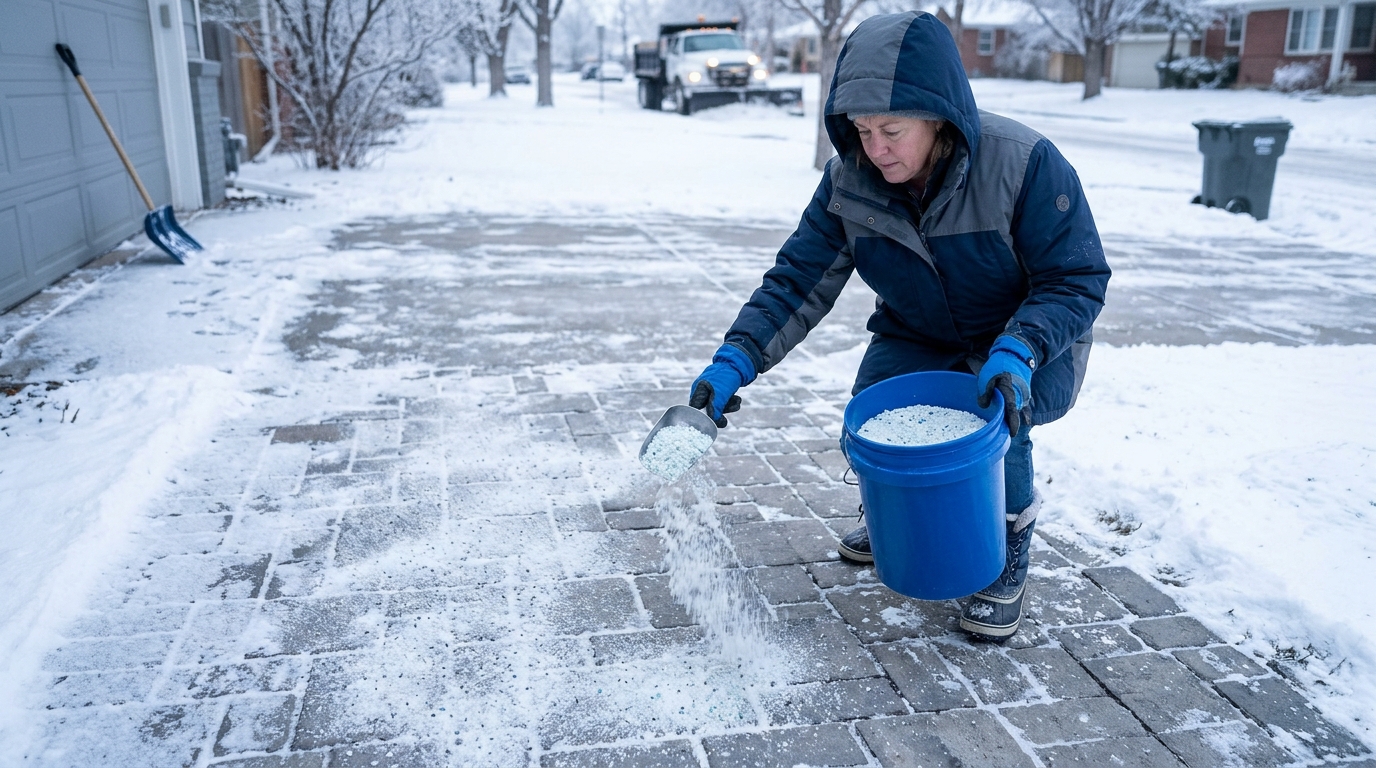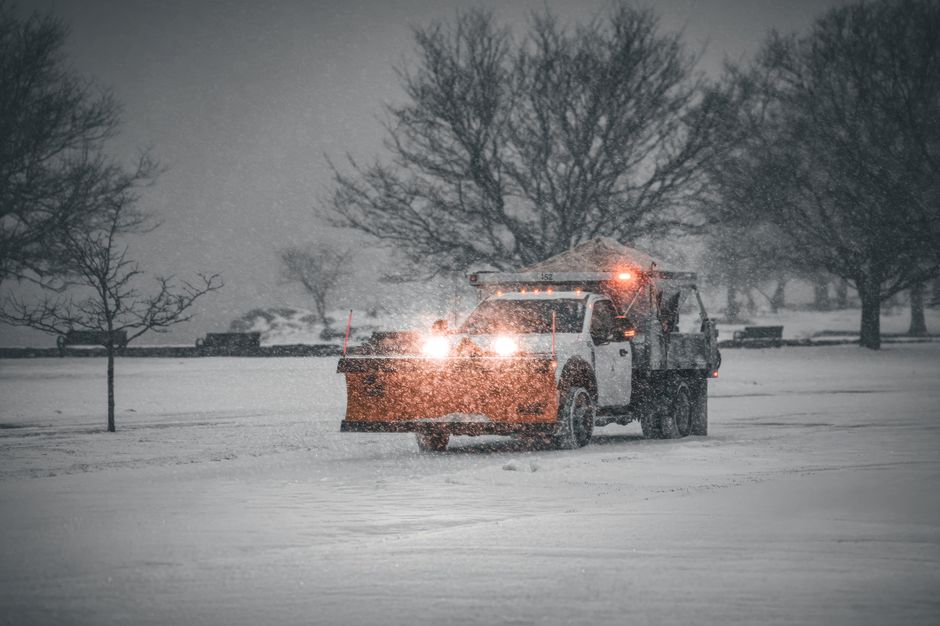
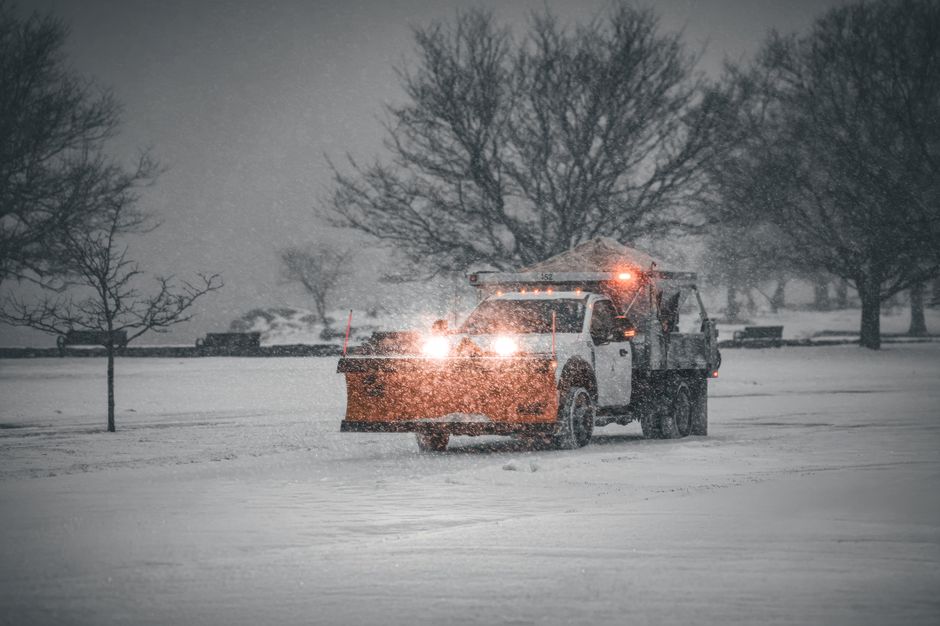
Snow removal cost in Denver is one of those numbers nobody thinks about until the first real storm dumps eight inches on a Tuesday night and the driveway is gone by morning. Then the phone calls start, and the quotes range from shockingly cheap to surprisingly high, often for what sounds like the same job.
The spread is real, and it comes down to a handful of things: what is actually being cleared, how big it is, how fast you want it done, and whether the company you hired still has a truck available when the whole metro is buried. Here is a straight look at 2026 pricing across Denver, Douglas County, Parker, Highlands Ranch, Roxborough, Castle Pines, Lone Tree and Castle Rock.
Average snow removal cost in Denver in 2026 – residential vs commercial
Published cost data for Denver puts a typical driveway and sidewalk visit at roughly $41. Two separate figures from a Denver snow removal cost report land at $41.46 and $41.25 per visit for that standard driveway-and-sidewalk job. Broader Denver snow removal pricing runs about $45 to $150 per visit once the job includes more than a basic driveway, and across the wider Front Range single-project quotes spread from around $48 to $394 depending on size, equipment and whether haul-off is involved.
Those numbers describe the market, not a quote. A small Denver bungalow with a two-car pad and one sidewalk run sits near the bottom. A corner lot in Wash Park with two sidewalk runs, a porch, steps and a detached garage pad sits closer to the top.
Commercial work does not price the same way at all. Parking lots, drive lanes and building entrances are usually handled on a seasonal contract with a defined snow trigger and response window, because a business cannot wait to see who answers the phone at 3 AM. Commercial and HOA properties are also where timing matters most, which is why commercial crews are commonly on site by 4 AM to have lots clear and safe before the first employees or tenants arrive.
Pricing models – per push, per inch, seasonal contract, hourly
Every snow removal quote you get in Denver will use one of four structures, and mixing them up is the fastest way to end up with a bill you did not expect.
| Pricing model | How it works | Where it fits | What to check |
|---|---|---|---|
| Per push | A flat fee each time the crew clears the property. Inside Denver County, per-push residential pricing commonly falls in the $35 to $85 range depending on size and scope. | Homeowners who only want service during bigger storms. | What triggers a visit, and whether a second pass in the same storm costs again. |
| Per inch | The rate steps up as accumulation grows, so a 3 inch storm costs less than a 10 inch storm. | Properties where a light dusting is not worth a truck roll. | Ask for the tier table in writing before the season starts. |
| Seasonal contract | One flat rate covers the winter, either unlimited visits or a set number. Some Denver-area companies market unlimited snow removal for a flat rate, and a few roll unused service forward. | Anyone who travels, works early shifts, or simply does not want a surprise bill in March. | Whether the season runs November to April, and what happens in a record snow year. |
| Hourly or time and materials | Billed by crew time plus materials, common for haul-off, hand-shoveling large walk networks and one-off cleanups. | Commercial sites with variable scope and properties that need snow removed, not just pushed. | The labor rate, the minimum call, and how de-icing product is billed. |
One homeowner in an online thread reported paying $250 to $300 to have a driveway cleared every time it snowed for an entire winter, which is the shape of a reasonable seasonal number for a simple residential property. Your mileage depends entirely on square footage and how many service points the crew has to hit.

What drives price in Denver and Parker – driveway size, slope, HOA, sidewalk, de-icing
Two driveways that look identical from the street can price $40 apart. These are the variables that move the number.
- Square footage. A single-car pad is a two-minute push. A three-car driveway with an apron, a turnaround and a detached garage pad is not.
- Slope. Steep driveways in Roxborough, Castle Pines and the western edges of the metro need more care, more product and sometimes more than one pass.
- Sidewalk and walkway length. Sidewalk is hand work or small-machine work, and it is the part most cheap quotes quietly leave out. Obligations around Denver sidewalks are worth confirming with the city or your HOA rather than assuming someone else handles it.
- Stairs, porches and landings. These are shovel-only areas with slip-and-fall exposure, so they carry more labor.
- HOA rules. Some associations require snow stacked in specific areas, cleared mailbox clusters, or plowed private streets. Those requirements change the job.
- De-icing. Ice melt and de-icing product is a real cost, especially on north-facing concrete that stays shaded all day.
- Driveway parking. Cars left in the driveway mean the crew works around them, or you get a call asking you to move.
- Storm frequency. A per-push price in a light winter feels expensive per visit until you live through a heavy one.
- Travel distance between stops. This is where Douglas County pricing separates from Denver. Crews clearing snow in Parker, Highlands Ranch and Castle Rock spend more time driving between properties, and that time shows up in the rate.
Residential cost examples – Denver driveway vs Parker and Highlands Ranch larger driveways
Here is how the same basic service lands across different property types. These are market benchmarks from published cost data plus the ranges Denver-area crews commonly quote, not a quote for your specific address.
| Property type | Typical market range per visit | Why it prices there |
|---|---|---|
| Denver single-family home, two-car driveway plus one sidewalk run | Around $41 based on published Denver cost figures, with many Denver County crews quoting in the $35 to $85 per-push band | Standard square footage, short push distances, one or two service points |
| Denver corner lot or home with porch, steps and two sidewalk runs | Upper end of the Denver range, up to about $150 per visit on the higher published figures | Extra hand work, more edge work, more slip-and-fall exposure |
| Parker or Highlands Ranch home with a three-car driveway and long sidewalk | Above the Denver average for the same level of service, quoted per property | More square footage, longer pushes, more sidewalk linear feet |
| Roxborough, Castle Pines, Lone Tree or Castle Rock home with a sloped or extra-long drive | Quoted individually, often at the top of the local range | Slope, drifting in open areas, longer travel between stops |
| Seasonal contract, simple residential driveway | One online account put a full winter of every-storm driveway clearing at $250 to $300 | Flat rate spreads cost across the season instead of per storm |
The practical takeaway: a Denver driveway and a Highlands Ranch driveway are not the same job, and a company quoting them at the same rate is either undervaluing one or overcharging the other. Ask what square footage the number is based on before you compare two bids side by side.
Commercial and HOA snow removal cost in Douglas County
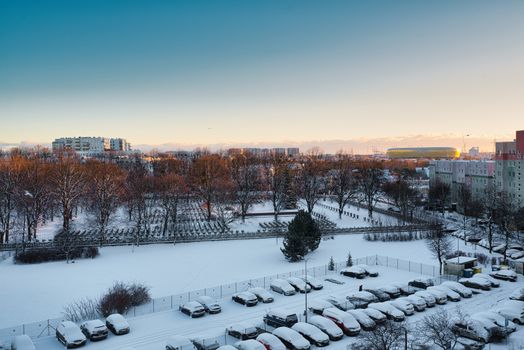
Commercial snow removal in Denver and Douglas County is quoted per site after a walk-through, because the variables are too large for a flat published rate. What gets measured is parking lot square footage, drive aisle length, the number of entrances and ADA paths, walkway linear feet, cart corrals, loading zones, and how many separate service windows the property needs.
Most commercial accounts run on a seasonal contract with a written snow trigger and response window, which is what protects a business from piecemeal storm-by-storm decision making. That structure also keeps liability exposure down and protects customer and tenant access during business hours.
HOA and multi-family properties in Douglas County add another layer. Boards are usually responsible for private streets, common sidewalks, clubhouse walkways, mailbox clusters and shared parking areas. Pricing depends on how many of those exist and how quickly the board wants them clear. A small HOA with one private loop prices very differently from a large association with multiple plowed drives and miles of common sidewalk.
Questions worth asking any commercial or HOA bidder: How many properties do you service per truck? Do you subcontract during large storms? What is your documented response time and how is it proven? For Denver-area commercial accounts, photo proof and GPS-tracked, timestamped logs are the difference between a vendor telling you the lot was cleared and a vendor showing you it was cleared at 4:12 AM.
What is included – plowing, shoveling, de-icing, haul off, return visits
Two quotes for the same driveway can differ by a hundred dollars simply because one includes things the other does not. Compare these line by line.
- Plowing or machine clearing of the driveway and any parking pad.
- Hand shoveling of sidewalks, walkways, porches, landings and stairs.
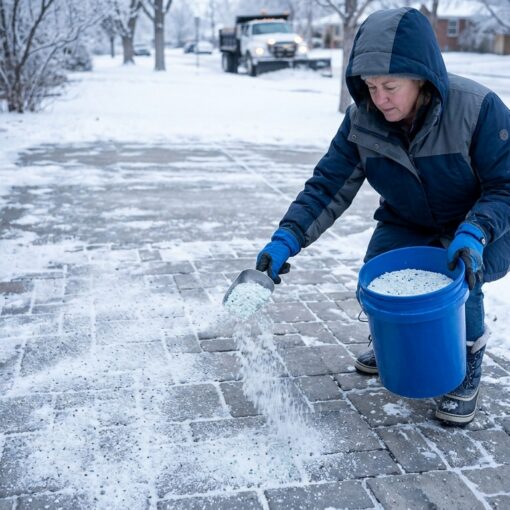
- De-icing and ice melt application, including whether the product is pet-friendly and non-corrosive. Pet-friendly Ice Slicer is a common choice because it is easier on paws, concrete and landscaping than straight rock salt.
- Return visits within the same storm. Some companies include a second pass when the plow buries your driveway apron again. Some bill it.
- Snow haul-off, which is almost always a separate line item because it requires loading and trucking snow off site.
- Storm-end cleanup, meaning the final pass after the snow stops rather than a single mid-storm push.
- Documentation. Ask whether you get before-and-after photos and timestamped service logs. If a vendor cannot tell you when they were on your property, they cannot prove they were.
If a bid does not spell out sidewalk, de-icing and return visits, assume it does not include them and ask directly.
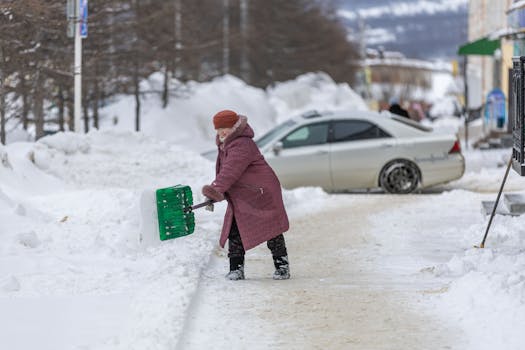
Why cheap per-push guys disappear during big storms in Denver
The lowest October bid and the company that shows up in a January blizzard are frequently not the same business. The cheapest operator usually has one truck, no seasonal contracts, and a list of accounts sold on price. When a storm hits the entire metro at once, that operator has to choose. Commercial accounts with contracts and penalties get served first. Residential per-push customers get a text.
Storm response also depends on routing. Mile High Snow has run Denver routes since 1974, family-owned and focused on the City and County of Denver, Glendale, Edgewater, Englewood, East Lakewood and West Aurora within about 10 miles of downtown. That footprint means crews work Denver surface streets instead of committing to I-25 or I-70 during a blizzard, and routes stay short even when the highways do not. The published response window is 2 to 4 hours, and every visit is GPS-tracked with timestamped logs and photo proof.
When you evaluate any snow removal service in Denver or Douglas County, ask how many trucks run the route, how many properties each truck covers, whether the company subcontracts during major storms, and what happens if you are the 41st call on a 12-inch night. A company that cannot answer those questions clearly is a company that will go quiet when you need it most.
Frequently Asked Questions
When do you come out for snow removal?
Service is triggered by accumulation, and the trigger is written into your agreement so there is no guessing. If you are on a seasonal contract, crews roll automatically once the threshold is met, including overnight. Per-push customers should confirm their trigger in advance. Dispatch runs 24/7, and you do not need to call to request a visit on an active contract.
How fast is the response time after a storm?
Denver properties inside the service footprint typically see a response window of 2 to 4 hours. Timing depends on storm intensity, how many properties are queued on your route, and whether parked cars or street conditions slow access. Commercial and HOA sites with early opening requirements are prioritized so lots and walkways are clear before staff and tenants arrive.
Do you salt or apply ice melt?
De-icing and ice melt are available and are usually quoted as part of the service rather than an afterthought. Pet-friendly Ice Slicer is a popular option because it is non-corrosive and easier on concrete, landscaping and paws than straight rock salt. Tell your provider about pets, new concrete or sensitive plantings so the right product gets used.
Is a seasonal contract worth it compared to per push?
A seasonal contract trades a predictable flat rate for a variable one. In a heavy winter, per-push billing can climb quickly, and contracted customers generally get priority when crews are stretched thin. Per push makes more sense for homeowners who travel, rarely need service, or only want clearing during larger storms. Compare your typical storm count against the seasonal rate.
Do you handle commercial snow removal accounts?
Commercial and HOA accounts are handled on seasonal contracts with a defined snow trigger and response window, typically with crews on site by 4 AM for parking lots, drive lanes, walkways and entrances. Documentation includes GPS-tracked, timestamped logs and before-and-after photos, which matters for liability, tenant complaints and board reporting. Every commercial site is quoted after a walk-through.
Snow removal cost in Denver comes down to how much ground there is to clear, how fast it needs to happen, and whether the company you hire still has a truck when the whole metro is under a foot of snow. For residential, commercial and HOA properties inside the City and County of Denver, Glendale, Edgewater, Englewood, East Lakewood and West Aurora, Mile High Snow runs 24/7 dispatch with 2 to 4 hour response, photo proof and GPS-tracked service logs, backed by 50 years of Denver routes. Call or book online to lock in your spot before the first storm, and if your property sits in Parker, Highlands Ranch, Roxborough, Castle Pines, Lone Tree, Castle Rock or elsewhere in Douglas County, call anyway and we will give you a straight answer about coverage on the first call.