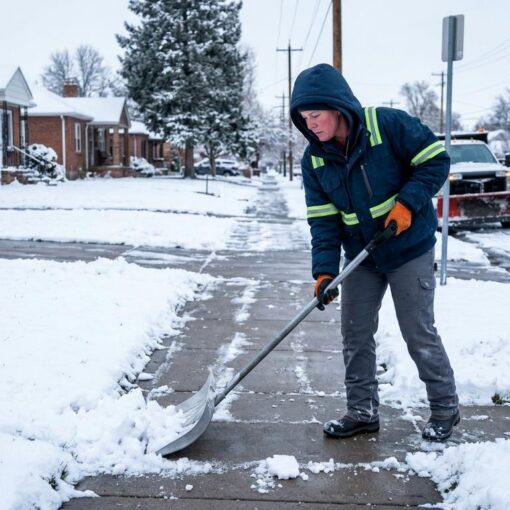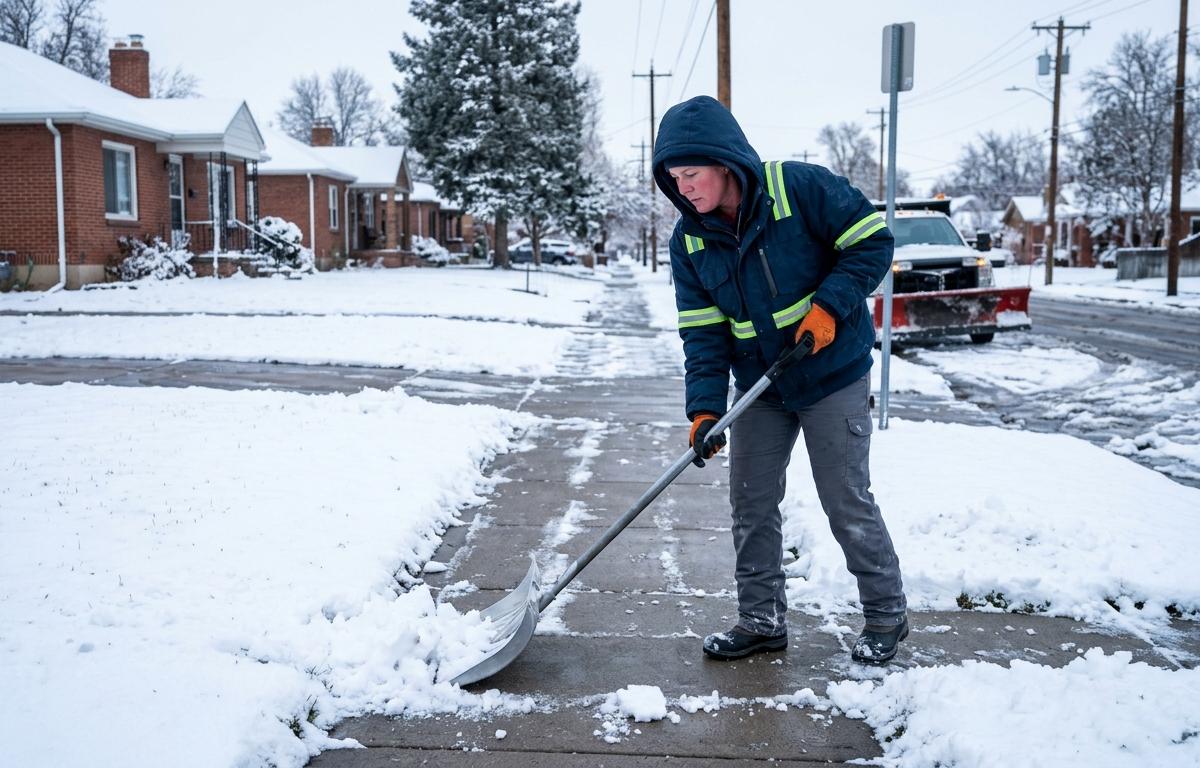
It is 5:40 a.m., the snow is still falling, and you are standing at the window typing “snow removal near me Denver” with one hand while the coffee goes cold in the other. Every listing looks about the same: a friendly truck photo, a phone number, a promise. The real difference between a crew that reaches your driveway in a couple of hours and one that shows up at lunchtime is not advertising, it is routing. In a city where a storm can bury one neighborhood and barely dust another, where the company stages its trucks decides how your morning goes.
This guide covers how to judge a local Denver snow crew in 2026, what questions actually separate a real operator from a call center, what pricing in this market tends to look like, and what the City and County of Denver does versus what lands on you or your HOA.
Why “Near Me” Means Something Different in Denver
Denver sits on a grid that gets punished by storms rolling off the Front Range, and the metro is big enough that a company based well outside the city limits can be three highways away from your sidewalk when the first flakes land. During a real blizzard, I-25 and I-70 turn into parking lots, and a crew stuck on a highway is not clearing your driveway, no matter how good its reputation is.
That is the practical argument for hiring inside the city. Our own service area is deliberately narrow: the City and County of Denver, plus Glendale, Edgewater, Englewood, East Lakewood, and West Aurora within about 10 miles of downtown. We do not travel to Brighton, Centennial, Parker, Castle Rock, Longmont, or Commerce City north, and we do not take routes that require highway travel during a storm. A tight map sounds like a limitation. It is actually the reason response times hold up when everything else falls apart.
What a Denver County Crew Can Do That a Metro-Wide Crew Cannot
When a company works only inside Denver County, the whole operation changes shape. Trucks stay on surface streets they already know, dispatch can stack stops in a sensible order, and a driver is not burning an hour of a shift just getting into the service area. That is how a 24/7 schedule and a two to four hour response window stay realistic instead of aspirational.
Here is what that looks like on the ground:
- Routing on Denver surface streets rather than interstate corridors, so storms do not strand the crew.
- Response windows measured in hours, not days, because each truck covers a compact zone.
- Service that runs overnight and on weekends, since commercial lots often need attention before sunrise.
- Documentation built into the visit, including before and after photos plus GPS-tracked, timestamped logs.
The Questions That Separate a Local Crew From a Call Center
Ask these before you sign anything. The answers tell you quickly whether you are talking to a Denver operation or a booking desk that subcontracts your driveway to whoever answers the phone.
- Where are your trucks staged during a storm, and do you drive highways to reach me?
- What is your written response window, and does it hold during a blizzard?
- Do you send photo proof and a timestamped log after each visit?
- Are you licensed and insured, and can you provide proof on request?
- What exactly is included: driveway, sidewalk, front entry, porch, stairs, and where does the snow go?
- What do you use for ice once the snow stops, and is it safe for pets and landscaping?
- Is pricing per push or seasonal, and what triggers an extra charge?
- What happens if a storm hits on a holiday or in the middle of the night?

Pricing Signals in the Denver Snow Market
Snow pricing in Denver is not published in one place, so treat any single number as a starting point rather than a rule. What the market shows is a fairly wide spread depending on whether you are buying labor by the hour, a flat visit, or a season-long contract.
| Pricing Model | What the Market Shows | Best Fit |
|---|---|---|
| Hourly labor | TaskRabbit lists Denver Taskers averaging about $44 per hour for snow removal | Small, occasional jobs and one-off cleanups |
| Flat per-visit | One Denver residential provider advertises $85 for front entryways, city sidewalk, and driveway | Homeowners who want a predictable number per storm |
| Per-push residential | Local Denver County per-push service commonly runs $35 to $85 depending on scope | Driveways, walks, porches, and stairs |
| Seasonal contract | Priced by property size, scope, and response expectations | HOAs, commercial lots, and owners who want guaranteed priority |
Always ask for the scope in writing. Two quotes that look identical can differ on whether sidewalks, stairs, and ice melt are included, or whether you pay again every time the plow pushes snow back into your apron.
Seasonal Contract or Per-Push: Which Fits Your Property
Per-push pricing makes sense if you travel, if you genuinely enjoy clearing your own walk, or if you only want help in the big storms. You pay when service happens, and you keep full control. The trade-off is that you are one of many callers on the morning of a storm, and priority usually goes to contracted properties first.
A seasonal contract flips that. You pay for the season, you land on the route list before the first flakes, and your property gets handled on a schedule rather than on demand. For HOA boards, property managers, and anyone who cannot be home to shovel, that predictability is usually worth the commitment. Ask any company how it handles priority when two customers call at the same time, and you will hear the difference immediately.
What the City Handles and What Falls to You
Denver’s emergency snow response falls under the Department of Transportation and Infrastructure (DOTI), which runs the city’s snow plan on streets and arterials. If you want to see where the plows are working, the city publishes a plow tracker map online, and residents can report issues directly.
For questions, reports, or concerns, the city’s contact routes are straightforward: dial 3-1-1 if you are inside Denver, call 720-913-1311 from outside Denver, use TTY 720-913-8479 for hearing-impaired callers, or submit an issue online. Confirm current sidewalk responsibilities with the City and County of Denver, since the rules and enforcement can change, and the exact requirement for your block is best verified with the city rather than assumed.

Commercial and HOA Properties Run on a Different Clock
A homeowner can wait until 8 a.m. A retail center, office building, or apartment complex cannot. Parking lots, walkways, and entrances need to be clear and de-iced before the first employee, tenant, or customer pulls in. That usually means overnight dispatch and crews working lots around 4 a.m. so the property is safe and open when the day starts.
Documentation matters just as much on commercial work. Photo proof before and after each visit, tied to GPS-tracked timestamps, gives property managers and HOA boards a defensible record if a slip-and-fall question ever comes up. Ask any prospective vendor to show you a sample report before you sign a seasonal agreement.
Trust Signals Worth Paying For
Longevity is a useful filter. Denver has had snow removal providers serving the metro since the early 1970s, including one that advertises continuous service since 1973, and that kind of history usually means the company has survived enough blizzards to know where its trucks should be. Our own operation, MileHiSnow, has been family-owned since 1974 and is licensed and insured.
Beyond years, look for these:
- Photo proof and GPS-tracked, timestamped logs after every visit.
- A stated response window in writing, not a verbal estimate.
- A Denver-based dispatch that is not routing you through an out-of-state call center.
- Ice melt products that are pet-friendly and non-corrosive, such as Ice Slicer.
- Clear handling of where snow gets piled, so it does not block a neighbor, a mailbox, or a drain.

Red Flags That Show Up Every Winter
Most bad snow removal experiences follow the same script. A low bid wins the job in October, the first big storm arrives, and the crew never shows because it oversold its route. Watch for companies that cannot name the neighborhoods they serve, that quote a price with no scope attached, that cannot produce insurance paperwork, or that have no answer for what happens after the snow stops and the ice sets in.
Be cautious with anyone who says yes to every address in the metro. A company that will drive from Castle Rock to Brighton to Erie in one storm is not going to reach you quickly, and it will likely prioritize the largest commercial contracts when it has to choose.
How to Get on a Route Before the First Storm
Snow crews build their winter routes in advance. Once a company is full, it is full, and late callers get whatever capacity is left. If you want reliable service in 2026, do the work in the fall.
- Decide your scope: driveway only, or driveway plus sidewalk, entry, porch, and stairs.
- Choose your model: per-push flexibility or a seasonal contract with priority.
- Verify local routing, insurance, and the written response window.
- Confirm the de-icing product and where snow will be stacked.
- Get the agreement in writing and save the dispatch number in your phone.
Frequently Asked Questions
How fast should a Denver snow removal crew respond?
A Denver County-only operation can typically commit to a two to four hour response window because trucks stay on surface streets instead of fighting highways during a storm. Companies covering the whole metro often cannot match that, since drivers may spend hours just reaching the service area. Ask for the response window in writing and confirm how it holds during a blizzard.
How much does snow removal cost in Denver?
Pricing varies by model and scope. TaskRabbit lists Denver Taskers averaging about $44 per hour, one Denver residential provider advertises $85 for front entryways, city sidewalk, and driveway, and local per-push residential service commonly falls between $35 and $85. Seasonal contracts are quoted by property size, scope, and priority. Get a written quote that lists exactly what is included.
Is the ice melt safe for pets and concrete?
It depends on the product. Pet-friendly, non-corrosive ice melt such as Ice Slicer is a common choice for Denver properties because it limits damage to paws, landscaping, and hard surfaces. Ask any crew what it spreads, whether the product is pet-safe, and whether de-icing is included in your price or billed separately after a storm.
Who do I contact about unplowed city streets?
Denver’s emergency snow response is handled by the Department of Transportation and Infrastructure. Residents inside Denver can dial 3-1-1, callers outside Denver can reach 720-913-1311, and TTY users can call 720-913-8479. You can also report an issue online or follow the city’s plow tracker map to see where equipment is working.
Should I choose a seasonal contract or pay per push?
Per-push suits homeowners who want to pay only when service happens and are comfortable waiting behind contracted properties during a big storm. A seasonal contract puts you on the route list before winter, which is usually the better call for HOAs, commercial lots, and anyone who cannot clear their own walk. Ask how priority is decided when demand spikes.