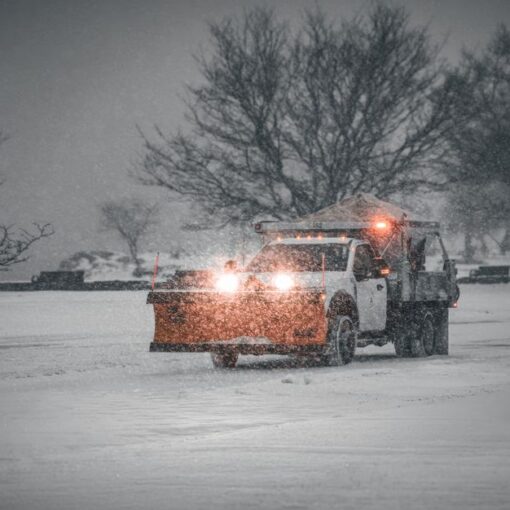

An empty parking lot at 4AM is a quiet place until you think about what happens at 7AM. Employees parked, deliveries arriving, tenants walking from their cars to the doors on a surface that has been packed by tires and refrozen. Commercial snow removal in Denver is less about the plow and more about the clock. Clearing a lot while it is still dark means the pavement is scraped, treated, and drying before the first car pulls in.
That timing separates a smooth morning from a stack of incident reports. It is also why timestamped logs and photo proof have become part of the conversation for 2026 contracts. Property managers no longer want a hand-written ticket that says “plowed.” They want a record that shows when a crew arrived, what they did, and what the lot looked like when they left.
Why 4AM Lot Clearing Sets the Tone for the Day
Denver’s winter weather often delivers snow overnight and then warms up during the morning. A lot cleared at 4AM can drain and dry as the sun comes up. A lot left until 9AM does the opposite. Traffic compresses the snow into the wheel paths, the sun softens the top layer, and the next overnight freeze turns those tracks into ice that survives for days.
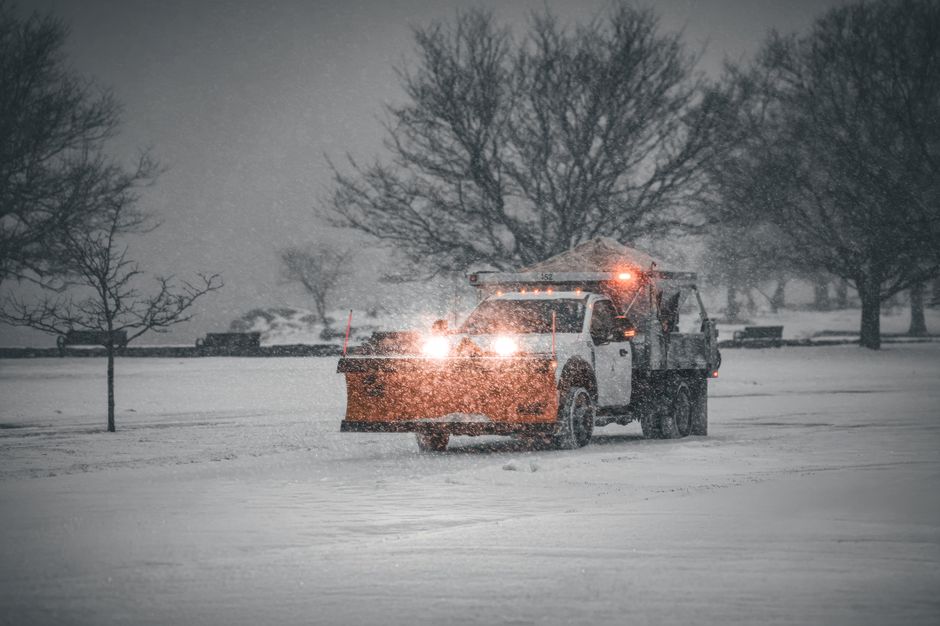
Commercial properties across the Denver Front Range, including hospitals, retail centers, and office buildings, are typically serviced by crews that monitor weather around the clock and respond proactively rather than waiting for a call. The 4AM window is the practical result. It gives crews time to finish before the morning rush, and it gives a supervisor time to walk the property and flag anything that needs a second pass.
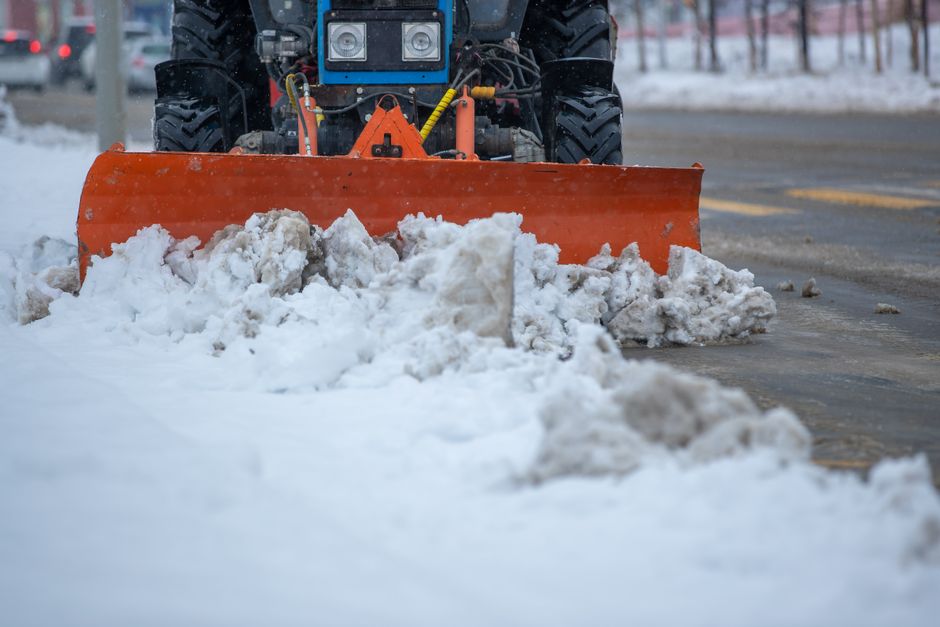
A typical overnight commercial visit covers more than pushing snow from one end of the lot to the other. It usually includes:
- Full lot plowing across drive lanes and parking stalls
- Entrance walks, sidewalks, curb cuts, and ADA ramps
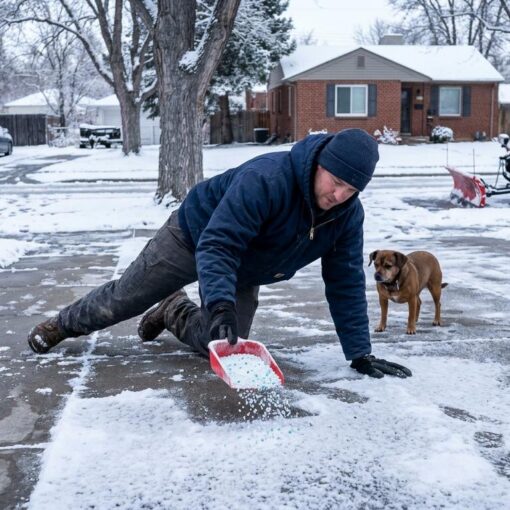
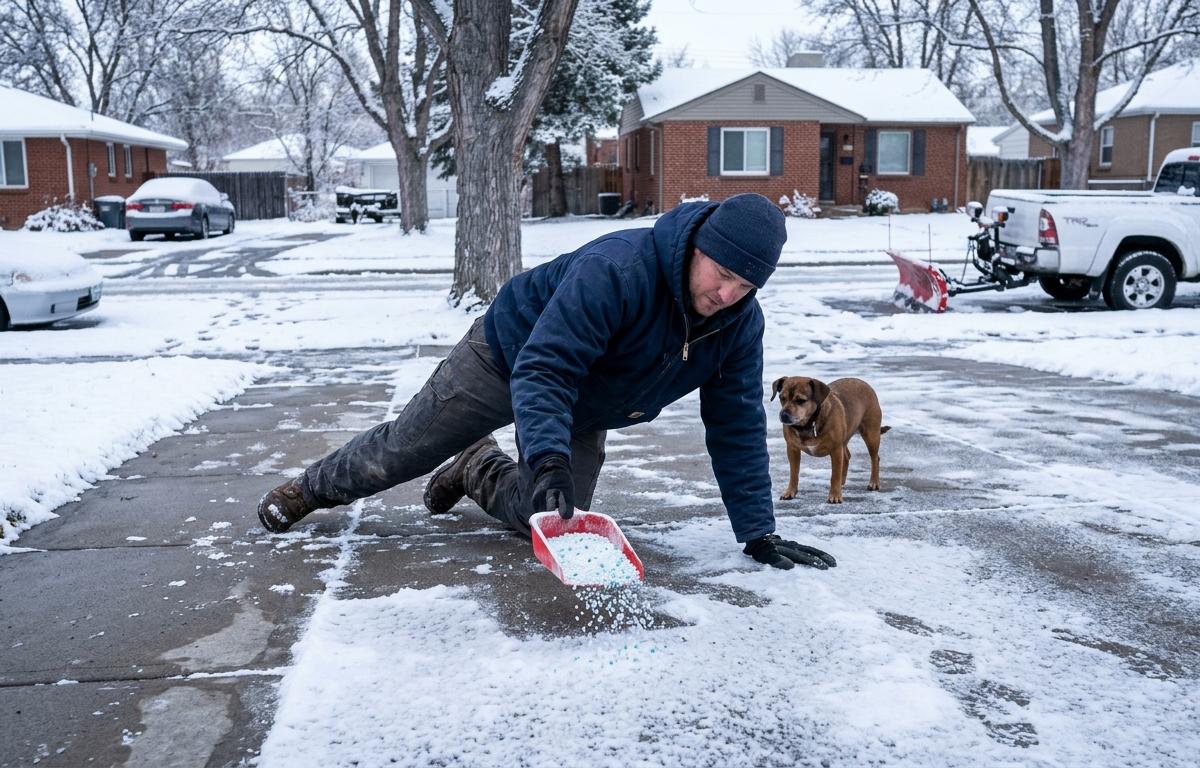
- De-icing or ice melt on high-traffic paths and thresholds
- Snow stacked in pre-agreed areas away from sight lines and storm drains
- A check-back later in the day if snow continues or refreezing is likely
What a Timestamped Log Actually Contains
A timestamped log is a service record generated from tracked data instead of memory. With GPS tracking on the equipment, arrival and departure times are captured automatically, which removes the guesswork that comes with a clipboard left in a truck cab.
A useful log for a Denver commercial property usually includes:
- Arrival and departure timestamps for each visit
- GPS location and the route the crew ran
- Services performed, broken out by zone or area
- The de-icing product applied and how much went down
- Before and after photos of the lot, walks, and entries
- Crew or vehicle identification
- Weather notes, such as continuing snowfall or a temperature drop
The value shows up the morning after a storm. A property manager can open the log, confirm the lot was cleared before opening, and forward it to an owner or a regional office without chasing anyone down. Over a full season, those records also show patterns, like a corner of the lot that drifts every storm or a sidewalk that needs extra ice melt after a freeze.
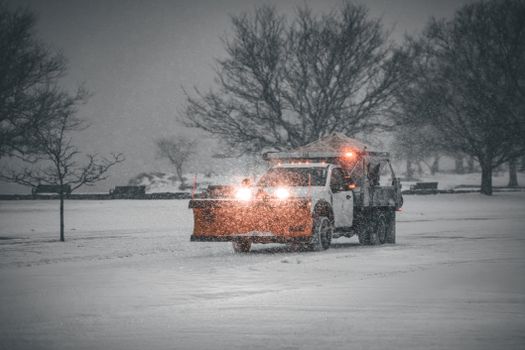
Photo Proof and GPS Tracking as Liability Protection
Snow and ice claims are among the most common winter headaches for commercial property owners. Documentation does not eliminate risk, but it changes the conversation. A dated photo of a cleared walkway and a GPS record showing a crew was on site at 4:12AM is a very different starting point than a verbal account of “we were there.”
When a claim is reviewed, the questions are almost always the same. When was the property last serviced? What was done? What did the surface look like afterward? A log with timestamps and images answers all three without anyone relying on recollection from six weeks earlier.
What Before and After Photos Should Show
Not every photo is useful. A close-up of a shovel blade proves nothing. Ask for images that tell the story of the property:
- A wide shot of the lot from the same angle before and after each visit
- Entrances, walkways, stairs, and ADA ramps
- Snow pile locations, so drifting and sight-line issues are visible
- Treated surfaces, showing where ice melt was applied
- Embedded timestamps, not just a file name that can be edited
Seasonal Contracts vs Per-Push Service
Denver property managers generally choose between two billing structures, and the right answer depends on how much a closed lot costs you. Per-push contracts bill each service visit. Seasonal contracts bundle the winter into one number, usually with a trigger depth written into the agreement.
| Consideration | Seasonal contract | Per-push service |
|---|---|---|
| Billing | One agreed price for the season | Invoice per visit, based on actual storms |
| Budgeting | Predictable, easier to plan across a fiscal year | Varies with how many storms hit |
| Trigger | Defined snow depth in the contract | Service requested or dispatched per event |
| Published benchmarks | About $3,000 to $8,000 for small commercial properties under 10,000 square feet, per a Denver pricing guide | About $125 to $350 per service visit for the same size properties |
Those third-party benchmarks come from a published Denver commercial pricing guide, and they are a starting point rather than a quote. Scope drives the number: a sidewalk-only account looks nothing like a full lot with hauling, stacking constraints, and hand work around planters. Denver Snow Removal at denversnow.com lists Denver County per-push pricing from $35 to $85 and offers seasonal contracts as well, which reflects smaller pushes and residential-scale work inside the county.
Whatever structure you pick, get the scope in writing. Square footage, zone map, trigger depth, response window, de-icing expectations, and who handles hauling should all be spelled out before the first storm, not negotiated at 5AM in a snowbank.

De-Icing and Ice Melt Choices for Denver Lots
Plowing removes snow. Ice control handles what is left behind, and that is where slip risk actually lives. Denver’s freeze-thaw cycles mean a surface that looks clear at 8AM can be slick by 6PM, especially at entries, ramps, and shaded north-facing walks.
Ask two questions when you compare providers. What product will be applied, and will it be named in the service log? Pet-friendly, non-corrosive ice melt options such as Ice Slicer are available, and for properties with heavy foot traffic, landscaping, or pets, that choice matters over a full season. You should also be able to see how much product went down and where. A log that says ice melt was applied, without naming the product or the area, is not much of a record.
Certification is another filter worth using. Some Denver snow contractors hold CSP certification through SIMA, which signals a formal commitment to industry standards for snow and ice management. It is not the only credential that matters, but it is a reasonable tiebreaker when two bids look similar.
Denver County Routing and the Response Time Advantage
Response time is a routing problem as much as a staffing problem. A crew staged outside the metro core has to fight I-25 or I-70 during a blizzard, and that is exactly when those corridors back up. A crew already working Denver surface streets is not sitting in highway traffic while your lot fills in.
Denver Snow Removal limits service to the City and County of Denver, Glendale, Edgewater, Englewood, East Lakewood, and West Aurora within 10 miles of downtown. That footprint covers neighborhoods like Capitol Hill, Wash Park, the Highlands, Cherry Creek, and Central Denver. It does not include Brighton, Centennial, Parker, Castle Rock, Longmont, or Commerce City north, because those routes require highway travel during storms.
Staying inside the county supports a 2 to 4 hour response window. It also means the crew clearing your lot has probably cleared the block before, knows where the snow can be stacked, and knows which entrance gets the morning sun.

Building the 2026 Plan Before the First Snow
Winter prep is cheaper than winter recovery. A property walkthrough in the fall, before the ground freezes, gives you a chance to set expectations while everyone is calm.
- Map the property into zones and mark priority areas such as entries, ramps, and tenant walkways.
- Pick snow stacking locations that will not block sight lines, storm drains, or parking revenue.
- Agree on a trigger depth and a response window in writing.
- Confirm licensing, insurance, and any certifications before signing.
- Define the log format you expect: timestamps, GPS, photos, and product applied.
- Set a mid-season check-in to review logs and adjust zones if a problem spot shows up.
Get the paperwork done in October and the first storm becomes routine. Leave it until the forecast turns and you are competing for crews with every other property manager in Denver County.
Frequently Asked Questions
How early should a Denver commercial lot be cleared?
Most commercial properties aim to have drive lanes, stalls, and main walks cleared before the first employees or tenants arrive, which usually means starting between 2AM and 4AM depending on storm size. A heavy or long-duration storm may need an earlier start and a second pass later in the day. The goal is a scraped and treated surface before traffic packs it down.
What is a timestamped snow removal log?
A timestamped log is a service record that captures when a crew arrived, where they worked, what they did, and when they left, usually generated from GPS data instead of handwritten notes. It typically includes before and after photos, the de-icer applied, and the zones serviced. Property managers can review it the next morning and share it with owners or insurers if a claim comes up.
Should I choose a seasonal contract or per-push snow removal?
Seasonal contracts charge a set amount for the winter and usually trigger at an agreed snow depth, which makes budgeting predictable. Per-push service bills each visit separately, so cost tracks the actual number of storms. Sites where access and safety are non-negotiable, such as retail centers or medical buildings, often prefer seasonal coverage, while smaller or low-traffic properties sometimes do better with per-push billing.
Is ice melt safe for pets and landscaping?
It depends on the product. Some ice melters are harsher on paws and plants than others, so ask what will be applied and whether a pet-friendly, non-corrosive option is available. Denver Snow Removal uses pet-friendly Ice Slicer for its Denver County customers. Whatever product is used should be named in your service log, so you know exactly what touched your lot.
Do snow crews travel outside Denver County for commercial lots?
Some do, but travel time works against you during a storm, and closures on I-25 or I-70 can delay crews starting outside the metro core. Denver Snow Removal limits service to the City and County of Denver, Glendale, Edgewater, Englewood, East Lakewood, and West Aurora within 10 miles of downtown, so crews stay on surface streets and can hold a 2 to 4 hour response window.